Do you have a website but can’t get it on the first page of Google? For any business — small, medium, or large — ranking on Google Page 1 is the primary goal for generating organic leads and conversions. Yet in 2026, it is far from straightforward. Google’s algorithm now evaluates hundreds of signals simultaneously: content quality, E-E-A-T (Experience, Expertise, Authoritativeness, Trustworthiness), Core Web Vitals, AI-readiness, mobile experience, and topical authority — all at once.
The good news? A first page ranking on Google is a tangible, achievable goal — even for new and local business websites — provided you follow the right strategy, consistently and patiently. That’s exactly what this guide delivers.
Below you will find a proven, step-by-step framework to rank on the first page of Google, built around the latest 2026 search ranking signals, semantic SEO principles, and real-world best practices used by Media Search Group’s team of SEO specialists across 2,000+ client campaigns.
Here’s what this guide covers:
Technical foundations your site must have before any SEO work begins
10 proven steps to achieve and maintain a Google first page ranking
2026-specific strategies: E-E-A-T, AI Overviews, topical authority, and Core Web Vitals
Common SEO mistakes that kill rankings
A realistic timeline for first-page results
FAQ section covering the most-searched questions about Google ranking
Why First-Page Google Ranking Matters More Than Ever in 2026
Over 92% of all search clicks happen on the first page of Google results. The top three organic positions capture nearly 70% of all clicks. With the introduction of AI Overviews (formerly SGE — Search Generative Experience), Google now surfaces AI-generated summaries at the very top of the SERP, pushing organic results further down the page for users who don’t scroll.
The implication is stark: if your website is not on Page 1, it is effectively invisible. Ranking beyond Page 1 means missing out on traffic, leads, and revenue that your competitors are actively capturing. For local businesses especially, where near me searches and Google Maps visibility dominate intent, a Page 1 presence is not optional — it is the difference between growth and stagnation.
If you want Guaranteed Google Page 1 Ranking support from a specialist team, Media Search Group has delivered measurable first-page results across 2,000+ clients and 98,000+ optimised keywords. But before you outsource or invest in paid campaigns, understanding the organic fundamentals will make every rupee you spend go further.
Before You Start: Technical Foundations Your Site Must Have
No SEO strategy will deliver first-page rankings if your website has critical technical deficiencies. Google’s crawlers must be able to find, read, and index your pages efficiently. Before executing any of the steps below, confirm that your website meets the following technical benchmarks.
Core Web Vitals: LCP, INP, and CLS
Google’s Core Web Vitals are a set of real-world performance metrics that directly influence your ranking position in 2026:
LCP (Largest Contentful Paint): Measures how quickly your main content loads. Target: under 2.5 seconds.
INP (Interaction to Next Paint): Measures how responsive your page is to user interactions (replaced FID in 2024). Target: under 200ms.
CLS (Cumulative Layout Shift): Measures visual stability — elements should not shift unexpectedly during load. Target: under 0.1.
Use Google Search Console’s Core Web Vitals report and PageSpeed Insights to identify and fix issues. Pages that fail Core Web Vitals consistently rank lower than technically sound competitors, all else being equal.
Mobile-First Indexing
Google completed its transition to mobile-first indexing — meaning Google primarily uses the mobile version of your website for ranking decisions. A responsive, mobile-optimised design is non-negotiable. As page loading time increases from 1 second to 10 seconds, the probability of a visitor bouncing increases by 123%. Test your mobile performance at search.google.com/test/mobile-friendly.
HTTPS Security
Google treats HTTPS as a ranking signal and actively marks HTTP sites as “Not Secure” in Chrome. Install an SSL certificate and redirect all HTTP traffic to HTTPS. This is foundational for both rankings and user trust.
Site Architecture and Crawlability
A well-structured website helps Google crawl, index, and understand your content hierarchy:
Submit an XML sitemap to Google Search Console
Use robots.txt wisely to block admin or duplicate pages from being crawled
Fix broken links (404s) and redirect chains that waste crawl budget
Ensure your site is easy to navigate — poor navigation increases bounce rates and signals a bad user experience to Google
Even the best premium SEO service providers cannot guarantee first-page rankings unless your website meets these technical criteria. Think of technical SEO as the foundation — without it, everything else you build will crack.
10-Step SEO Strategy to Rank on the First Page of Google in 2026
With your technical foundations in place, it’s time to execute the organic ranking strategy. These 10 steps reflect best practices tested across thousands of campaigns and updated for 2026’s algorithm landscape.
Step 1 – Do Intensive Keyword Research to Find the Right Terms
Keyword research is the backbone of every successful Google first-page ranking strategy. Choosing the wrong keywords wastes months of effort; choosing the right ones multiplies your return on every piece of content you create.
How to find the right keywords:
Start with your services and products. The simplest keywords are the generic names of what you offer — web design services, SEO agency, haircutting services — which may or may not have heavy competition.
Think like your customer. What words or phrases does your ideal customer type into Google when looking for what you sell? These are your highest-converting keyword opportunities.
Target long-tail keywords. Long-tail keywords (three or more words) have lower competition and higher purchase intent. For example, affordable SEO services for small businesses in Delhi is more specific and easier to rank for than SEO services.
Include location modifiers. For local businesses, location-based keywords — best haircutting services in Delhi, salon near me, hairstylist Connaught Place — unlock local search visibility and “near me” queries simultaneously.
Use free and paid tools. Google Keyword Planner, Ubersuggest, Ahrefs, SEMrush, and Google’s autocomplete and “People Also Ask” boxes are invaluable for keyword discovery.
Map keywords to pages. Each webpage should target a distinct primary keyword cluster. Targeting the same keyword across multiple pages causes keyword cannibalization, diluting your authority across all of them.
Example: If you run a salon providing haircutting services in Delhi, your keyword list might include: haircutting services Delhi, haircutting services near me, best hairstylist in Delhi, cost of haircut in Delhi, salon near Connaught Place, best hairstyles for men 2026.
Pro tip: Combine high-volume head terms with low-competition long-tail variations and question-based keywords (e.g., how much does a haircut cost in Delhi?). This balanced approach captures traffic at different stages of the buyer journey.
Step 2 – Analyse Your SEO Competitors and Find the Gaps
Before writing a single word of content, study the websites already ranking on Page 1 for your target keywords. Competitor analysis tells you what Google is already rewarding — and where the gaps are that you can exploit.
Identify your real competitors. These are the pages ranking on Page 1, not necessarily the businesses you compete with offline. A local business may compete with national directory sites or informational blogs for the same keyword.
Study their content depth. How long is the content? What subtopics do they cover? What headings do they use? What questions do they answer?
Find their keyword gaps. What relevant keywords are they ranking for that you haven’t targeted? Use tools like Ahrefs’ Content Gap or SEMrush’s Keyword Gap to identify these.
Look for weaknesses. Thin content, poor internal linking, slow page speed, missing schema markup — these are opportunities where you can outperform them by doing better.
Analyse backlink profiles. Where are their quality backlinks coming from? Are there opportunities to earn links from the same sources?
Remember: Just as it’s harder to open a grocery store next to a Supermarket, ranking above well-established brands with massive domain authority takes time and a differentiated approach. To achieve a guaranteed 1st Page Google ranking, you must understand precisely whom you are competing against before investing resources.
Step 3 – Create Content That Matches Search Intent
In 2026, search intent alignment is one of the most critical ranking factors. Google’s algorithm is sophisticated enough to understand not just what a user searches for, but why they searched for it. Content that doesn’t match the intent of the target keyword will not rank on Page 1, regardless of how well-optimised it is technically.
The four types of search intent:
Informational: The user wants to learn something. (“How does SEO work?”)
Navigational: The user wants to reach a specific site or page. (“Media Search Group blog”)
Commercial: The user is researching before making a decision. (“Best SEO agencies in India”)
Transactional: The user is ready to act or buy. (“Hire SEO agency India”)
Match your content format to the intent. Informational keywords need comprehensive how-to guides, tutorials, or blog posts. Transactional keywords need service pages with clear CTAs and trust signals. Creating the wrong content type for a keyword is one of the most common — and most damaging — SEO mistakes.
Content formats aligned with different intents:
Product or Service Page (Transactional)
Category Page (Commercial)
How-to Guide or Tutorial (Informational)
Blog Post or Article (Informational / Commercial)
Comparison or Review Page (Commercial)
Press Release (Navigational / Brand authority)
Video with Accompanying Transcript (Informational)
Content creation tips for 2026:
Depth over length. A 2,000-word article that comprehensively covers a topic outperforms a 4,000-word piece padded with filler. Aim for completeness — if someone reads your page, they should have no unanswered questions about that topic.
Create location-specific pages. If you serve multiple cities, build dedicated location pages with localised content. Google uses IP addresses to serve geographically relevant results — even when users don’t type a location — so localised pages capture that traffic automatically.
Use multimedia. Images, infographics, videos, and data charts improve dwell time (the amount of time users spend on your page), which is a positive behavioural signal to Google.
Write for humans first. Do not stuff keywords unnaturally. Google’s NLP (Natural Language Processing) capabilities in 2026 are sophisticated enough to detect unnatural language patterns and keyword over-optimisation, and will penalise pages that prioritise bots over readers.
Pair video with text. For tutorial and how-to content, publish both a video and written version on the same page. This captures users who prefer to watch and those who prefer to read — and improves overall engagement metrics.
Step 4 – On-Page SEO: Place Keywords Where Google Expects Them
Google scans and indexes specific locations on your pages more closely than others. Placing your primary keyword in these high-weight locations sends clear relevancy signals, improving your chances of ranking for that term.
Critical on-page SEO elements for first-page ranking:
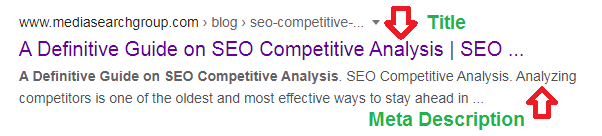
1. Title Tag (Meta Title)
Your title tag is the single most important on-page SEO element. Include your primary keyword as close to the beginning of the title as possible. Keep it under 60 characters. Example: How to Rank on Google’s First Page in 2026 (Complete Guide)
2. Meta Description
While not a direct ranking factor, a well-crafted meta description significantly impacts click-through rate (CTR) — which is an indirect ranking signal. Include your primary keyword, a clear value proposition, and a call-to-action. Keep it under 160 characters.
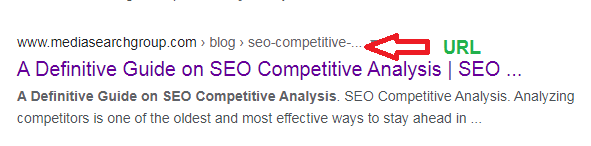
3. URL Slug
Use a short, descriptive, keyword-rich URL. Hyphens separate words. Avoid stop words like “and,” “the,” or “of.” Example: /blog/first-page-google-ranking-guide/
4. H1 Tag
Each page should have exactly one H1 tag containing your primary keyword. The H1 signals the main topic of the page to both users and Google crawlers.
5. H2 and H3 Subheadings
Use subheadings to structure your content logically and incorporate secondary and long-tail keywords naturally. Subheadings improve readability and also help Google understand your content hierarchy.
6. Image Alt Text
Google cannot “see” images — it relies on alternative text (alt text) to understand what an image depicts. Descriptive, keyword-inclusive alt text improves image indexing and Google Images visibility. If an image fails to load, alt text also provides context for the reader.
Example: <img src="seo-checklist.jpg" alt="On-page SEO checklist for first page Google ranking" />
7. Schema Markup (Structured Data)
Adding schema markup (JSON-LD) to your pages helps Google understand your content’s context and can unlock rich results in the SERP — star ratings, FAQs, how-to steps, breadcrumbs. For blog posts, implement Article schema. For service pages, use LocalBusiness and Service schema. For FAQ sections, use FAQPage schema.
8. Internal Links
Link relevant pages on your site to each other using descriptive anchor text. Internal linking distributes link equity across your site, helps Google crawl your content more efficiently, and keeps users engaged longer — reducing bounce rate. See our guide to choosing the best SEO package for more on how a structured SEO plan supports internal linking strategy.
Step 5 – Build E-E-A-T Signals Into Every Page
E-E-A-T — Experience, Expertise, Authoritativeness, and Trustworthiness — is Google’s quality evaluation framework, and in 2026 it has become more influential than ever, particularly for YMYL (Your Money or Your Life) topics including finance, health, and legal content.
Here’s what each component means practically:
Experience: Does the author have first-hand, real-world experience with the topic? Include case studies, data from your own campaigns, client results, and original insights. Avoid generic statements — specificity signals experience.
Expertise: Is the content written by a subject-matter expert? Include author bios with credentials, qualifications, and professional background on every blog post.
Authoritativeness: Is your brand recognised as an authority in your niche? This is built through backlinks from reputable industry sources, mentions in press, and consistent publishing of high-quality content over time.
Trustworthiness: Does your site inspire trust? This includes HTTPS security, a clear privacy policy, accurate contact information, genuine customer reviews, and transparent business information.
For service businesses, E-E-A-T signals include displaying client testimonials, case studies with measurable results, industry awards and recognitions, and press mentions. Media Search Group, for example, has served over 2,000 clients globally, optimised 98,000+ keywords, and been recognised by top industry platforms — all of which are E-E-A-T signals that support ranking authority.
Step 6 – Earn High-Quality Backlinks from Authority Websites
Backlinks — links from other websites pointing to yours — remain one of Google’s top three ranking factors. However, the emphasis in 2026 has shifted decisively from quantity to quality and relevance. A single backlink from a high-authority, industry-relevant website outperforms hundreds of low-quality directory links.
Proven backlink acquisition strategies:
Guest posting: Write expert articles for high-authority websites in your industry. Choose publications where your ideal customers or clients are likely to be reading. Include a natural link back to a relevant page on your site.
Digital PR: Get your business featured in local news websites, industry publications, and online magazines. A brand mention with a link from a credible media outlet carries significant authority.
Create linkable assets: Original research, data studies, comprehensive guides, and unique tools naturally attract backlinks from other content creators who want to cite your work.
Broken link building: Identify websites linking to outdated, moved, or dead resources in your industry. Reach out to inform them and suggest your content as a replacement — a tactful and effective approach.
Supplier and partner links: If you work with other businesses, suppliers, or industry associations, request a link from their website to yours — and reciprocate where appropriate.
Critical warning: Never purchase bulk backlinks from link farms or private blog networks (PBNs). Google’s SpamBrain algorithm is highly effective at detecting and penalising unnatural link schemes. A handful of genuine, relevant backlinks built consistently over time will always outperform hundreds of paid, low-quality links.
Step 7 – Optimise for Google AI Overviews and Featured Snippets
One of the most significant shifts in 2026 SEO is the prominence of AI Overviews (Google’s AI-generated summaries that appear at the top of the SERP for many informational queries). Being cited in an AI Overview can deliver significant visibility — even more than a traditional #1 organic ranking for some query types.
How to optimise content for AI Overviews and featured snippets:
Answer questions directly and concisely at the top of each section. Write a direct, 40–60 word answer to the implied question in each H2 heading before elaborating.
Use structured formats: Numbered lists, bullet points, comparison tables, and definition-style paragraphs are frequently pulled into AI Overviews and featured snippets.
Add FAQ sections: A dedicated FAQ section targeting People Also Ask (PAA) questions dramatically increases your chances of appearing in AI-generated answers.
Include verifiable data: Statistics, original research, case study results, and authoritative citations make your content more likely to be cited by Google’s AI summarisation systems.
Use schema markup:FAQPage, HowTo, and Article schema all support rich result eligibility and improve AI Overview candidacy.
Step 8 – Set Up and Optimise Your Google Business Profile
For local businesses, a fully optimised Google Business Profile (formerly Google My Business) is essential to rank in the Google Maps pack and local SERP results. Both Google Search and Google Maps pull from your GBP to populate local listings — making it one of the highest-ROI actions a local business can take.
Claim and verify your Google Business Profile at business.google.com
Add your accurate NAP (Name, Address, Phone number) — keep it completely consistent across all platforms, directories, and your website
Select the most accurate primary and secondary business categories
Upload high-quality photos and videos of your premises, products, and team
Write a keyword-rich business description (up to 750 characters) covering your services and location
Add your hours of operation, website URL, and service areas
Actively encourage satisfied customers to leave Google reviews — and respond to all reviews, positive and negative, professionally
Post regular updates, offers, and events via the GBP Posts feature to signal active engagement
List on other local directories: JustDial, Sulekha, IndiaMart, Yelp, and industry-specific directories — consistent citations reinforce your local authority to Google
Step 9 – Build Topical Authority with a Content Cluster Strategy
In 2026, Google increasingly views websites as entities with either deep or shallow expertise in specific subject areas. A website that publishes random, disconnected blog posts rarely ranks well for competitive terms. One that publishes a structured cluster of interlinked content around a central topic — and proves comprehensive knowledge of that topic — builds topical authority, which is one of the most powerful long-term ranking strategies available.
How to build a content cluster:
Pillar page: A comprehensive, long-form guide covering a broad topic (e.g., “The Complete Guide to SEO”). This is your central authority document.
Cluster content: A series of more specific, narrowly focused articles that address subtopics in depth (e.g., “What is Keyword Research?”, “How to Build Backlinks”, “Technical SEO Checklist”). Each links back to the pillar page and to related cluster articles.
Strategic internal linking: Connect all cluster pages to the pillar and to each other using descriptive anchor text. This signals to Google that your site owns the topic end-to-end.
This approach is particularly effective for competitive keywords where single-page optimisation is insufficient to outrank established players. By demonstrating breadth and depth of expertise across an entire topic, you send a powerful authority signal that isolated content cannot replicate.
Step 10 – Track, Update, and Refresh Your Content Regularly
SEO is not a one-time activity — it is an ongoing process of measurement, refinement, and renewal. Google rewards freshness: updated content consistently outperforms stale articles in competitive SERPs.
Build a content maintenance routine:
Use Google Search Console to monitor your page’s impressions, clicks, CTR, and average position every month
Identify queries driving impressions but few or no clicks (a CTR problem) and update your title tag and meta description to be more compelling
Identify pages with declining rankings and refresh them with updated statistics, new sections, additional keywords, and improved internal links
Set a content review calendar: revisit every significant blog post and service page every 3–6 months
Update publication dates after meaningful refreshes — but only when the content has been substantially updated, not just cosmetically
Monitor Google algorithm updates (Core Updates, Helpful Content Updates) and assess whether any rankings changes correlate with your content quality or E-E-A-T signals
Common SEO Mistakes That Prevent First-Page Google Ranking
Understanding what not to do is equally important as knowing the right steps. These are the most common errors that sabotage first-page ranking efforts:
Keyword stuffing: Repeating the same keyword unnaturally throughout the content. Google’s NLP detects this and views it as a quality signal failure.
Ignoring search intent: Writing content that doesn’t match what users actually want from that query — even if it’s technically well-optimised for the keyword.
Targeting overly competitive keywords too early: New or low-authority websites cannot realistically rank for head terms with massive competition. Start with long-tail keywords and build from there.
Keyword cannibalization: Multiple pages on your site targeting the same keyword confuse Google about which page to rank, diluting authority across all of them.
Ignoring technical SEO: Poor Core Web Vitals, crawl errors, duplicate content, and slow page speed suppress rankings regardless of content quality.
Buying low-quality backlinks: Purchased links from link farms trigger algorithmic or manual penalties that can erase years of SEO progress.
No internal linking strategy: Failing to connect related content leaves link equity stranded on individual pages and limits Google’s ability to understand your site’s topical depth.
Generic AI-generated content without human expertise: In 2026, Google’s Helpful Content System specifically identifies and demotes thin, unhelpful AI content that lacks genuine expertise and experience signals.
Neglecting mobile experience: With Google’s mobile-first indexing, a poor mobile experience directly reduces your ranking potential.
Setting and forgetting: Publishing content once and never revisiting it. Stale, outdated content gradually loses rankings as competitors publish fresher, more comprehensive alternatives.
How Long Does It Take to Rank on Google’s First Page?
This is the most frequently asked question in SEO — and the honest answer is: it depends. The timeline for achieving a first-page Google ranking varies based on several factors:
Keyword competition: Low-competition long-tail keywords can rank in 4–8 weeks. Medium-competition terms typically require 3–6 months. Highly competitive head terms may take 12–24 months of consistent effort.
Domain authority: Newer websites with few or no backlinks take longer to rank than established domains with existing link profiles and content history.
Content quality and depth: Comprehensive, well-researched content that genuinely satisfies search intent ranks faster than thin or generic content.
Technical SEO health: A website with Core Web Vitals issues, crawl errors, or mobile performance problems will rank more slowly than a technically sound site.
Publishing frequency and consistency: Sites that publish quality content consistently build topical authority faster than those that publish sporadically.
Backlink acquisition pace: Earning relevant, high-quality backlinks steadily over time accelerates ranking velocity.
The most important principle: be patient and be consistent. SEO is a compounding investment. The work you do today builds ranking momentum that pays dividends for years. Expecting overnight results and abandoning the strategy after a few weeks is the single most common reason businesses fail to achieve the rankings their content deserves.
If you don’t have the time, in-house expertise, or resources to execute this strategy, working with a reputable guaranteed page 1 rank provider company is a smart investment — particularly one that can demonstrate measurable results across industries. Don’t know which SEO package is right for your business? Read our guide: How to Choose the Best SEO Package for Your Website.
Frequently Asked Questions About First-Page Google Ranking
How do I get my website on the first page of Google?
To get your website on the first page of Google, you need a combination of: thorough keyword research targeting the right search terms for your business, high-quality content that fully matches the search intent behind those keywords, strong technical SEO (fast load times, mobile-friendly design, HTTPS), a consistent backlink acquisition strategy from relevant authority sites, and on-page optimisation of title tags, meta descriptions, URL slugs, and internal links. For local businesses, a fully optimised Google Business Profile is also essential. Consistent effort over 3–12 months, depending on keyword competition, is typically required to achieve and maintain Page 1 positions.
Is it possible to rank on the first page of Google for free?
Yes, it is possible to achieve organic (free) first-page rankings on Google without paying for Google Ads. Organic SEO — optimising your website’s content, technical structure, and backlink profile — delivers free, sustained traffic once rankings are achieved. However, it requires a significant investment of time, expertise, and consistent effort. Free tools like Google Search Console, Google Keyword Planner, and Google Analytics support the process at no cost. For most businesses, the combination of free organic SEO fundamentals with professional support delivers the fastest and most scalable results.
How long does it take to rank on the first page of Google?
The time required to rank on Google’s first page varies significantly based on keyword competition, your domain’s existing authority, content quality, and backlink profile. As a general benchmark: low-competition long-tail keywords can rank within 4–8 weeks; medium-competition terms typically take 3–6 months; and highly competitive head terms can require 12–24 months of sustained SEO effort. New websites generally take longer than established domains. Consistent, high-quality content publishing and steady backlink acquisition are the most reliable accelerators of ranking progress.
What is E-E-A-T and why does it matter for Google ranking?
E-E-A-T stands for Experience, Expertise, Authoritativeness, and Trustworthiness. It is Google’s quality evaluation framework used by human quality raters and reflected in its search algorithm. In 2026, E-E-A-T signals have a strong influence on rankings, particularly for topics involving health, finance, legal advice, and major purchases. To demonstrate E-E-A-T: publish content authored by verified experts with professional credentials, include original data and case studies that demonstrate first-hand experience, earn backlinks and mentions from authoritative industry sources, display genuine customer reviews, maintain accurate contact information, and secure your site with HTTPS.
How do Core Web Vitals affect Google ranking?
Core Web Vitals are Google’s page experience metrics that measure real-world user experience: LCP (Largest Contentful Paint) measures loading speed, INP (Interaction to Next Paint) measures interactivity responsiveness, and CLS (Cumulative Layout Shift) measures visual stability. Pages that pass Core Web Vitals thresholds are given a ranking advantage over pages that fail, particularly in competitive niches where other ranking signals are similar. Use Google Search Console’s Core Web Vitals report and PageSpeed Insights to identify and fix issues. Common fixes include compressing images, enabling browser caching, minimising JavaScript, and using a CDN.
How many results appear on the first page of Google?
Google’s first page typically displays 10 organic results, though the actual number of organic listings visible to a user depends on the query type. For many searches in 2026, the first page is heavily populated with SERP features — AI Overviews, featured snippets, People Also Ask boxes, Google Maps packs, image carousels, shopping results, and ads — which can push organic results further down the page. This makes targeting featured snippets, Google Business Profile, and AI Overview optimisation increasingly important alongside traditional organic ranking.
What SEO tools should I use to rank on Google’s first page?
The most effective SEO tools for achieving and maintaining first-page Google rankings include: Google Search Console (free — monitors impressions, clicks, CTR, average position, Core Web Vitals, and indexing issues), Google Keyword Planner (free — keyword research and search volume data), Google Analytics (free — traffic analysis and user behaviour), Ahrefs or SEMrush (paid — backlink analysis, competitor research, keyword gap analysis, rank tracking), Ubersuggest (freemium — keyword ideas and content suggestions), and PageSpeed Insights (free — Core Web Vitals and page speed diagnostics). For most small businesses, starting with the free Google tools and investing in one paid platform (Ahrefs or SEMrush) provides a strong foundation.
Can a new website rank on the first page of Google?
Yes, a new website can rank on Google’s first page, but it requires a focused strategy. New sites should begin by targeting low-competition long-tail keywords with clear search intent rather than broad, competitive head terms. Publishing high-quality, well-structured content consistently, building a logical site architecture, earning initial backlinks from relevant sources, and fully optimising Google Business Profile (for local businesses) are the most effective early actions. Building topical authority within a specific niche — rather than covering everything — accelerates ranking progress for newer domains.
Start Ranking on Google Page 1: Your Next Steps
Ranking on the first page of Google in 2026 is not about tricks, shortcuts, or gaming the algorithm. It is about building genuine authority — through expert content, technical excellence, strategic backlinks, and a user experience that keeps visitors engaged. The businesses that achieve sustainable first-page positions are those that commit to SEO as a long-term growth channel, not a quick fix.
If your website is currently beyond Page 1, you are invisible to the vast majority of potential customers who search for your products or services online — and you are losing that traffic and revenue to competitors every single day.
The choice is simple: start now and build steadily, or fall further behind.
Whether you execute this strategy in-house or partner with an expert team, the steps in this guide give you a clear, proven roadmap for achieving and sustaining a Google first page ranking that generates real business results.
Ready to get your business to Page 1? Explore how Media Search Group’s Guaranteed Google Page 1 Ranking service has helped 2,000+ businesses achieve measurable first-page results — and see how we can do the same for yours.
Vijaya Raj Laxmi Tyagi has been an avid content writer for over five years with a keen interest in writing SEO articles and blogs. She also finds great enthusiasm in writing about a vast variety of topics, including gardening, interior designing, health & wellness, and tourism. Her educational background in Computer Science and Engineering has given her an edge to write about technologies that tend to mark a great impression on daily lifestyle and behaviour, while her intrigue towards Mother Nature drives her to discuss green topics.