Local SEO helps a locally operated small business get found by nearby customers in just a couple of clicks. Even without a business website, a well-optimized local presence makes your business visible the moment someone nearby searches for what you offer.
When people see your business show up in their search results, your chances of turning that visibility into a real lead go up dramatically. Local SEO is about ranking for a specific place, the area where you actually serve customers, rather than competing nationally. It is, at its core, about putting your brand and your offerings in front of the people who are close enough to actually walk in or call.
The numbers back this up clearly:
46% of all Google searches now carry local intent, meaning nearly half of all search activity involves someone looking for something nearby.
76% of people who search for a local business on their smartphone visit that business within 24 hours (Google).
“Near me” and “close by” searches grew roughly 900% between 2015 and 2017, and that growth has continued steadily every year since, with mobile “near me” volume still climbing year over year in 2026.
These numbers say the same thing they said a few years ago, only louder: local SEO is not optional anymore, and its importance is only going to keep growing.
So, how do you actually rank with local SEO? If you have this question, here are the tactics that move the needle most for small, locally operated businesses. For the full technical setup checklist, our complete local SEO checklist walks through every step in detail; this guide focuses on the tactics that build lasting local trust and visibility around that foundation.
Best Tips to Improve Local SEO
Claim and Optimize Your Google Business Profile
Optimize for Voice and AI-Powered Search
Build Credibility Through Happy Customers
Publish Content Rooted in Local Events and News
Focus on Location-Specific Keywords
Create Location-Specific Web Pages
Establish Your Presence in Online Business Directories
Earn High-Quality, Locally Relevant Backlinks
1. Claim and Optimize Your Google Business Profile
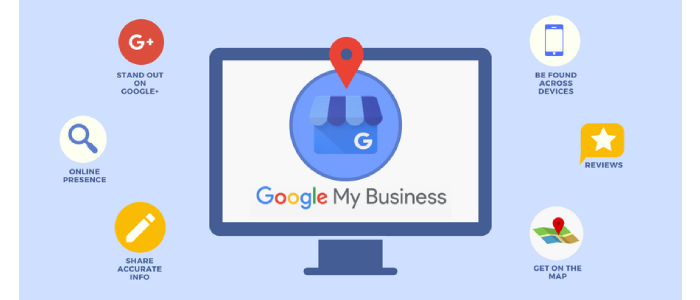
Google Business Profile (formerly Google My Business) is a free platform that lets small and locally operated businesses engage customers directly across Google Search and Google Maps. Don’t think of it as a simple listing, it does far more than that, connecting your business to customers through clicks, calls, follows, and bookings.
The short version: fill out every field, verify your business, add real photos, publish regular updates, and respond to every review. That single profile influences whether you show up in Google’s Local 3-Pack, the map results at the top of local search, more than almost anything else you can do. We cover the full field-by-field setup process in our Google Business Profile setup and optimization guide, and our local SEO checklist covers exactly what a fully optimized profile should include.
Voice search has moved well past a novelty. People of every age now search by speaking to their phones, smart speakers, and cars, and in 2026, AI-powered search experiences like Google’s AI Overviews increasingly answer local queries directly, often pulling from the same structured, conversational content that voice search rewards.
The way people phrase a spoken query is fundamentally different from how they type. When people search by voice, they tend to:
Use longer, more natural phrases instead of short keyword fragments
Ask full questions rather than typing fragments
Speak conversationally, as if talking to a person
Use question words like why, what, where, how, and who
State their intent clearly and directly
Build this into your content wherever it fits naturally: structure blog posts and FAQ sections around real questions your customers actually ask, and answer them directly in the first sentence or two, rather than burying the answer three paragraphs down.
3. Build Credibility Through Happy Customers
People are far more willing to leave a review when a business has engaged with them warmly throughout the experience. Improve how you interact with customers, answer their questions, and resolve their issues, and reviews tend to follow naturally.
You can also proactively post the questions customers ask most often, along with clear answers, essentially building your own FAQ section. It helps prospective customers learn about your business before they ever reach out.
Encourage happy, satisfied customers to leave reviews, provide ratings, and share photos on their own social profiles, and ask them to tag your business when they do. Why does this matter so much?
91% of customers aged 18 to 34 trust online reviews as much as personal recommendations
94% say a negative review has convinced them to avoid a business
That last stat is the one worth sitting with. If your negative reviews start to outweigh the positive ones, the cost is not abstract, it is customers choosing a competitor before they ever contact you.
To build a steady stream of positive reviews:
Ask for feedback in person, right after a successful purchase or service, while the experience is still fresh
Follow up by message or email if you have a customer’s contact details, asking directly for a review
Respond to every review, positive or negative, in a professional and genuinely helpful tone
Address complaints directly and work to resolve them rather than ignoring them
Once resolved, ask the customer if they’d be willing to update or acknowledge the fix, which softens the impact of the original negative review
4. Publish Content Rooted in Local Events and News
When you operate locally, your content should reflect that. You can speak as a genuine local expert, offering insight a general writer sitting somewhere else simply cannot. Give your content a real, local, personal touch.
Write posts about local festivals, charities, culture, sports events, concerts, and news that matters to your community
Cover local rules, regulations, or safety concerns relevant to your industry, written honestly and accurately
Mix business-focused content with content that is purely about your local area, not just your services
Sometimes people are more interested in your local area than in your business directly, and that is fine. Once they discover your business through content about their own community, they are far more likely to consider you when the need actually comes up. This kind of content-building is a long game, not an instant-results tactic, but the visibility it builds compounds over time.
5. Focus on Location-Specific Keywords
Use keyword research tools to find the local search terms people actually use, then narrow that list down to the ones genuinely relevant to your business.
Once you have that list, weave those terms naturally into your web pages, meta content, URL structure, blog posts, and social media, rather than stuffing them in artificially. Where it fits naturally, include recognizable local landmarks in your content too; it makes your business easier to place and helps guide customers who are unfamiliar with the exact address.
6. Create Location-Specific Web Pages
If you serve multiple parts of a city or region, build a dedicated page for each one, and make sure each page genuinely reflects that specific location rather than swapping out a city name on an otherwise identical template.
For example, a restaurant based in London serving only the North London area might use its About page to reference the specific North London neighborhoods it draws the most orders from.
Each location-specific page should include hours, name, address, phone number, a locally-relevant description, testimonials from customers in that area, parking information if relevant, current promotions, and an embedded Google Map.
7. Establish Your Presence in Online Business Directories
Appearing on high-authority directories relevant to your country and industry builds credibility and trust. Beyond Google Business Profile itself, this includes platforms like Yelp, Bing Places, Apple Maps, and regional directories relevant to your market (Indiamart, Sulekha, and Just Dial for India, for example).
Registering with these directories helps you:
Increase local visibility across more places customers actually look
Get discovered by people who never searched Google directly
Build customer trust through consistent, verifiable presence
Strengthen your overall local SEO signal
Make sure every listing includes accurate, consistent business information, name, address, phone number, a clear business description, and a link back to your website wherever the platform allows it. Consistency across every listing matters more than the number of listings itself.
8. Earn High-Quality, Locally Relevant Backlinks
What are the strongest signals Google uses to rank a website in search results? High-quality content and backlinks remain right at the top of that list.
Links pointing to your website play a major role in both the Local Pack and localized organic results. Quantity matters less than quality, a handful of relevant, locally authoritative links will outperform a large volume of generic ones. If you want expert support building this out, our affordable local SEO packages are built around exactly this kind of targeted link building.
How to earn quality local backlinks:
Publish genuinely useful, well-written content that authoritative local sites want to reference on their own
Contribute guest posts to relevant, well-regarded local or industry websites
Create an infographic or original piece of data that other sites will want to share and link back to
Partner with local social influencers or creators who can genuinely recommend your business and link back from their own content
Local SEO Is Key to Growing Your Local Business
Consumer behavior has shifted permanently, and businesses need to shift with it. When customers search for businesses online first, being genuinely discoverable there is no longer optional if you want to stay competitive.
Whether or not you sell online, your business needs to be visible where local customers are actually looking, and that means understanding how to rank locally and sticking with it consistently. Start with the tactics above, use our complete local SEO checklist for the technical details, and if it becomes more than you have time for, hire an affordable local SEO agency to handle it for you.
Vijaya Raj Laxmi Tyagi has been an avid content writer for over five years with a keen interest in writing SEO articles and blogs. She also finds great enthusiasm in writing about a vast variety of topics, including gardening, interior designing, health & wellness, and tourism. Her educational background in Computer Science and Engineering has given her an edge to write about technologies that tend to mark a great impression on daily lifestyle and behaviour, while her intrigue towards Mother Nature drives her to discuss green topics.