Recently updated: July 24th, 2026
The best SEO keyword rank tracker tools in 2026 go well beyond showing you a position number in Google. They now monitor AI Overviews, Featured Snippets, People Also Ask boxes, Local Map Packs, and whether your brand is being cited inside ChatGPT and Perplexity responses. Traditional blue-link rankings are still important, but they tell only part of the story of your organic search visibility.
According to data from Adam Connell’s 2024 SEO statistics roundup, 43.9% of marketers track keyword rankings as their primary measure of SEO success. With Google AI Overviews now appearing on close to half of all searches in the US as of mid-2026, and roughly 60% of searches ending without a click according to recent zero-click research, that measurement framework needs updating. This guide covers the 10 best rank tracking tools available right now, including which ones have adapted for the AI search era and which ones are still catching up.
Whether you manage hundreds of client campaigns, run a small business tracking 20 keywords, or lead an in-house SEO team trying to prove ROI to leadership, you will find a tool in this guide that fits your workflow and budget. We cover free options, mid-range tools, budget bundles, and enterprise platforms, with honest assessments of where each one excels and where it falls short.
What Is SEO Keyword Rank Tracking?
SEO keyword rank tracking is the process of monitoring where your web pages appear in search engine results pages (SERPs) for specific target keywords. It is a core component of any SEO strategy because it shows whether your optimisation efforts are producing measurable improvements in organic visibility. Without rank tracking, you are making SEO decisions based on instinct rather than data.
Search engines like Google use hundreds of ranking signals, including content quality, backlinks, page speed, Core Web Vitals, and user intent matching, to assign each page a position in search results. Keyword rank tracking tools query those SERPs from a specified location and device, record where your pages land for each keyword, and log that data over time so you can see trends rather than snapshots.
How Keyword Ranking Works
For every target keyword, your web pages hold a specific position in the search results at any given moment. A keyword rank tracker queries the search engine from a chosen location and device type, records the SERP position of your page, and stores that data point. Accumulated over weeks and months, this creates a ranking trend line you can use to measure the impact of specific SEO actions.
For example: if you run a website selling industrial equipment in Dubai and you search “industrial equipment supplier UAE,” finding your page in third position means your keyword ranking is #3 for that query in that location. A rank tracker captures this automatically every day, so you do not need to search manually or worry about personalised results skewing what you see.
Why Keyword Ranking Positions Matter for Organic Traffic
Web pages that rank in the top positions on Google receive a disproportionately large share of organic clicks. Research from Backlinko’s analysis of 4 million Google search results shows that position one receives approximately 27.6% of all clicks for a query, while position three receives around 9.5%, and position ten receives roughly 2.4%. Results beyond page one receive less than 1% of clicks on average.
Moving from position 11 to position 6 can double or triple your organic traffic for that keyword almost overnight. This is why the pages sitting at positions 11 to 20 in your rank tracker are often the highest-return optimisation opportunities on your site: they need a relatively small improvement to break into page one and deliver a significant traffic increase. The difference between page one and page two in Google is not incremental. It is the difference between being found and being invisible.
What Causes Keyword Ranking Fluctuations?
Keyword rankings are not static. They fluctuate daily due to several well-understood factors:
- Competitor content updates: A competitor publishes a stronger, more detailed piece targeting the same keyword and moves above you in the results.
- Backlink changes: Your site gains or loses authoritative backlinks, shifting your domain’s overall trust signals in Google’s index.
- Google algorithm updates: Core updates, spam updates, and helpful content updates re-evaluate page quality signals across millions of pages simultaneously.
- On-page changes: Editing your own title tags, content, internal links, or page structure can positively or negatively affect rankings within days of Google re-crawling.
- Seasonal search behaviour: User intent shifts over time, affecting which pages Google considers most relevant for a given query at different times of year.
- AI Overview appearance: When Google adds an AI Overview above the organic results for a query, the click-through rate for all organic positions typically drops, even if your ranking stays the same.
Regular keyword rank tracking lets you detect these fluctuations early and respond with targeted on-page SEO improvements before traffic drops significantly. Waiting for traffic to fall before investigating is the most expensive mistake in organic search: by the time the drop appears in Google Analytics, the ranking change has already happened.
Why SEO Keyword Ranking Data Is Essential in 2026
Keyword ranking data in 2026 serves four distinct strategic purposes that go beyond simply knowing your position. Understanding all four helps you use rank tracking tools more effectively rather than treating position numbers as a vanity metric.
1. Measure Whether Your SEO Efforts Are Working
When you make optimisation changes, such as updating a title tag, improving content depth, adding internal links, or earning new backlinks, rank tracking shows whether those actions moved the needle. If a change improves rankings within days of Google re-crawling the updated page, it is a signal worth scaling to similar pages. If nothing changes after two to three weeks, you have data to support trying a different approach rather than continuing to guess.
This data-driven feedback loop is what separates systematic SEO services from guesswork. Media Search Group has tracked keyword rankings for over 2,000 clients since 2009, and the consistent finding across industries is that teams who review ranking data weekly make better optimisation decisions than those who check monthly or not at all.
2. Protect Revenue from Ranking Drops
By combining keyword ranking data with conversion analytics from Google Analytics 4, you can identify which high-ranking pages drive the most revenue and prioritise those for ongoing attention. If a product page ranking at position 8 is generating 40% of your ecommerce revenue and suddenly drops to position 15, a daily rank tracking alert gives you 24 to 48 hours to investigate and respond before the traffic drop reaches a level that affects your monthly numbers.
For businesses where organic search drives a significant portion of leads or sales, this early warning function alone justifies the cost of a paid rank tracking tool. The alternative, discovering a ranking drop from a revenue shortfall at the end of the month, is both more expensive and harder to diagnose.
3. Monitor Competitor SERP Positions
Keyword tracking tools do not just show your own rankings. They show where your competitors rank for the same keywords. This competitive intelligence is actionable in a way that most competitor analysis is not. If a competitor moves from position 5 to position 2 for a keyword you share, your rank tracker flags it immediately so you can investigate what changed on their page and whether a similar improvement would help yours.
For businesses building SEO packages that include competitor monitoring, this function alone can identify content gaps worth targeting and keywords where competitors are vulnerable to a well-executed page improvement.
4. Track SERP Features and AI Visibility
Modern rank trackers in 2026 monitor far more than traditional blue links. They track whether your pages appear in Featured Snippets, the Local Map Pack, People Also Ask boxes, image carousels, video results, and increasingly, Google AI Overviews. These SERP features drive significant additional traffic without necessarily requiring a number-one ranking.
The more significant development in 2026 is AI search visibility. Tools like Semrush’s AI Visibility Index and Ahrefs Brand Radar now track whether your brand is being mentioned inside ChatGPT, Gemini, and Perplexity responses. According to research from SparkToro and Datos published in early 2026, approximately 40% of US adults use AI-powered search tools at least monthly. Separately, brands cited inside Google AI Overviews have been shown to see meaningfully higher organic click-through rates than brands that are not cited at all, even accounting for the overall click suppression AI Overviews cause. If your brand does not appear in those responses, you are invisible to a growing segment of your potential audience regardless of your Google rankings.
How to Track SEO Keywords: Step by Step Guide for 2026
Setting up keyword rank tracking properly from the start saves significant time later. These four steps apply whether you are using Google Search Console or a paid tool like Semrush or SE Ranking.
Step 1: Build Your Target Keyword List
Start with 20 to 50 keywords most relevant to your business goals. Include three distinct types: head terms (high volume, high competition, for example “SEO services”), mid-tail phrases (moderate volume, moderate competition, for example “SEO services for ecommerce”), and long-tail keywords (lower volume, easier to rank, higher conversion intent, for example “affordable SEO services for small ecommerce stores in Dubai”).
Use Google Search Console’s Performance report to identify keywords already driving impressions but few clicks. These are your fastest-win opportunities because Google already considers your pages relevant for those queries. Supplement with keyword research tools to find keywords you are not yet targeting. Prioritise keywords where the gap between your current position and page one is bridgeable with realistic content improvements.
Step 2: Set Up a Rank Tracking Project
In your chosen rank tracker, create a new project for your domain. Input your keyword list and configure three critical settings: your target location (country, region, or city level depending on your business), device type (always track desktop and mobile separately, since Google’s mobile-first indexing means rankings can differ meaningfully between the two), and at least three to five competitor domains you want to monitor alongside your own site.
Set your check frequency. Daily tracking is the standard for any active campaign because weekly averages can hide significant SERP volatility that occurs between check cycles. If a competitor jumps from position 8 to position 2 for a high-value keyword on Tuesday and you only check weekly, you will not know until Sunday.
Step 3: Connect Rank Tracking to Business Metrics
Ranking data in isolation is useful. Ranking data connected to traffic and revenue data is actionable. Integrate your rank tracking tool with Google Analytics 4 and Google Search Console so you can correlate ranking changes with traffic fluctuations and conversion outcomes. When a keyword drops five positions and organic revenue falls the following week, the connection becomes visible immediately rather than requiring manual investigation across disconnected data sources.
Set up automated alerts for significant ranking changes. Most tools allow you to configure email notifications when any keyword moves more than three positions in either direction. For high-value commercial keywords, tighten that threshold to one or two positions.
Step 4: Add AI Visibility Monitoring in 2026
This step did not exist two years ago. In 2026, keyword rankings in traditional SERPs do not capture the full picture of your organic search visibility. Check whether your content appears in Google AI Overviews for your target queries. Tools like SE Ranking and Semrush now track this automatically. Also manually test your key queries in Perplexity and ChatGPT to see whether your brand or content is being cited.
If competitors are being cited in AI responses and your brand is not, the gap is usually structural rather than quality-based. AI tools favour content that is well-cited, contains attributed data, and answers questions with direct, extractable sentences. Structuring your content with those characteristics is what the industry is now calling GEO, or Generative Engine Optimisation (also referred to as AEO, Answer Engine Optimisation, depending on the source). For high-visibility queries, this is worth tracking alongside traditional rank positions.
The 10 Best SEO Keyword Rank Tracker Tools in 2026
The following tools have been evaluated against four criteria that matter in 2026: ranking data accuracy, update frequency, AI visibility features, and value for money at different budget levels. Pricing is verified as of July 2026.
1. Google Search Console: Best Free SEO Keyword Rank Tracker
Best for: Small businesses, solo practitioners, and anyone tracking under 200 keywords on a limited budget.
Price: Free, no limitations.
Google Search Console is the most accurate keyword rank tracker available at any price, including zero. Because the data comes directly from Google, it has no sampling bias, no third-party estimation, and no accuracy gap. Every impression, click, and average position figure reflects what Google’s systems actually recorded.
To use Search Console for rank tracking: open the Performance section, enable Average Position, and scroll to the Top Queries report. You can filter by page URL to see rankings for specific content, by device to separate mobile and desktop performance, and by date range to compare performance across different time periods. Click any individual query to see its ranking history plotted as a trend line over the last 16 months.
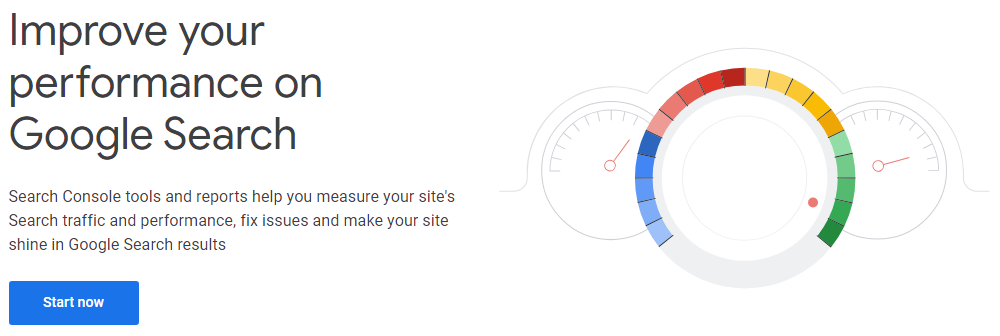
Search Console’s most underused feature for rank tracking is the comparison view. Select two date ranges and the interface shows which keywords improved, which declined, and by how many positions, exactly what you need to measure the impact of recent optimisation work. For pages sitting at positions 11 to 30, this view identifies the keywords closest to page one without any paid tool required.
Key limitations: No competitor tracking, no daily automated checks (data updates approximately every 2 to 3 days), no AI visibility monitoring, and no white-label reporting. If you need any of these capabilities, you need a paid tool alongside it.
Pricing: Free, no keyword limits, no data history limits within the 16-month window.
2. Semrush: Best for Agencies and Enterprise Teams
Best for: Digital marketing agencies, enterprise in-house teams, and anyone running simultaneous SEO and PPC campaigns.
Starting price: $139.95 per month (Pro plan, 500 keywords).
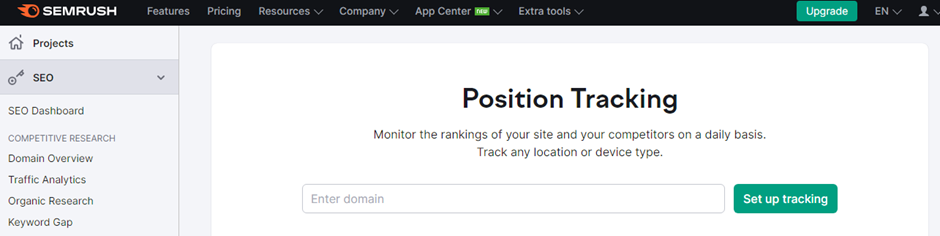
Semrush’s Position Tracking tool is one of the most widely used rank trackers in the world, used by over 10 million marketing professionals across more than 140 countries according to Semrush’s own transparency reporting. It delivers daily SERP position updates, monitors up to 20 competitor domains in a single project, and tracks 25 SERP feature types including Google AI Overviews, Featured Snippets, Local Pack, and People Also Ask results.
Source: Semrush
The 2026 version of Semrush folded its AI features into a unified AI Visibility Index that tracks brand mentions across ChatGPT, Google Gemini, and Perplexity. This is one of the most developed AI visibility features in any rank tracking tool currently available. The same dashboard that shows your Google rankings now shows how often your brand or content appears in AI-generated responses for your target keywords, a measurement that essentially no tool offered at all in 2024. Semrush also launched an MCP server in 2025, which lets AI agents and automated workflows query Semrush data directly rather than through the standard dashboard, a feature aimed at teams building their own SEO automation on top of the platform.
For SEO reseller agencies and white-label services, Semrush’s Business plan includes fully customisable, branded PDF reports with scheduled automated delivery. This removes the manual reporting burden that eats into agency margins at scale.
Where it falls short: Semrush is significantly more expensive than most alternatives. The Pro plan at $139.95 per month limits you to 500 tracked keywords, which is insufficient for agencies managing large client portfolios without upgrading to the Guru or Business tier.
Pricing: Pro $139.95/month (500 keywords, 5 projects), Guru $249.95/month (1,500 keywords, 15 projects), Business $449.95/month (5,000 keywords, 40 projects).
3. Ahrefs: Best for Backlink-Driven SEO Strategies
Best for: Advanced SEO professionals, content strategists, and teams where backlink analysis and rank tracking need to inform each other.
Starting price: $129 per month (Lite plan).
Ahrefs Rank Tracker monitors keyword positions across more than 190 countries, on desktop and mobile, with historical data available from 2015. Its database covers over 110 billion keywords, making it one of the most complete keyword datasets available. The platform’s genuine differentiator is the depth of connection between ranking data and backlink analysis.
Source: Ahrefs
When a keyword drops, Ahrefs lets you immediately investigate whether a competitor gained backlinks to their page, whether your page lost backlinks, or whether the content gap widened. Moving between rank tracking and backlink analysis within the same platform session, rather than exporting data and cross-referencing across multiple tools, saves meaningful time when managing large keyword portfolios.
Ahrefs Brand Radar monitors how your brand appears in ChatGPT, Gemini, Perplexity, and Copilot responses. When testing a client site, Ahrefs showed that the site had not lost Google rankings; instead, Google AI Overviews were answering the query before users reached the organic results, explaining a traffic drop that traditional rank data could not account for. This kind of AI-aware diagnostic is genuinely useful, and it is one of the more mature implementations among the mainstream rank trackers in this guide.
Where it falls short: Daily rank tracking requires an additional paid add-on on the Lite and Standard plans, adding $100 to $250 per month to the base cost depending on keyword volume. White-label reporting is not available.
Pricing: Lite $129/month, Standard $249/month, Advanced $449/month, Enterprise custom pricing. Daily tracking add-on is separate.
4. SE Ranking: Best Value for Agencies and SMBs
Best for: Freelancers, small to mid-size agencies, and growing businesses that need professional-grade rank tracking without enterprise pricing.
Starting price: $65 per month (Essential plan, billed monthly).
SE Ranking earns strong ratings from verified reviewers on third-party review platforms, and its 2026 platform updates are the most significant reason it deserves a higher ranking in this guide than it received in previous years. It now tracks 37 SERP features including Google AI Overviews, ChatGPT search visibility, Gemini mentions, and Perplexity citations alongside traditional rank positions, with AI Overview rank tracking now out of beta. At $65 per month for 500 keywords with daily updates, it offers AI visibility tracking that Semrush charges roughly double to provide.
Source: SE Ranking
SE Ranking’s Share of Voice metric, showing what percentage of total available search visibility your domain captures for a tracked keyword set, is one of the most useful agency reporting metrics available. Clients understand “your site captures 12% of total visibility for these 50 keywords and we are targeting 20% within 6 months” far better than a table of individual position numbers.
White-label reports with full custom branding are available on all plans, not just the top tier. This is unusual; most tools reserve white-labelling for enterprise pricing. For agencies building client reporting into their digital marketing packages, this eliminates a significant cost pressure. The interface itself is dense and takes longer to learn than Semrush or Moz, which is the main trade-off for the depth of data at this price point.
Pricing: Essential $65/month, Pro $119/month, Business $239/month. Annual billing reduces these by approximately 20%.
5. Moz Pro: Best for Beginners
Best for: SEO beginners, content marketers, and small teams that value educational support alongside rank tracking data.
Starting price: $99 per month (Starter plan).
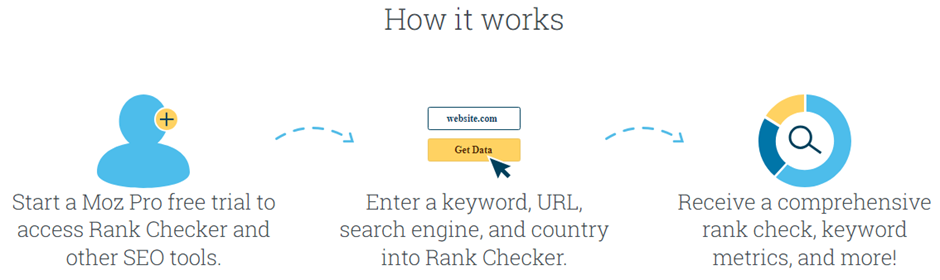
Moz Pro remains the most accessible entry point into professional rank tracking for practitioners who are earlier in their SEO learning curve. Its rank tracker monitors keyword positions on Google, Bing, and Yahoo across desktop and mobile, and its Domain Authority and Page Authority metrics remain among the most widely cited benchmarks in the industry for evaluating link equity.
Source: Moz
Moz’s built-in educational resources and plain-English explanations of ranking metrics are genuinely useful for teams where not everyone has an SEO background. When a keyword drops, the interface explains likely causes rather than just showing the data point. For marketing managers presenting SEO performance to non-technical stakeholders, Moz’s reporting templates produce cleaner, more understandable outputs than most competitor tools.
Source: Moz
Where it falls short: Moz updates rankings weekly rather than daily, which means you can miss significant ranking volatility between check cycles. It also has among the least developed AI visibility features of the tools in this guide: no AI Overview tracking and no LLM citation monitoring as of mid-2026.
Pricing: Starter $99/month (50 keywords), Standard $179/month (300 keywords), Medium $299/month (900 keywords), Large $599/month (1,900 keywords).
6. SEO PowerSuite: Best Desktop Rank Tracker with No Keyword Limits
Best for: Freelancers and agencies managing large keyword volumes who prefer one-time payment over monthly subscriptions.
Starting price: $299 per year (Professional plan).
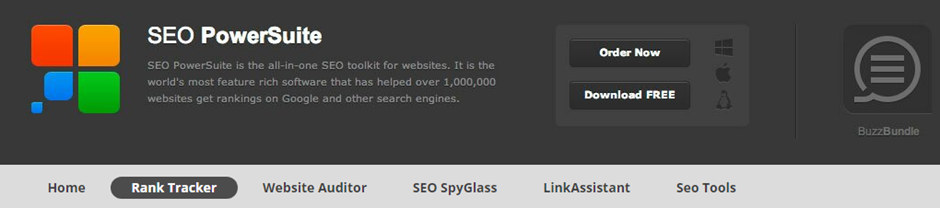
SEO PowerSuite Rank Tracker is the only tool in this guide that runs as desktop software rather than in the cloud. This has meaningful advantages for certain use cases: your data is stored locally, there are no keyword limits on higher-tier plans, and you pay annually rather than monthly. For an agency tracking 10,000+ keywords across multiple client accounts, the economics are substantially better than cloud-based tools at equivalent scale.
Source: SEO PowerSuite
The Rank Tracker monitors positions across 400+ search engines globally, including regional Google variants, Bing, Yahoo, YouTube, Yandex, and Baidu. This breadth of search engine coverage is unmatched by any cloud-based tool. For businesses with significant traffic from non-Google search engines or from international markets where Google’s dominance is lower, this matters.
The full SEO PowerSuite toolkit includes four applications: Rank Tracker for position monitoring, Website Auditor for technical SEO analysis, SEO SpyGlass for backlink research, and Link Assistant for outreach management. This covers the full technical SEO workflow in a single annual payment, which compares favourably to paying monthly for multiple cloud tools.
Where it falls short: Desktop software requires installation and a connected machine to run checks. There is no mobile access, collaborative cloud dashboard, or real-time team sharing. AI visibility monitoring is not currently available.
Pricing: Free (unlimited keywords, no project saving), Professional $299/year, Enterprise $499/year.
7. Serpstat: Best for SEO and PPC Combined Tracking
Best for: Digital marketers running simultaneous organic and paid campaigns who want unified keyword intelligence.
Starting price: $69 per month (Individual plan).
Serpstat combines SEO rank tracking with PPC keyword intelligence in a single platform. Its rank tracker offers advanced filtering by device, location, URL, ranking range, and custom tags, making it particularly useful for large websites with thousands of pages and complex keyword portfolios where granular segmentation is necessary to manage data at scale.
Source: Serpstat
The platform’s competitor domain analysis goes beyond showing competitor rankings. You can monitor an entire competitor domain across all of their pages and keywords simultaneously, identifying their top-performing content, their fastest-growing keyword clusters, and pages where they have recently gained or lost rankings. For competitive markets where understanding your competitors’ movements is as important as tracking your own, this level of visibility has real strategic value. A dedicated team analytics module also lets multiple SEOs collaborate inside one workspace, which suits in-house teams that would rather not pay per-seat agency pricing.
Pricing: Individual $69/month, Team $139/month, Agency $299/month.
8. AccuRanker: Best for Real-Time Rank Tracking
Best for: Agencies and large in-house teams that need on-demand SERP refreshes and real-time ranking updates.
Starting price: $109 per month (1,000 keywords).
AccuRanker is built specifically for rank tracking rather than as part of a broader SEO suite. This focus produces one tangible advantage: its on-demand refresh feature lets you request an immediate SERP check for any keyword rather than waiting for the next scheduled update, typically processing within hours rather than on the next daily cycle. When you publish a new piece of content or make a significant on-page change, seeing the ranking impact quickly is useful for fast-moving campaigns.
AccuRanker’s Share of Voice tracking, competitor monitoring, and Looker Studio integration make it a popular choice for agencies that build custom client reporting dashboards. The platform is straightforward to use; the intentional absence of non-tracking features means the interface focuses entirely on rank data rather than requiring navigation through tools you do not need for this specific task. AccuRanker has also introduced a separate add-on product for tracking AI prompt visibility, sold apart from the core rank tracking plan, for teams that want that data without switching platforms.
Where it falls short: AccuRanker does not include keyword research, backlink analysis, or site auditing tools as part of the core product. It is purely a rank tracker. For teams that want everything in one platform, this is a limitation. For teams that already use separate tools for research and auditing, it is an advantage.
Pricing: Starts at $109/month for 1,000 keywords. Scales by keyword volume with no project or user limits at most tiers.
9. Nightwatch: Best for Agencies Managing Multiple Clients
Best for: Small to mid-size agencies handling multiple client accounts who need clean segmentation and custom reporting.
Starting price: $39 per month (Starter, 250 keywords).
Nightwatch takes a different approach to rank tracking dashboards. Rather than presenting data in a fixed template, it lets you build fully custom views, filters, and segments for each client or campaign. You decide what metrics matter most for each account and build the reporting layout around that rather than working around the tool’s defaults. For agencies with clients in different industries, different geographies, and different SEO maturity levels, this flexibility is practical.
Nightwatch tracks Google, Bing, and YouTube rankings, and supports location targeting across a very large number of cities and postcodes, a genuine strength for multi-location businesses and franchise operations. Its white-label dashboard supports custom domain mapping, so your clients access their ranking data on a portal that looks like your agency’s own platform rather than Nightwatch’s. At $39 per month entry pricing, it is the most affordable option in this guide with multi-client segmentation built in from the first tier.
Pricing: Starter $39/month (250 keywords), Optimize $79/month (1,000 keywords), Agency $159/month (5,000 keywords), Enterprise custom pricing.
10. Mangools (SERPWatcher): Best Budget Bundle for Freelancers and Small Sites
Best for: Freelancers, bloggers, and small businesses that want a full lightweight SEO toolkit rather than a standalone rank tracker.
Starting price: Around $29 per month (Basic plan, all five tools included).
Mangools is not a single tool but a bundle of five: SERPWatcher for rank tracking, KWFinder for keyword research, SERPChecker for SERP analysis, LinkMiner for backlink checking, and SiteProfiler for domain metrics. For a solo operator who cannot justify a dedicated tool for each of these functions, getting all five for roughly the price of a single mid-tier rank tracker elsewhere is genuinely good value.
SERPWatcher itself is intentionally simple: add keywords, pick a location and device, and it tracks positions daily with a proprietary “performance index” that summarises overall visibility trend rather than forcing you to read individual position changes one keyword at a time. It will not compete with Semrush or Ahrefs on data depth or AI visibility tracking, and it is not built for agencies managing dozens of client accounts. For a freelancer or a small local business tracking a modest keyword list on a tight budget, it is one of the most approachable options in this guide.
Where it falls short: No meaningful AI visibility or AI Overview tracking. Feature depth in each individual tool is lighter than a dedicated specialist product. Not designed for large-scale agency use.
Pricing: Basic plan from around $29/month for all five tools, with higher tiers increasing keyword and lookup limits.
SEO Keyword Rank Tracker Comparison Table 2026
Use this comparison to evaluate which rank tracker best fits your budget, team size, and feature requirements. Prices are verified as of July 2026.
| Tool |
Free Plan |
Starting Price |
Update Frequency |
AI Visibility |
White-Label |
Best For |
| Google Search Console |
Yes, fully free |
Free |
Every 2-3 days |
No |
No |
Beginners and budget-conscious |
| Semrush |
Limited trial |
$139.95/month |
Daily |
Yes, AI Visibility Index |
Yes (Business plan) |
Agencies and enterprise |
| Ahrefs |
Free Webmaster Tools |
$129/month |
Weekly (daily add-on) |
Yes, Brand Radar |
No |
Backlink-heavy SEO strategies |
| SE Ranking |
14-day free trial |
$65/month |
Daily |
Yes, 37 SERP features |
Yes, all plans |
Agencies and SMBs |
| Moz Pro |
30-day free trial |
$99/month |
Weekly |
No |
Yes |
Beginners and content marketers |
| SEO PowerSuite |
Yes, unlimited keywords |
$299/year |
On demand |
No |
Yes |
Desktop users and large keyword volumes |
| Serpstat |
Limited free tier |
$69/month |
Daily |
Limited |
Yes (Agency plan) |
SEO and PPC combined campaigns |
| AccuRanker |
No |
$109/month |
Daily + on-demand |
Add-on product |
Yes |
Real-time rank tracking |
| Nightwatch |
No |
$39/month |
Daily |
Limited |
Yes, all plans |
Multi-client agencies |
| Mangools (SERPWatcher) |
Limited free trial |
$29/month |
Daily |
No |
No |
Freelancers and small budgets |
AI-Powered Rank Tracking in 2026: What Has Changed
The SERP landscape in 2026 looks meaningfully different from 2023. Google AI Overviews now appear on a substantial proportion of commercial and informational queries in the US and UK markets, and their presence directly affects click-through rates for all organic positions below them. According to data from Seer Interactive’s analysis of 650,000 search results, AI Overviews reduce click-through rates for position-one results by an average of 34% on queries where they appear.
This means that ranking number one for a keyword no longer guarantees the same traffic it delivered two years ago. Rank tracking tools that only show your traditional SERP position are giving you an incomplete picture of your organic visibility.
What AI Visibility Tracking Covers
The tools that have adapted most successfully to this shift now track five distinct visibility types alongside traditional rank positions:
- Google AI Overview inclusion: Is your content being cited as a source within Google’s AI-generated answer panel for your target queries?
- Featured snippet capture: Are your pages triggering position-zero rich results that appear above standard organic listings?
- People Also Ask visibility: Are your FAQs being pulled into Google’s expanding PAA boxes, which now appear on a large majority of informational queries?
- Local pack rankings: Is your Google Business Profile appearing in map pack results for local queries?
- AI chatbot citations: Is your brand being mentioned in responses from ChatGPT, Perplexity, or Gemini when users ask questions related to your industry?
Of the tools in this guide, Semrush has one of the most developed AI visibility toolkits, SE Ranking covers the broadest range of SERP features at the most accessible price, and Ahrefs Brand Radar is a strong option specifically for monitoring LLM citations. Google Search Console does not track any of these AI visibility signals.
Dedicated AEO Tools: A Separate Category Worth Knowing About
Alongside traditional rank trackers adding AI features, a new category of dedicated AI visibility tools has emerged, sometimes called AEO (Answer Engine Optimisation) or AI search monitoring platforms. Tools such as Peec AI, Otterly, and Airefs focus entirely on tracking how often a brand is cited across ChatGPT, Perplexity, Gemini, and Google AI Overviews, using prompt-based tracking rather than keyword-based tracking. Rather than asking “where do I rank for this keyword,” they ask “how often does my brand get mentioned when someone asks an AI tool a question in my category.”
Most businesses do not need a dedicated AEO tool on top of a full rank tracker. The AI visibility features built into Semrush, SE Ranking, and Ahrefs cover the fundamentals for most use cases. A dedicated AEO tool becomes worth considering once AI-driven brand visibility is a primary KPI in its own right, for example for brands in categories where a large share of research now happens inside AI chat interfaces rather than traditional search. Treat this category as a specialist addition to your stack rather than a replacement for the tools in the main list above.
How to Optimise for AI Overview Inclusion
Getting your content cited in Google AI Overviews requires a different approach from traditional on-page SEO. Google’s AI systems tend to favour content that directly answers the query in the first one to two sentences, uses structured headings that match the question being asked, cites named data sources with publication dates, and contains FAQ sections structured with schema markup.
This is the same content structure that AI tools like Perplexity and ChatGPT favour when selecting sources to cite in their responses. The overlap between Google AI Overview optimisation and broader AI citation strategy, sometimes called GEO or Generative Engine Optimisation, is significant enough that they are now best treated as a single discipline rather than separate tracks. Our team at Media Search Group has been incorporating AI Overview optimisation into client SEO campaigns since mid-2025, and the results suggest that content structured for AI citation also tends to perform better in traditional organic rankings, likely because both favour the same quality signals.
Free vs Paid Keyword Rank Tracker Tools: Which Should You Use?
When a Free Tool Is Sufficient
Google Search Console is adequate for most small websites and solo practitioners. If you manage a single domain with fewer than 200 target keywords, check rankings manually a few times per week, do not need competitor data, and are not running client campaigns requiring white-label reporting, Search Console gives you everything necessary directly from Google, at zero cost.
Ahrefs Webmaster Tools also offers a genuinely useful free tier for verified domains, including basic rank tracking alongside backlink data. For a freelancer or small business owner with one website, combining Google Search Console with Ahrefs Webmaster Tools covers most practical rank tracking needs without any monthly subscription.
When to Invest in a Paid Rank Tracker
A paid tool becomes necessary when you need daily automated rank checks across hundreds or thousands of keywords, competitor rank monitoring, local or international SERP tracking, white-label reporting for clients, AI visibility monitoring, or integration with analytics platforms for attribution reporting.
For active professional SEO packages, the time saved by automated tracking and reporting alone typically justifies the investment within the first two to three months. Manual rank checking across 100+ keywords is a 2 to 3 hour task per week. At agency billing rates, that time cost exceeds the monthly price of any tool in this guide. As a general rule, no single platform covers every part of the job well: most effective stacks pair a dedicated rank tracker with Google Search Console for first-party data, and add a separate keyword research or backlink tool if the rank tracker does not already include one.
Budget-Based Recommendations
The following recommendations assume you have a clear sense of your scale and primary use case:
- Under $50 per month: Mangools ($29) for a full lightweight toolkit, or Nightwatch Starter ($39) if rank tracking segmentation matters more than bundled research tools. Use Google Search Console alongside either for official data.
- $50 to $150 per month: SE Ranking is the strongest value at this range for most agencies and SMBs. Moz Pro works well if your team is newer to SEO and benefits from the educational scaffolding.
- $150 to $300 per month: Semrush Pro or Ahrefs Standard. The choice depends on whether your strategy is more link-building-focused (Ahrefs) or multi-channel marketing-focused (Semrush).
- Above $300 per month: Semrush Guru or Business for agencies needing historical data and unlimited white-label reporting. AccuRanker for teams that need real-time updates and already use separate tools for research and auditing.
Frequently Asked Questions About SEO Keyword Rank Tracker Tools
What is the best free keyword rank tracker?
Google Search Console is the best free keyword rank tracker available in 2026. It provides official ranking data directly from Google at no cost, covering keyword positions, impressions, click-through rates, and up to 16 months of ranking history. For users who need competitor data alongside their own rankings, Ahrefs Webmaster Tools offers a limited free tier that includes rank tracking for verified domains. Neither tool tracks AI Overview visibility, which requires a paid platform.
How often should I check keyword rankings?
For active SEO campaigns, daily or weekly rank checks are standard practice. Daily tracking is most valuable immediately after publishing new content, completing a link-building campaign, or following a Google core algorithm update. For stable pages that have been holding consistent positions for several months, weekly checks are sufficient. Checking more frequently than daily does not provide actionable information, as Google does not update SERP positions in real time for most queries.
Can I track keyword rankings for multiple locations?
Yes. Most paid keyword rank trackers support local and international rank tracking. Tools like SE Ranking, Semrush, Nightwatch, and Ahrefs allow tracking at country, state, city, or postcode level, on separate desktop and mobile devices. This is especially important for businesses with physical locations, multi-market ecommerce sites, and local service businesses where rankings can differ meaningfully between suburbs of the same city.
What is a good keyword ranking position?
Any ranking in the top 10 results on Google is considered a good keyword ranking. Positions 1 to 3 capture the highest click-through rates, approximately 27.6%, 15.8%, and 11.1% respectively according to Backlinko’s analysis of 4 million search results. Positions 4 to 10 are good but have meaningful room for improvement. Positions 11 to 20 (page two) are where the highest-value optimisation opportunities typically sit, as a relatively small improvement can push these into page one with significant traffic impact.
Do rank tracker tools monitor AI Overviews?
In 2026, the leading rank tracking tools have added AI Overview monitoring. Semrush tracks AI Overview appearances as part of its AI Visibility Index. SE Ranking includes AI Overview tracking across its 37 monitored SERP features, now out of beta. Ahrefs Brand Radar extends monitoring further to ChatGPT, Gemini, and Copilot. Google Search Console does not currently surface AI Overview data. Moz Pro, SEO PowerSuite, and Mangools do not yet include meaningful AI visibility tracking as of mid-2026.
How do keyword rankings affect organic traffic?
Keyword rankings directly determine how much organic traffic a page receives. Research from Backlinko’s analysis of 4 million Google search results shows position one receives approximately 27.6% of clicks for a query, while position ten receives around 2.4%. Moving a page from position 10 to position 3 can increase its organic traffic by five to ten times. This is why actively tracking and improving keyword positions is central to any SEO strategy focused on sustainable revenue growth from organic search.
What is the difference between rank tracking and keyword research?
Keyword research is the process of discovering which search terms your target audience uses and identifying which ones are worth targeting based on search volume, competition, and business relevance. Rank tracking monitors how your pages perform for those chosen keywords over time. Both are necessary: keyword research identifies what to target, and rank tracking measures whether your SEO work is producing results for those targets. Most paid SEO platforms combine both functions, though some tools, like AccuRanker, focus almost exclusively on tracking.
What is the difference between a rank tracker and a dedicated AEO tool?
A traditional rank tracker measures keyword-based positions in Google and sometimes Bing, and increasingly adds AI Overview and chatbot citation tracking as a feature within that same product. A dedicated AEO (Answer Engine Optimisation) tool, such as Peec AI or Otterly, is built entirely around prompt-based tracking: it monitors how often a brand is mentioned across AI tools like ChatGPT and Perplexity for a defined set of prompts, rather than keywords. Most businesses get sufficient AI visibility data from the features built into a full-featured rank tracker; a dedicated AEO tool is worth adding once AI-driven brand visibility becomes a primary KPI on its own.
Is SE Ranking good for agencies?
SE Ranking is widely regarded as one of the best rank tracking tools for agencies in 2026. Its Essential plan at $65 per month tracks 500 keywords with daily updates, white-label reporting, and client dashboards. It monitors 37 SERP features including AI Overview appearances, integrates with Google Analytics 4, Google Search Console, and Looker Studio, and includes Share of Voice reporting that translates well into client presentations. At roughly half the cost of Semrush with comparable core tracking features, it delivers strong value for agencies managing multiple client accounts.
Which SEO Keyword Rank Tracker Should You Choose?
The right keyword rank tracker in 2026 depends on three things: how many keywords you track, whether you need AI visibility monitoring alongside traditional rankings, and what your budget supports. Here is the short version of the decision:
Start with Google Search Console regardless of which paid tool you use. It is free, official, and the most accurate source of ranking data available. Use it as your baseline and your audit layer even when a paid tool handles daily monitoring.
If you are at an agency or managing multiple clients, SE Ranking gives you the best combination of price, daily updates, AI SERP feature tracking, and white-label reporting. If your work is heavily backlink-focused, Ahrefs gives you rank tracking tightly integrated with the most accurate link data in the industry. If you need a full marketing operations platform that covers SEO, PPC, and content in one system, Semrush is the most capable option despite its higher cost. If your budget is genuinely tight and you are a solo operator, Mangools packages five tools into one affordable subscription rather than forcing you to piece together a stack.
At Media Search Group, we have been monitoring keyword rankings for clients since 2009 across more than 98,000 keywords in multiple countries. The consistent lesson from that experience: the best rank tracker is the one you will actually open and act on every week. A tool that sits idle because it is too complex or too expensive to justify is worse than Google Search Console used diligently. Start simple, add complexity as your campaign scales, and always connect your ranking data back to the business outcomes that justify your SEO investment.
If you want support building an SEO strategy that moves rankings into page one and keeps them there, our team handles everything from keyword research and rank tracking setup to content optimisation and link building. Take a look at our SEO services or explore our SEO packages to understand what a managed campaign looks like at different budget levels.