Search engine optimization (SEO), search engine marketing (SEM), and social media marketing (SMM) are the three pillars most businesses lean on to grow online, yet a lot of marketers still use these terms interchangeably. That mix-up gets expensive fast, because each channel works on different platforms, targets a different kind of user, and needs a different budget to succeed.
In short: SEO is the organic side of search, SEM is the umbrella term covering both SEO and paid search ads, and SMM covers everything you do on social platforms like Facebook, Instagram, and LinkedIn. This guide breaks down exactly how they differ, where they overlap, and how to decide which one (or combination) fits your business in 2026.
We will also look at how paid advertising strategies are shifting in the age of AI Overviews and social search, and what that means for your marketing budget.
Before comparing these channels, it helps to define each one clearly. All three fall under the wider umbrella of digital marketing, but they solve different problems.
What Is SEO (Search Engine Optimization)?
SEO is the practice of improving a website so it ranks higher in unpaid, organic search results. It relies on on-page optimization, technical fixes, content, and link building rather than paid placements. SEO takes months to show results, but once a page ranks well, it can keep bringing free traffic for years.
What Is SEM (Search Engine Marketing)?
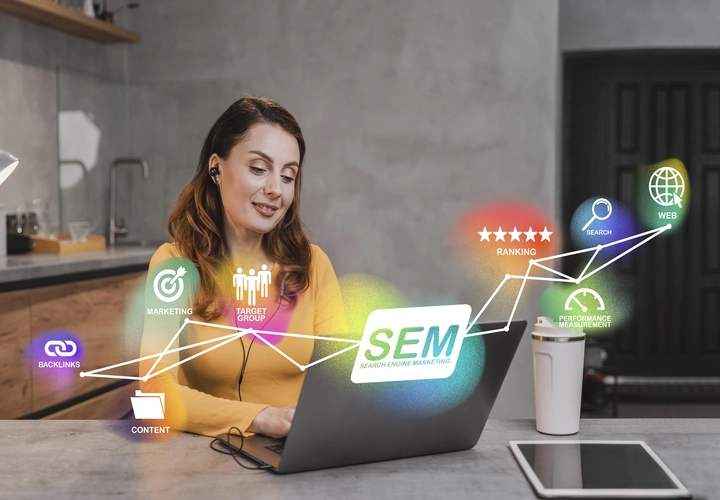
SEM is the broader strategy of increasing visibility on search engines like Google and Bing. It includes two parts: pay-per-click (PPC) advertising and SEO itself. So technically, SEO is not separate from SEM, it is one half of it. When people ask “what is SEM,” the simplest answer is: SEM is the sum of your paid search ads and your organic search rankings combined.
What Is SMM (Social Media Marketing)?
SMM is the use of platforms such as Facebook, Instagram, LinkedIn, X (Twitter), TikTok, and YouTube to build brand awareness, engage audiences, and drive sales. Unlike SEM, which reaches people who are actively searching, SMM reaches people while they scroll, browse, and socialize. It has both an organic side (posts, reels, stories) and a paid side (sponsored ads).
What Is SMO (Social Media Optimization)?
SMO is the organic optimization layer inside SMM. It covers profile optimization, posting schedules, hashtag strategy, and content formatting designed to increase reach without paid promotion. Think of it this way: SEO is to SEM what SMO is to SMM.
SEO vs SEM vs SMM: Core Differences at a Glance
The fastest way to understand SEO, SEM, and SMM is to see them side by side. The table below compares the three across the factors that matter most for planning a budget.
Factor
SEO
SEM (Paid/PPC)
SMM
Cost model
No direct cost per click; time and effort investment
Cost-per-click (CPC) or cost-per-impression (CPM)
CPC, CPM, or cost-per-engagement (CPE)
Traffic source
Organic search results
Paid ads on the SERP, labeled “Ad”
Social feeds, stories, and reels
User intent
Active search, informational to transactional
Active search, high commercial intent
Passive browsing, discovery-based
Time to results
3 to 12 months
Hours to days
Weeks (paid) to months (organic)
Best funnel stage
Middle to bottom
Bottom (ready to buy)
Top and middle (awareness)
Longevity
Compounds over time
Stops the moment budget stops
Builds an owned audience over time
Notice that SEO sits inside SEM as its organic half, while SMM operates almost entirely on a different set of platforms. That is why “SEO vs SEM” is really a question about paid versus organic search, while “SEM vs SMM” is a question about search versus social.
How Does SEM Work? The Ad Auction Explained
Every time someone runs a search with commercial intent, a real-time auction happens behind the scenes. Advertisers bid on keywords, and Google Ads guidelines confirm that five factors decide who wins each auction and where their ad lands:
Bid amount: The maximum you are willing to pay per click. A higher bid improves your odds but does not guarantee the top spot.
Ad quality (Ad Rank): A score based on ad relevance, expected click-through rate, and landing page experience. A well-optimized ad can outrank a bigger budget.
Expected click-through rate (CTR): Google’s estimate of how likely users are to click your ad, based on past performance.
Ad format and extensions: Sitelinks, callouts, and structured snippets increase your ad’s visibility and quality signals.
Search context: Device, location, time of day, and search history all influence which ad gets shown.
Google still holds an 82% share of desktop searches worldwide, which makes it the main battlefield for SEM. Costs vary heavily by industry. In the United States, the insurance niche averages a CPC of $17.55, while lower-competition niches can see CPCs under $1.
SEM vs SMM: 10 Key Differences Compared
SEM and SMM both aim to grow your revenue, but they run on different platforms, different user mindsets, and different playbooks. Here is a breakdown of the ten distinctions that matter most.
1. Platform
SEM lives on search engines: Google, Bing, and Yahoo, managed through Google Ads and Microsoft Advertising. SMM lives on social networks: Facebook, Instagram, X, LinkedIn, TikTok, Pinterest, and YouTube, each with its own ads manager.
2. User Intent vs Audience Targeting
SEM captures active buyer intent. Someone searching “buy running shoes online” has already declared what they want, so SEM intercepts that exact moment. SMM instead targets people based on demographics, interests, and behaviors, reaching users who are not actively searching for anything yet.
3. Traffic Source
SEM traffic comes from search engine results pages, where users click on ads or organic listings tied to their query. SMM traffic comes from content and ads inside social feeds, where users click while scrolling.
4. Ad Formats
SEM relies on text ads, shopping listings, and responsive display ads across the Google Display Network. SMM supports richer formats: image ads, video ads, carousels, stories, reels, and interactive lead forms, giving brands far more room for creative storytelling.
5. Cost Structure
SEM mostly runs on cost-per-click, with some display campaigns using cost-per-thousand-impressions. Costs are driven by keyword competition. SMM offers more flexible pricing, including cost-per-engagement, and generally lands on a lower CPC than competitive search terms, though this varies by industry.
6. Conversion Tracking
SEM offers precise, direct tracking through Google Analytics and Google Ads. You can attribute a sale to a specific keyword or ad group with high accuracy. SMM tracking is harder, since social conversions often involve multiple touchpoints like view-through conversions and brand recall that are tough to measure directly.
7. Time to Results
Paid SEM can put your ad at the top of Google within hours. SEO, the organic half of SEM, takes months to build. Paid social can also deliver fast visibility, but organic SMM takes time to build a following, and viral spikes are unpredictable.
8. Content Style
SEM content is keyword-led and transactional. Ad copy and landing pages need to mirror exactly what the user searched for, with a strong call-to-action. SMM content is creative and community-driven, built around storytelling, user-generated content, and social proof.
9. Measurement Metrics
SEM tracks click-through rate, Quality Score, cost per click, conversion rate, cost per acquisition, and return on ad spend. SMM tracks reach, impressions, engagement rate, follower growth, video views, and CTR on paid posts.
10. Long-Term vs Short-Term Role
Paid SEM stops delivering the moment you stop paying, though SEO compounds and can drive free traffic for years. SMM builds an owned audience over time, a following that reduces how much you need to spend on ads later. It also feeds SEO indirectly, since viral content attracts backlinks and builds brand authority.
Quick-Reference Table: SEM vs SMM
Dimension
SEM (Search Engine Marketing)
SMM (Social Media Marketing)
Primary Platform
Google, Bing, Yahoo
Facebook, Instagram, LinkedIn, TikTok, YouTube
User Mode
Active search (pull)
Passive browsing / discovery (push)
Targeting
Keyword and intent-based
Demographic, interest, and behavior-based
Ad Formats
Text ads, shopping ads, display
Image, video, carousel, stories, reels
Cost Model
CPC, CPM
CPC, CPM, CPE
Primary Goal
Conversions, leads, direct sales
Brand awareness, engagement, community
Time to Results
Immediate (PPC) / Months (SEO)
Rapid (paid) / Long-term (organic)
Conversion Tracking
Highly precise
Complex, multi-touch
Key Metrics
CTR, CPC, ROAS, Quality Score
Reach, engagement rate, CPE, ROI
Best Funnel Stage
Bottom (high intent)
Top and middle (awareness, nurturing)
SEO vs SEM vs SMM vs SMO: How the Four Fit Together
A lot of confusion comes from treating SEO, SEM, SMM, and SMO as four separate, competing tactics. They are not. They form two parallel pairs, split by platform (search vs social) and by cost model (paid vs organic).
Term
Full Form
Platform
Paid or Organic
SEO
Search Engine Optimization
Search engines
Organic
PPC
Pay-Per-Click
Search engines
Paid
SMO
Social Media Optimization
Social platforms
Organic
Paid Social
Social Media Advertising
Social platforms
Paid
SEO and PPC together make up SEM. SMO and paid social together make up SMM. Once you see the pattern, the question is not really “SEO or SEM or SMM,” it is “which combination of paid and organic, search and social, fits my budget and my goals right now.”
SEM and SMM Best Practices
SEM Best Practices
Intent-focused keyword research: Target what your ideal customer actually types when they are ready to buy. Prioritize long-tail keywords for lower competition and higher conversion rates.
Compelling ad copy: Lead with the benefit, use the keyword naturally, and close with a direct call-to-action.
Use every ad extension available: Sitelinks, callouts, structured snippets, call extensions, and price extensions all increase your ad’s footprint and CTR.
Optimize landing pages for relevance: Your landing page needs to match the promise in your ad. A mismatch hurts Quality Score and conversion rate optimization at the same time.
A/B test constantly: Test headlines, descriptions, CTA wording, and landing page layouts. Small CTR gains compound significantly over a campaign’s life.
Mobile optimization: Mobile accounts for over 63% of web traffic, so mobile-first indexing and fast mobile pages are not optional.
Track conversions from day one: Install Google Ads conversion tracking before you launch. Without this data, budget decisions are guesswork.
SMM and SMO Best Practices
Build platform-specific strategies: A LinkedIn strategy (professional, long-form, B2B) looks nothing like a TikTok strategy (short video, trending audio, casual tone). Avoid one-size-fits-all content.
Build detailed audience personas: Use the targeting tools in Meta Ads Manager, LinkedIn Campaign Manager, and TikTok Ads to segment by age, location, job title, and interests.
Invest in video: 89% of businesses now use video as a marketing tool. Short-form video earns disproportionately high organic reach and is favored by most platform algorithms.
Use social proof: User-generated content, testimonials, and influencer partnerships build trust faster than branded posts.
Engage consistently: Replying to comments and DMs signals to both the algorithm and your audience that your brand is active.
Run remarketing: Use pixel-based retargeting to reach people who already visited your site. Warm audiences convert at far higher rates than cold ones.
How Much Do SEO, SEM, and SMM Cost, and How Do You Track Them?
Budgets for these three channels vary widely by industry and goals, but the cost logic differs in one key way: SEO and SMO cost time and expertise rather than a per-click fee, while PPC and paid social charge you directly for every click, impression, or engagement.
Most agencies, including ours, offer tiered plans so you can match spend to goals. If you are comparing options, it helps to look at SEO packages, PPC packages for the paid side of SEM, and social media marketing packages for SMM separately, since bundling them without a clear breakdown makes it hard to see what is actually driving results.
Tracking works differently too. SEM tracking usually runs through Google Ads and Google Analytics 4 (GA4), where you can trace a conversion back to the exact keyword and ad group that produced it. SMM tracking relies on platform-native tools like Meta Ads Manager, plus UTM parameters and pixel data, since social conversions often involve multiple touchpoints before a sale happens.
Should You Use SEO, SEM, or SMM? How to Choose
For most businesses, the honest answer is a mix of all three, weighted differently based on goals, budget, and funnel stage. Here is a practical way to decide.
When to Prioritize SEO
You want traffic that does not stop the moment you cut ad spend.
Your niche has steady, ongoing search demand rather than one-off spikes.
You are building a long-term asset and can wait 3 to 12 months for results.
When to Prioritize SEM (Paid Search)
You need immediate, measurable leads or sales, since PPC delivers traffic from day one.
You operate in a high-intent, transactional category, like emergency plumbing, legal services, or B2B software.
You want precise ROI attribution with direct revenue tracking.
You compete in a crowded local market and need to appear at the top of results right away.
When to Prioritize SMM
You are building a new brand and need awareness before people search for you by name.
You sell visually-driven or lifestyle products, such as fashion, food, beauty, or travel.
Your audience is younger and spends more time on TikTok and Instagram than on Google.
You want to build an owned audience that lowers your ad spend over time.
Why Most Businesses Need All Three
SEO, SEM, and SMM each cover a different stage of the customer journey. SMM builds awareness and nurtures prospects. Paid SEM captures those prospects at the exact moment of high-intent search. SEO earns long-term organic traffic that reduces how much you rely on paid ads over time. Used together, they form a full-funnel strategy where SMM retargeting can re-engage users who clicked a Google ad but did not convert the first time.
A well-rounded digital marketing strategy almost always blends all three, adjusting the budget split as the business grows.
SEO, SEM, and SMM in 2026: What Has Changed
The lines between these channels keep blurring. A few shifts worth planning around:
AI Overviews (Google SGE): AI-generated summaries now appear above traditional organic results for many queries, cutting into organic click-through rates and increasing the importance of both PPC (which still appears below AI Overviews) and featured snippet optimization.
Social platforms as search engines: TikTok, Instagram, YouTube, and Pinterest are now used as search tools, especially by Gen Z. 62% use TikTok to search for local businesses and 67% use Instagram the same way. Keyword-rich captions, on-screen text, and hashtags now function as a form of SMO.
Social and search convergence: Google increasingly surfaces TikTok videos, Pinterest pins, and Instagram posts directly in search results, so SMM activity can now influence SEM visibility.
SMBs pivoting to social: A 2025 survey found 64% of small businesses now list social media as their main traffic driver, ahead of organic search at 52%. For SMBs with tight budgets, paid social often delivers a lower cost per lead than competitive PPC markets.
AI-driven automation: Google’s Performance Max and Meta’s Advantage+ campaigns now use AI to automate creative testing, targeting, and bid optimization, making campaigns easier to launch but harder to control down to every variable.
The takeaway for 2026 is simple: treat SEO, SEM, and SMM as connected parts of one system, not separate silos. A viral TikTok video generates backlinks that help SEO. A ranking blog post fuels the audiences you retarget on social. That connected approach is sometimes called Social SEO, and it is where forward-thinking brands are putting their budget.
SEO is organic search optimization. SEM is the umbrella term covering both SEO and paid search ads. SMM is marketing on social platforms, covering both organic posts and paid social ads. SEO sits inside SEM as its unpaid half, while SMM operates on an entirely different set of platforms.
Is SEM the same as SEO?
No. SEO is one component of SEM. SEM is the broader term that includes both SEO (organic search improvement) and PPC (paid search advertising). When people use “SEM” narrowly, they sometimes mean just the paid side, but technically SEM covers both.
What does SEM include?
SEM includes two core components: pay-per-click advertising, where you bid on keywords and pay per click, and SEO, where you earn rankings through content, technical optimization, and link building without paying per click.
What is the difference between SEO, SEM, SMM, and SMO?
These four terms form two pairs. SEO (organic) and PPC (paid) together make up SEM, the search marketing umbrella. SMO (organic) and paid social together make up SMM, the social marketing umbrella. A complete digital marketing strategy typically uses all four in coordination.
Which is more cost-effective: SEM or SMM?
It depends on your industry and goals. For high-intent, transactional searches, PPC (SEM) typically delivers stronger direct ROI despite higher CPCs. For brand building and reaching specific audiences, paid social (SMM) often offers lower CPCs and wider reach. Many businesses get the best overall efficiency by combining both.
Does social media marketing affect SEO rankings?
Not directly. Social signals are not confirmed Google ranking factors. But SMM helps SEO indirectly: strong social content attracts backlinks from bloggers and journalists, viral posts increase branded search volume, and engaged social profiles build the brand authority that Google’s algorithms reward. Google also increasingly surfaces social content directly in search results, blending the two channels further.
Should a small business use SEO, SEM, or SMM first?
If you need immediate leads from people actively searching for your service, like a local plumber or dentist, start with SEM through PPC. If you are building a brand, selling visually appealing products, or targeting younger demographics, invest in SMM first. Add SEO as soon as budget allows, since it is the channel that keeps paying off after the ad spend stops.
What are the key metrics to track for SEO, SEM, and SMM?
For SEO: organic traffic, keyword rankings, and backlinks. For SEM (paid): click-through rate, Quality Score, cost per click, conversion rate, cost per acquisition, and return on ad spend. For SMM: reach, impressions, engagement rate, follower growth, and cost per engagement. For all three, always tie activity back to leads, revenue, and customer lifetime value.
Conclusion
SEO, SEM, and SMM are not competing strategies. They are complementary channels that serve different stages of the customer journey and run on different platforms. SEO and paid SEM intercept buyers at the moment they are actively searching, while SMM builds the awareness and trust that makes people want to search for you in the first place.
Understanding how SEO, SEM, and SMM differ, and how SMO fits into the picture, is the foundation of a budget-efficient marketing strategy. The businesses that win in 2026 will be the ones using all three in coordination: SMM building awareness, SEM converting high-intent buyers, and SEO compounding organic traffic in the background.
Whether you are deciding where to put your first marketing dollar or fine-tuning an existing strategy, this guide gives you the vocabulary and framework to make that call with confidence, or to brief your agency or in-house team clearly.
Mridula is a seasoned content writer whose passion for words is matched only by her talent for creating compelling narratives. With a proven track record of delivering impactful content across diverse platforms, she has firmly established herself as an expert in her field. She excels in crafting web content that not only informs but also inspires. Her digital content strategies are tailored to optimize online presence, engagement, and conversion rates. She has a portfolio that includes articles, blog posts, e-books, and more, all characterized by her distinctive style and commitment to excellence.