Recently updated: September 25th, 2026
PPC in digital marketing, or Pay-Per-Click advertising, is one of the fastest ways to put your brand in front of high-intent buyers the moment they search for what you offer. In 2026, with AI-driven bidding, first-party data strategies, and Performance Max campaigns reshaping how ads are served, understanding PPC is no longer optional for growth-focused businesses.
Whether you are a business owner exploring paid ads for the first time or a marketer looking to sharpen your strategy, this complete guide covers everything: how PPC works, its core elements, the proven benefits, and the 2026 trends you cannot afford to ignore.
Quick facts: 74% of brands say PPC is a huge driver for their business. The global PPC software market is projected to reach $22.49 billion in 2025, and it is growing fast. Over 52% of PPC clicks now come from mobile devices.
What Is PPC in Digital Marketing?
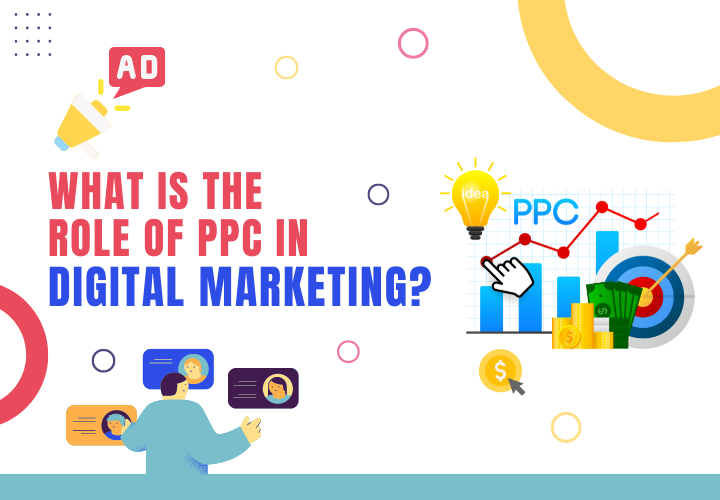
PPC stands for Pay-Per-Click, a performance-based digital marketing strategy where advertisers pay a fee each time a user clicks on their ad. Unlike organic traffic, which is earned through SEO over months, PPC delivers immediate, measurable visibility on search engines like Google and Bing, as well as social media platforms like Meta, LinkedIn, and YouTube.
At its core, PPC advertising in digital marketing works as an auction. Advertisers bid on keywords that match what their target audience searches for. When a user types a query, the platform’s algorithm determines which ads to show and in what order, based not just on bid amount, but also on the ad’s relevance and quality.
The result: your ad appears at the top of the search engine results page (SERP) in front of the right people, at the right moment, and you only pay when someone actually clicks.
PPC full form in digital marketing: Pay-Per-Click. It is also commonly referred to as paid search, cost-per-click (CPC) advertising, or search engine marketing (SEM).
How Does PPC Work?
Understanding how PPC works helps you make smarter decisions about your campaigns. Here is the step-by-step process:
1. Keyword Research and Selection
Everything starts with keywords, the phrases your potential customers type into search engines. You choose keywords that match your products or services, group them by intent (informational, navigational, transactional), and assign bids to each.
2. Ad Creation
You write text ads (or design display/video ads) with a compelling headline, description, and call-to-action (CTA). In 2026, platforms like Google Ads support Responsive Search Ads (RSAs) and AI-generated ad copy, dynamically assembling the best combinations for each query.
3. The Ad Auction
Every time a user searches, Google runs a real-time auction to determine which ads appear and where. Your Ad Rank decides your position:
Ad Rank = Bid Amount × Quality Score × Expected Impact of Ad Extensions
The highest Ad Rank wins the top position, but importantly, a well-optimised ad with a high Quality Score can outrank a competitor bidding more money.
4. User Clicks and You Pay
When a user clicks your ad, they land on your chosen destination page (your landing page), and you are charged. The actual cost per click is typically lower than your maximum bid, you pay just enough to beat the advertiser ranked below you.
5. Conversion and Tracking
After the click, conversion tracking records whether the user completed a desired action: a purchase, form fill, phone call, or download. This data feeds back into your campaign, helping the algorithm optimise future bids and targeting.
Want expert help running profitable PPC campaigns? Explore our PPC management services designed to maximise your ad spend.
Types of PPC Advertising
PPC is not just Google text ads. The ecosystem in 2026 spans multiple formats and platforms:
Search Ads
Text-based ads that appear at the top and bottom of Google or Bing search results when users search for specific keywords. These are the most common form of PPC and ideal for capturing high-intent, bottom-of-funnel traffic.
Display Ads
Image or banner ads shown across millions of websites in the Google Display Network. Great for brand awareness, remarketing, and reaching users who are not actively searching but fit your target profile.
Shopping Ads (Product Listing Ads)
Ads that showcase a product image, title, price, and store name directly in search results. Ideal for brands improving their ecommerce branding, Shopping Ads connect searchers with products ready to buy.
Video Ads
Skippable and non-skippable ads on YouTube and the Google Video Network. In 2026, short-form video ads on YouTube Shorts, Meta Reels, and TikTok have become essential for upper-funnel PPC campaigns.
Social Media PPC Ads
Paid ads on platforms like Meta (Facebook and Instagram), LinkedIn, Twitter/X, and TikTok. These are powerful for demographic and interest-based targeting beyond keyword intent.
Performance Max (PMax) Campaigns
Google’s AI-driven campaign type that serves ads across all Google inventory, Search, Display, YouTube, Discover, Gmail, and Maps, from a single campaign. Performance Max uses machine learning to automatically optimise ad placements, bidding, and creative combinations in real time, making it one of the most powerful, and rapidly evolving, formats in 2026.
Remarketing / Retargeting Ads
Ads shown to users who have previously visited your website or interacted with your brand. Remarketing keeps your brand top-of-mind and drives high-conversion return visits.
Core Elements of a PPC Campaign
A successful PPC campaign in digital marketing is built on several interconnected components. Understanding each one is key to maximising results:
Keyword Selection
PPC begins with selecting keywords relevant to your business and target audience. These are the terms users type when seeking your products or services. Use a mix of broad match, phrase match, and exact match keywords, and build a robust negative keyword list to prevent wasted spend on irrelevant clicks.
Ad Copy and Creative
Craft compelling ads that connect with your audience. Write concise, persuasive copy that highlights your unique selling proposition (USP), incorporates your target keyword, and includes a clear Call-to-Action (CTA) such as “Get a Free Quote” or “Shop Now.” In 2026, visual assets, images and videos, are increasingly important even in Search campaigns.
Ad Auctions
Participate in ad auctions on platforms like Google Ads or Microsoft Ads. Your bid, combined with your Quality Score, determines where your ad appears in the results.
Quality Score
Search engines assign a Quality Score (1-10) to each keyword based on three factors: expected click-through rate (CTR), ad relevance, and landing page experience. A higher Quality Score lowers your cost per click and improves ad positioning, making it one of the most valuable metrics to optimise.
Ad Extensions (Assets)
Enhance your ads with extensions, now called “assets” in Google Ads, such as sitelinks, callouts, location information, call extensions, price extensions, and structured snippets. Ad assets increase your ad’s real estate on the SERP and improve CTR without additional cost per click.
Landing Page Experience
The page a user lands on after clicking your ad directly impacts both your Quality Score and your conversion rate. Your landing page must be fast (especially on mobile), relevant to the ad’s promise, and designed with a single clear conversion goal. In 2026, landing page optimisation is considered a primary performance lever by Google’s algorithm. Our guide on increasing mobile conversion rate covers many of the same principles that drive PPC landing page performance.
Bid Management
Set bids strategically to compete in auctions and achieve desired placements. Modern PPC relies heavily on Smart Bidding strategies, automated bid strategies that use machine learning to optimise for conversions, conversion value, target CPA (Cost Per Acquisition), or target ROAS (Return on Ad Spend).
Targeting Options
Narrow down your audience using geography, demographics, device type, time of day, and user behaviour. Layer audience signals, such as in-market audiences, customer match lists, and remarketing audiences, on top of keyword targeting for more precise reach.
Conversion Tracking
Implement conversion tracking to measure campaign success. Track actions such as purchases, form submissions, phone calls, and chat interactions. Without accurate conversion data, Smart Bidding algorithms cannot optimise effectively.
A/B Testing
Continuously experiment with different ad variations, testing headlines, descriptions, landing pages, and CTAs. Use Google Ads’ built-in experiments or Microsoft’s ad testing features to identify top performers and scale what works.
Budget Management
Set and manage daily or monthly budgets to control your ad spend. Allocate resources based on campaign priorities, and use portfolio bid strategies to distribute budget efficiently across multiple campaigns.
6 Key Benefits of PPC Advertising in Digital Marketing
1. Immediate Visibility and Results
One of the most significant advantages of PPC in digital marketing is speed. Unlike SEO, which can take months to build organic rankings, a well-structured PPC campaign can place your ads at the top of search results within hours of launch.
This makes PPC invaluable for:
- New product or service launches
- Time-sensitive promotions and seasonal campaigns
- Testing new markets or audiences quickly
- Recovering traffic lost to algorithm changes
As soon as your campaign goes live, ads appear on SERPs to users actively searching for what you offer, driving immediate, qualified traffic to your site.
2. Precision Targeting
PPC platforms offer some of the most granular targeting options in all of digital marketing. You can reach the right person, on the right device, in the right location, at the right time:
- Keyword targeting: Reach users based on the exact search terms they use.
- Demographic targeting: Filter by age, gender, household income, and parental status.
- Geographic targeting: Show ads to users in specific cities, regions, or a radius around your location, essential for local businesses.
- Behavioural targeting: Target users based on their browsing history, past site visits, or in-market intent signals.
- Customer Match: Upload your own customer email lists to target existing customers or create look-alike audiences. Google reduced the minimum list size for Customer Match in Search campaigns from 1,000 to just 100 users in 2025, making this accessible to smaller businesses.
This precision means your ad budget is focused on the people most likely to convert, minimising waste and maximising efficiency.
3. Complete Cost Control
PPC operates on a pay-as-you-go model, you only pay when someone clicks. This, combined with flexible budget controls, gives businesses of all sizes precise financial oversight of their campaigns:
- Set daily or monthly budget caps so spending never exceeds your limit.
- Use Target CPA bidding to control how much you pay per conversion.
- Pause, adjust, or scale campaigns instantly based on performance.
- Allocate budget dynamically across campaigns, ad groups, and keywords based on ROI data.
Unlike traditional advertising, where you pay for exposure regardless of results, PPC ensures every rupee or dollar spent has a direct, traceable outcome.
4. Fully Measurable ROI
PPC is one of the most measurable forms of advertising available. Through platforms like Google Ads and analytics tools, you can track and measure every stage of the user journey:
- Impressions and click-through rate (CTR)
- Cost per click (CPC) and cost per acquisition (CPA)
- Conversion rate and total conversions
- Revenue and Return on Ad Spend (ROAS)
This data-driven accountability allows you to calculate your exact return on investment (ROI), make informed budget decisions, and continuously optimise for better performance. In 2026, integrating PPC data with GA4 (Google Analytics 4) and CRM platforms provides even deeper attribution insights.
5. Flexibility and Customisation
PPC campaigns offer unmatched flexibility. You can:
- Adjust bids, budgets, and targeting in real time.
- Run seasonal campaigns and switch them off instantly when promotions end.
- Test multiple ad creatives simultaneously to find what resonates.
- Customise ad messaging for different audience segments, locations, or devices.
- Use ad scheduling to show ads only during your most profitable hours.
This agility makes PPC one of the most adaptable tools in a marketer’s arsenal, able to respond quickly to competitor actions, market shifts, or new business opportunities.
6. Complements and Amplifies SEO
PPC and SEO strategies work best together. While SEO builds long-term organic authority, PPC provides immediate visibility, and the two channels complement each other to dominate the SERP:
- Keyword intelligence: PPC data reveals which keywords drive conversions, informing your organic content strategy.
- SERP domination: Appearing in both paid and organic results increases brand trust and overall click share.
- Rapid testing: Use PPC to test new keywords before committing to a long-term SEO content plan.
- Traffic bridge: PPC fills the traffic gap while new SEO content climbs the rankings.
- Seasonal and promotional support: Run time-sensitive PPC campaigns that would be impractical to optimise organically.
Businesses that integrate their PPC and SEO efforts typically see significantly higher total search visibility and lower blended cost per acquisition. Explore our SEO services to see how we build this synergy for clients.
PPC vs. SEO: Which Should You Choose?
One of the most common questions businesses ask is whether to invest in PPC or SEO, or both. Here is a direct comparison:
| Factor |
PPC |
SEO |
| Speed of Results |
Immediate (within hours) |
Slow (months to years) |
| Cost Model |
Pay per click |
Investment in content & links |
| Traffic Sustainability |
Stops when budget ends |
Ongoing once rankings established |
| Targeting Precision |
Very high (demographics, behaviour) |
Moderate (keyword and content match) |
| Click-Through Rate |
Lower for branded queries |
Higher trust for organic results |
| ROI Measurement |
Immediate and precise |
Harder to attribute directly |
| Best For |
Launches, promotions, high-intent traffic |
Long-term visibility, brand authority |
The smartest answer in 2026? Use both. PPC drives immediate results and feeds data into your SEO strategy. SEO builds long-term authority that reduces reliance on paid traffic over time. Learn how our team builds effective advertising campaigns that combine both channels.
PPC Trends in 2026 You Must Know
The PPC landscape is evolving at a pace unmatched in its 20-year history. Here are the critical trends shaping PPC in digital marketing in 2026, and what they mean for your strategy:
1. AI Is Now the Engine of PPC
Artificial intelligence has moved from a helpful feature to the core infrastructure of PPC campaigns. Google Ads’ AI-powered products, including Performance Max, Smart Bidding, and the newer AI Max campaigns, automate bidding, audience assembly, creative testing, and placement decisions in real time. Advertisers who succeed in 2026 are those who feed these systems with high-quality signals: accurate conversion tracking, compelling creative assets, and clean first-party data.
2. First-Party Data Is Your Most Valuable Asset
With third-party cookies being phased out on Chrome and already blocked by Safari and Firefox, the data you collect directly from your customers has become irreplaceable. In 2026, leading PPC advertisers are connecting their CRM lists, customer email databases, and loyalty programme data to ad platforms, using Customer Match and Enhanced Conversions to improve targeting accuracy without relying on third-party tracking.
3. Privacy Regulations Are Reshaping Targeting
California’s updated CCPA regulations, which took effect January 1, 2026, and the EU’s AI Act, now in its phased enforcement, require greater transparency around data collection and use. PPC advertisers must ensure their consent frameworks, cookie banners, and tracking setups are compliant, or risk losing the conversion data that Smart Bidding depends on.
4. Creative Quality Is Now a Performance Metric
Google is pushing visual-forward ad formats across Search, Shopping, and Performance Max. Strong imagery, compelling video, and authentic storytelling are now direct performance drivers, not just branding niceties. Campaigns that lead with genuine narratives and user-generated content (UGC) style delivery are consistently outperforming keyword-stuffed, transactional ads.
5. Voice and Conversational Search Are Growing
A meaningful share of people globally now use voice search regularly. As AI assistants like Google Assistant, Siri, and Microsoft Copilot become primary search interfaces, PPC advertisers need to optimise for long-tail, conversational keywords that mirror how people actually speak, for example, “best PPC agency for small businesses near me” rather than “PPC agency.”
6. Multi-Channel PPC Is the New Standard
Google’s share of the US search ad market is projected to fall below 50% for the first time in over two decades, according to eMarketer, as Amazon, TikTok, and AI-powered platforms capture a growing share of ad spend. Savvy advertisers are diversifying into Amazon Ads, TikTok, LinkedIn, and retail media networks. A portfolio approach, spreading budget across channels based on where your audience actually is, is the 2026 standard.
7. Mobile-First PPC Is Non-Negotiable
Mobile ad spend continues to represent the majority of media spend in most major markets, and in-app ad spending keeps climbing. Every PPC campaign must be built with a mobile-first mindset: responsive ad formats, fast-loading landing pages, click-to-call extensions, and location-based targeting.
How to Start a PPC Campaign: Step-by-Step
Ready to launch your first, or next, PPC campaign? Here is a practical roadmap following 2026 best practices:
- Define your goal: Are you driving sales, generating leads, building brand awareness, or promoting a specific offer? Your goal shapes every other decision.
- Set your budget: Determine a daily or monthly cap. For Google Search, a starting budget of ₹500 to ₹1,000 per day (or equivalent) is typically enough to gather meaningful data in competitive niches.
- Conduct keyword research: Use Google Keyword Planner, SEMrush, or Ahrefs to find high-intent keywords with sufficient search volume. Prioritise transactional queries (e.g., “hire PPC agency,” “best PPC services India”).
- Set up conversion tracking: Install Google Ads conversion tags or import GA4 goals before spending a single rupee. Without this, Smart Bidding cannot optimise.
- Build tightly themed ad groups: Group closely related keywords together and write ads specifically relevant to each group. This improves Quality Score and lowers CPC.
- Write compelling ads: Use your primary keyword in the headline, highlight your USP, and include a clear CTA. Add as many relevant ad assets (extensions) as possible.
- Create or optimise your landing page: Ensure your landing page directly matches your ad’s promise. Optimise for speed, mobile experience, and a single conversion goal.
- Choose your bidding strategy: Start with Maximise Clicks or Maximise Conversions while gathering data, then shift to Target CPA or Target ROAS once you have 30+ conversions per month.
- Monitor and optimise: Review search term reports weekly, add negative keywords, test new ad copy, and adjust bids based on performance data.
- Scale what works: Once you identify high-performing keywords and ad combinations, increase budget selectively and expand to new match types or campaign types.
Managing PPC effectively requires constant attention and expertise. If you would like a team of specialists to handle this for you, our PPC advertising services are built to maximise your return at every stage.
Frequently Asked Questions About PPC in Digital Marketing
What does PPC stand for in digital marketing?
PPC stands for Pay-Per-Click. It is a form of digital advertising where you pay a fee each time someone clicks on your ad. The most common PPC platform is Google Ads, where businesses bid on keywords to appear at the top of search results.
What is the difference between PPC and SEO?
PPC is paid advertising that delivers immediate traffic, while SEO (Search Engine Optimisation) earns organic rankings over time. PPC gives you precise targeting and instant results but requires ongoing budget; SEO builds lasting visibility but takes longer to produce results. For the best outcomes, use both in an integrated strategy.
How much does PPC advertising cost in India?
PPC costs vary widely depending on your industry, keyword competitiveness, and quality score. On Google Ads in India, the average CPC typically ranges from ₹5 to ₹150 per click for most industries, with competitive sectors like finance, legal, and real estate reaching ₹300+ per click. You control your total spend through daily budget caps.
Is PPC worth it for small businesses?
Yes, PPC is highly effective for small businesses precisely because of its cost control and targeting precision. You can start with a modest budget, target only the most relevant audience, and scale based on what performs. The key is proper campaign setup, tight keyword targeting, and optimised landing pages to maximise every click.
What is a good CTR for PPC ads?
A good click-through rate (CTR) for Google Search Ads typically ranges from 3% to 5% for most industries, though highly targeted campaigns with strong ad copy can achieve 10%+. Display and Shopping campaigns tend to have lower CTRs (0.5% to 2%) due to their broader audience exposure. Improving your CTR starts with tighter keyword relevance, stronger headlines, and the use of ad assets.
What is Quality Score in PPC and why does it matter?
Quality Score is a 1-10 rating Google assigns to each of your keywords based on expected CTR, ad relevance, and landing page experience. A higher Quality Score means you pay less per click and achieve better ad positions. It is one of the most impactful optimisations in PPC, improving your score from 5 to 8 can meaningfully reduce your CPC.
What is the role of PPC in digital marketing in 2026?
In 2026, PPC is more sophisticated and AI-driven than ever. It serves as the fastest path to high-intent traffic, a testing ground for new keywords and messaging, and a critical complement to organic SEO. With AI automation, first-party data strategies, and multi-channel campaigns, PPC plays a central role in full-funnel digital marketing strategies for businesses of all sizes.
What are the most important PPC metrics to track?
The most critical PPC metrics are: Click-Through Rate (CTR), Cost Per Click (CPC), Conversion Rate, Cost Per Acquisition (CPA), Return on Ad Spend (ROAS), Quality Score, Impression Share, and Search Lost Impression Share. Together, these metrics paint a complete picture of campaign health and profitability.
Conclusion: Why PPC Remains Essential in 2026
PPC in digital marketing is not just a traffic channel, it is a precision tool for business growth. Its ability to deliver immediate, targeted, measurable results while giving you complete control over your budget makes it one of the most powerful and accountable forms of advertising available.
In 2026, the fundamentals remain as critical as ever: smart keyword selection, high-quality ad creative, optimised landing pages, and accurate conversion tracking. What has changed is the scale of AI involvement, the critical importance of first-party data, and the need to think across multiple channels and formats.
Whether you are just starting with PPC or looking to take your existing campaigns to the next level, success comes from combining strategic thinking with data-driven execution, and continuously testing, learning, and improving.
At Media Search Group, our PPC management team builds and manages campaigns built for measurable results. From keyword strategy and ad creation to bid optimisation and conversion tracking, we handle every element of your digital marketing strategy so you can focus on growing your business.
Ready to generate more leads and sales from paid search? Contact our PPC experts today for a free campaign audit.