
Recently updated: July 20th, 2026
If you run a local business, here is a number that should stop you in your tracks: 46% of all Google searches carry local intent, meaning nearly half of the 8.5 billion daily searches on Google are people looking for products, services, or businesses near them. Yet according to industry research, more than half of businesses still have not fully optimised for local search. That gap is your opportunity.
Local SEO, or local search engine optimisation, is no longer a “nice to have” digital marketing strategy. In 2026, with AI-powered search results, the Google Local 3-Pack, and well over a billion monthly “near me” searches, it is one of the most effective ways for location-based businesses to be found by high-intent customers at the exact moment they are ready to buy.
This guide explains why local SEO services are worth investing in, how local search rankings actually work in 2026, and what it takes to compete in your local market, whether you run a restaurant, law firm, dental clinic, or retail store. For the hands-on, step-by-step version of this content, our complete local SEO checklist and local SEO improvement tips cover the tactics in detail. This piece focuses on the business case: why it matters, what it’s worth, and what actually moves the needle.
What Is Local SEO? (And How It Differs from Traditional SEO)
Local SEO is the practice of optimising your online presence so your business appears prominently in location-based search results, for example, when someone types “best dentist near me” or “plumber in Mumbai.” Unlike traditional SEO, which targets national or global audiences, local SEO focuses on attracting customers within your specific geographic area.
Google uses a distinct set of local ranking factors, including your Google Business Profile (GBP), NAP (Name, Address, Phone) consistency, online reviews, and proximity, to determine which businesses appear in the Local 3-Pack (the map-based results that appear at the top of local search pages).
Local SEO vs. Traditional SEO: Key Differences
| Factor | Local SEO | Traditional SEO |
|---|---|---|
| Target Audience | Customers in your city, neighbourhood, or region | National or global audience |
| Key Ranking Signals | Google Business Profile, reviews, NAP, proximity | Backlinks, domain authority, content quality |
| Primary SERP Feature | Google Local 3-Pack + Google Maps | Organic blue-link results |
| Search Intent | High purchase intent (“near me”, “open now”) | Mixed (informational, navigational, transactional) |
| Best For | Restaurants, clinics, salons, retailers, service businesses | E-commerce, SaaS, national brands, publishers |
8 Proven Benefits Of Local SEO Services
Still wondering whether local SEO services are worth the investment? Here are eight reasons, grounded in current data, that make the case.
1. Local Search Results Have Become Highly Competitive
Just a few years ago, a basic listing was often enough to land a local business on page one. Google’s local results have since consolidated from a seven-listing pack down to just three organic map listings, the Local 3-Pack, appearing before paid results. Competition for those three spots has never been fiercer.
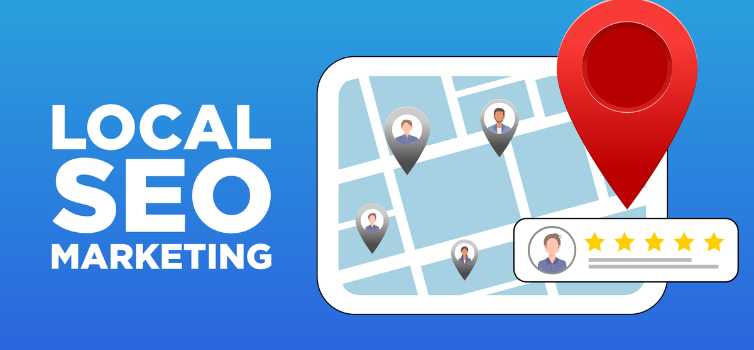
This is a clear indicator that local search is intensely competitive in 2026. Basic, one-time optimisation is not enough to consistently hold a top-three spot. It takes ongoing, specialised local SEO packages to thoroughly optimise your presence for Google and other major search engines.
2. Dominate the Google Local 3-Pack (Map Pack)
The Google Local 3-Pack, the map-based box at the top of local search results, captures the largest share of clicks on any local query. Industry research puts businesses in the Local Pack at roughly 90 to 130% more actions (calls, website clicks, and direction requests) than businesses ranked in positions 4 through 10, and around 40 to 60% more clicks than organic listings sitting directly below the pack.
Appearing in the Local 3-Pack requires a well-optimised Google Business Profile, strong local citations, consistent NAP information, and a steady stream of positive customer reviews. Without professional local SEO services, securing and maintaining one of these three coveted spots is genuinely difficult, and as local search becomes an increasingly competitive, pay-to-play environment with more paid placements taking up SERP space, organic Local 3-Pack visibility is only becoming more valuable. Engaging a reputable local SEO marketing company is no longer optional; it is a strategic necessity.
3. Drive High-Intent “Near Me” Search Traffic
Location is everything in local search. When a user runs a query on Google, the search engine identifies their physical location and tailors results accordingly. This is why “near me” and “close by” searches grew by roughly 900% over a two-year stretch, and that volume has kept climbing every year since, now running well over a billion such searches every month.
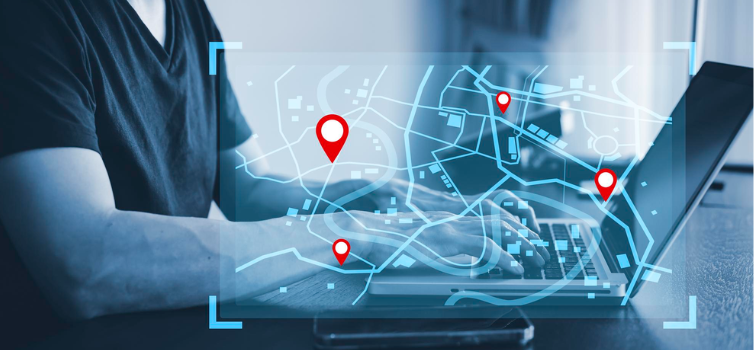
Google has confirmed its commitment to making search results more relevant based on the user’s precise location. If your business does not have a strong local SEO presence, it will not appear in searches performed by nearby potential customers, regardless of how good your website is. With the right local SEO services, your business gains visibility exactly when and where it matters most.
4. Capture Mobile-First Customers Ready to Buy
Your SEO strategy must account for the dominance of mobile search. Smartphones are now the primary device for finding local products and services on the go, and the purchase intent behind mobile searches is exceptionally high.

Consider these current statistics:
- Roughly 57% of all local searches now happen on mobile devices
- 76% of people who perform a “near me” search on their smartphone visit that business within 24 hours (Google)
- Around 60% of mobile users contact a business directly from local search results, via click-to-call or direction requests
When a person uses their smartphone to run a local search, Google precisely pinpoints their location and shows only the most relevant nearby businesses. Your business needs not just a mobile-friendly website, but one that is fully optimised for mobile local search. A qualified local SEO marketing company can help with the right SEO services and SEO packages to achieve this.
5. Build Trust Through Reviews and Online Reputation
Your business reputation is directly tied to your local search visibility. The large majority of consumers regularly read online reviews before visiting a store, restaurant, or service provider. Reviews are no longer just a trust signal for customers, they are a direct local search ranking factor for Google.
The data is clear:
- A large share of consumers will not seriously consider a business rated below 4 stars
- Consumers are meaningfully more likely to choose a business that responds to all of its reviews
- A steady stream of new reviews outperforms a single burst followed by silence, both for rankings and for conversion
Google rewards businesses with a strong, active review profile with better placement in both the Local 3-Pack and organic results. Actively encourage customers to leave reviews, and make it a priority to respond to every single one, positive or negative. It demonstrates your commitment to customer service and improves your chances of ranking ahead of competitors who don’t bother.
6. Attract More Foot Traffic to Your Physical Location
For brick-and-mortar businesses, retail stores, restaurants, salons, clinics, and more, local SEO directly translates to more people walking through your door. The data supporting this is compelling:
- A large majority of local searches lead to some form of conversion, a purchase, a call, or an in-person visit
- Roughly a quarter to a third of “near me” mobile searches lead to a purchase within the same day
- Customers are meaningfully more likely to trust a business with a complete, accurate profile on Google Search and Maps than one with a sparse listing
Local SEO ensures that when a potential customer nearby searches for what you offer, your business appears, not your competitor’s. That visibility directly drives real-world footfall and sales.
7. Outstanding ROI Compared to Traditional and Paid Advertising
In traditional advertising, direct mailers, newspaper classifieds, or flyers, there is significant wasted exposure. Your message reaches people whether they want it or not. Local SEO is the opposite: your business appears only to people who are actively searching for exactly what you offer, at exactly the moment they need it.

Local SEO is not just efficient, it is exceptionally cost-effective over time. Industry research from First Page Sage puts the average ROI for a local SEO campaign over three years at well over 300%. Unlike paid ads that stop the moment you stop spending, organic local visibility compounds over time, delivering consistent, long-term returns on your investment.
8. Future-Proof Your Business for AI-Powered Local Search
AI Overviews now appear for a substantial and growing share of local business queries, roughly 40% and climbing depending on industry and query type. This means Google’s AI is now surfacing direct answers and business recommendations at the top of search results, before users even scroll to traditional listings. Businesses that are not recognised as trusted, authoritative local entities by Google’s AI are increasingly invisible in these results.
Strong local SEO, a complete GBP, consistent citations, strong reviews, and relevant local content, signals to Google’s AI that your business is a legitimate, trustworthy local entity. This is no longer optional; it is how you stay visible as search evolves.
How Local SEO Works in 2026
Understanding why local SEO services are worth it requires knowing how Google’s local algorithm actually works. According to Whitespark’s annual Local Search Ranking Factors research, one of the industry’s most respected studies, local rankings are determined by a combination of signals across multiple categories:
Google Business Profile Signals
Your Google Business Profile (GBP) is consistently reported as the single most influential category of local ranking factors. A complete, accurate, and actively managed GBP, with the right business categories, up-to-date hours, high-quality photos, and regular posts, is what determines whether you appear in the Local 3-Pack at all. Businesses that treat their GBP as a living asset consistently outperform those who set it up once and forget it. Our Google Business Profile setup guide covers the full field-by-field process.
Review Signals
Review volume, recency, sentiment, and your response rate all factor into your local ranking. Google does not merely count your reviews, it analyses patterns: how frequently new reviews arrive, whether location and service terms are mentioned, and how actively you respond as a business owner. Consistent, recent reviews with genuine detail outperform a burst of reviews followed by silence.
On-Page SEO Signals
Your website’s content, heading structure, title tags, meta descriptions, and schema markup all contribute to local rankings. Dedicated service pages, internally linked content, and locally relevant blog posts help Google understand your business’s expertise and geographic relevance.
NAP Consistency & Citation Building
NAP, Name, Address, and Phone number, must be identical across your website, Google Business Profile, and every online directory where your business is listed. Inconsistent NAP information confuses Google and damages your local authority. Quality matters more than quantity: focus on major directories, niche directories relevant to your industry, and authoritative local citation sources.
Behavioural & Engagement Signals
In 2026, Google pays close attention to how users interact with your business in search results, clicks, calls, direction requests, and website visits all function as behavioural signals. Businesses that generate strong engagement across their GBP and search listings send positive signals to Google that they are the preferred choice in their local market.
Local SEO in the AI Era: What Has Changed in 2026
The rise of AI-powered search represents the most significant shift in local SEO since the introduction of the Google Local Pack itself. Here is what every local business needs to understand.
How AI Overviews Are Reshaping Local Discovery
Google’s AI Overviews now appear for a substantial share of local search queries, with estimates varying by industry, query type, and research methodology, but consistently pointing toward a large and growing percentage. These AI-generated summaries appear above the traditional Local Pack and organic results, summarising recommendations directly on the SERP. For businesses, this means a growing share of potential customers are making decisions without clicking through to any website.
Instead of simply ranking pages, Google’s AI is identifying and surfacing trusted local business entities, businesses it confidently recognises as legitimate, relevant, and trustworthy based on consistent signals across multiple platforms. If your business lacks strong entity signals (a complete GBP, accurate citations, a healthy review profile, and relevant local content), you risk being invisible in AI-generated results.
How to Optimise Your Business for AI-Powered Local Search
- Build entity clarity: Ensure your business name, address, category, and service descriptions are consistent across your website, GBP, social profiles, and directories.
- Create locally relevant content: Blog posts, FAQs, and service pages that answer real local customer questions signal topical authority to Google’s AI.
- Earn structured citations: Citations on high-authority directories remain important signals for AI-driven local results.
- Implement schema markup: LocalBusiness schema and Article schema help Google’s AI understand and categorise your content accurately.
- Generate consistent reviews: AI tools heavily weight review recency and engagement. A steady stream of authentic reviews is more valuable than a large historical volume.
What This Actually Takes to Execute
Local SEO is an ongoing process, not a one-time task, which is exactly why most businesses partner with a dedicated local SEO company rather than tackling it internally. Here is what that ongoing work actually involves.
Directory Citations
Online business directories remain important for local visibility, especially in markets like India, where digital adoption is accelerating rapidly. Your business should be listed in every major local and niche directory relevant to your industry, with accurate and consistent NAP information across every one of them, from Google and Bing to Justdial, Sulekha, and IndiaMART.
Local Link Building
Backlinks remain a powerful ranking signal, but for local SEO, link building looks different from the conventional approach. A link from a local Chamber of Commerce, a community blog, a neighbourhood association, or a sponsored local event is far more valuable than a generic link from an unrelated national website.
Google recognises that local businesses support each other within their communities. Incoming links from other local businesses, event sponsorships, and community involvement signal local authority and credibility. Quality local backlinks consistently outperform high volumes of irrelevant links from unrelated sources.
NAP Consistency on Your Website
NAP must appear consistently on your website and match exactly what is listed in your citations and on your Google Business Profile.

If your business operates across multiple cities, create dedicated, individually optimised city-specific web pages, each with unique, high-quality content and location-specific keywords. Avoid copying and pasting the same content across location pages, as this will dilute your local relevance signals.
Google Business Profile, Continuously Maintained
No local SEO strategy is complete without a fully optimised Google Business Profile. It is effectively your business’s homepage on Google Search and Maps, and one of the highest-impact assets you have for local visibility. For the complete, field-by-field optimisation checklist, see our local SEO checklist, which walks through every GBP element in detail.
The short version: complete profiles with rich photo galleries and regular posts consistently receive significantly more location visits, calls, and website clicks than sparse, inactive ones, and are considered meaningfully more trustworthy by consumers browsing Google Search and Maps.
Focus on Reviews, and Respond to Every One
Every time a customer interacts with your business, encourage them to leave an online review. Implement a systematic review request process, a follow-up text, email, or in-person request, to build a steady, consistent stream of fresh reviews. Review velocity, how regularly new reviews arrive, matters more than total review count to Google’s local algorithm in 2026.
Make a point of responding to every review, positive and negative. Timely, professional responses to negative reviews demonstrate accountability and customer care, and consumers are consistently more likely to choose a business that responds to all its reviews. When prospective customers read your reviews and your thoughtful responses, they are significantly more likely to choose you over a competitor who does not engage.
The Short Version: 10 Places to Start
- Claim and fully optimise your Google Business Profile, complete every section, add photos, and set accurate hours
- Ensure NAP consistency, your business name, address, and phone number must be identical across all online platforms
- List your business in key directories, Google, Bing Places, Justdial, Sulekha, and industry-specific directories
- Target local keywords, incorporate city names, neighbourhood names, and “near me” variants into your website content, titles, and meta descriptions
- Build local backlinks, seek links from local Chambers of Commerce, community organisations, and partner businesses
- Generate consistent reviews, implement a review request system and respond to every review promptly
- Optimise for mobile, ensure fast load times, tap-friendly design, and seamless mobile navigation
- Add schema markup, implement LocalBusiness and Article schema to improve how Google reads and displays your content
- Create locally relevant content, publish blog posts, guides, and FAQs that answer real questions from your local customers
- Monitor and refine, track your local keyword rankings, GBP insights, and website traffic monthly using Google Search Console and Analytics
For the full, detailed walkthrough of each of these, our complete local SEO checklist is the resource to bookmark.
Frequently Asked Questions About Local SEO Services
How long does local SEO take to show results?
Most businesses begin to see meaningful improvements in local search visibility within 3 to 6 months of consistent local SEO efforts, fixing their GBP, building citations, and generating reviews. Stronger gains in calls, foot traffic, and top-3 Local Pack rankings typically emerge between 6 and 12 months. Local SEO is a long-term investment that compounds over time, delivering increasingly better returns the longer it is maintained.
Is local SEO worth it for small businesses?
Absolutely. Local SEO levels the playing field, allowing small businesses to compete with larger brands in their geographic area. With the large majority of local searches resulting in some form of conversion and a three-year ROI regularly reported well above 300%, local SEO is one of the highest-return marketing investments available to small businesses. Unlike paid advertising, the visibility you build through local SEO does not disappear the moment you stop spending.
What is the difference between local SEO and national SEO?
Local SEO targets customers within a specific geographic area using location-based keywords, Google Business Profile optimisation, and local citations. National SEO targets a country-wide audience and relies more on broad keywords, domain authority, and large-scale link building. For businesses that serve customers in a specific city or region, local SEO typically delivers faster results and higher conversion rates because it reaches customers with immediate purchase intent.
How much do local SEO services cost?
The cost of local SEO services varies depending on the competitiveness of your market, the scope of work required, and the experience of the agency you partner with. Most businesses benefit from customised local SEO packages that are tailored to their specific goals, location, and budget. At Media Search Group, we offer flexible and affordable local SEO solutions designed to deliver measurable results, contact us for a free consultation.
Can I do local SEO myself?
While it is possible to implement some basic local SEO tactics yourself, such as claiming your Google Business Profile and listing your business in directories, achieving competitive rankings in 2026 requires in-depth knowledge of local ranking factors, schema markup, content strategy, review management, and technical SEO. Most business owners find that partnering with an experienced local SEO company delivers faster and more consistent results, freeing them to focus on running their business.
How do I appear in the Google Local Pack?
To appear in the Google Local 3-Pack, you need: (1) a fully optimised and verified Google Business Profile with the correct primary category; (2) consistent NAP information across your website and all directories; (3) a strong, recent stream of positive customer reviews; (4) locally relevant content on your website; and (5) quality backlinks from local and niche-relevant sources. A professional local SEO agency can build and manage all of these elements systematically on your behalf.
Conclusion
Local SEO is a specialist discipline, and in 2026, with AI-powered search results, intensely competitive Local 3-Pack rankings, and well over a billion monthly “near me” searches, it has never mattered more for location-based businesses. The data is unambiguous: 46% of Google searches have local intent, the large majority of local searches result in some form of conversion, and businesses that invest in local SEO consistently outperform those that do not.
Whether you run a restaurant, dental clinic, law firm, retail store, or any other local business, the question is no longer whether you need local SEO, it is how quickly you can implement it before your competitors capture the customers you are missing.
Partner with a local SEO company that can offer you affordable, reliable, and results-driven local SEO packages. It’s how your business gets found by your target audience, and how your revenue and profit grow consistently over time.