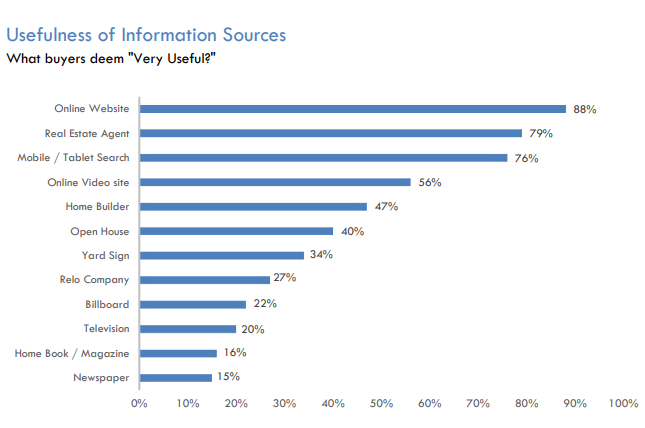
Which source do property buyers find the most useful when it comes to searching for a real estate property? An Online Website! According to the Real Estate Tech Trends shared by Properties Online, Inc.,88% of property buyers find an online website the most useful means to search for properties in any area — and a 2024 NAR report confirms that 97% of homebuyers now use the internet at some point during their property search.
Image Source: Properties Online, Inc.
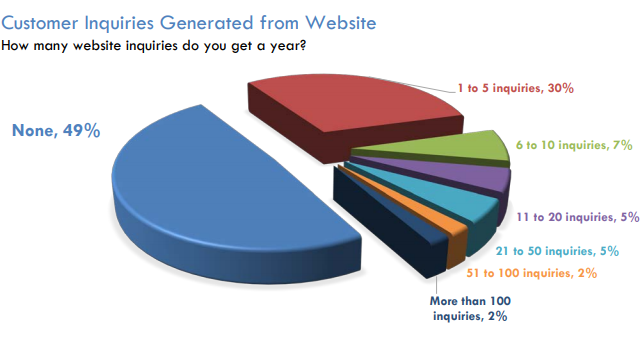
Want to know another shocking finding? Only 2% of real estate agents get more than 100 inquiries from a website a year — despite the fact that millions of property searches happen online every single day.
Image Source: Properties Online, Inc.
What about other realtors? Are they not experienced or knowledgeable enough? Absolutely not.
The most common reason why most realtors don’t get more leads through their websites is that most real estate websites are poorly structured, have poor-quality images, don’t contain relevant and useful content, and — most importantly — are not showing up in front of potential customers in search results.
What does this mean for any real estate agent? It means you need to focus on your website’s search ranking right now. Unless your real estate website is visible to people who are searching for properties in your service area, you are not going to gain even a fraction of attention from these potential customers. Visibility is the key to success in the modern real estate business.
How are you supposed to rank your real estate website on the first page of Google? How can you increase the visibility of your real estate business online in 2026 — when AI-powered search results, Google Business Profiles, and hyper-local content dominate the landscape?
Real Estate SEO can be challenging and complex — but it is absolutely achievable with the right strategy. This comprehensive guide shows you how to rank your real estate website for thousands of keywords, how to optimize for every stage of the buyer journey, how to leverage local SEO and schema markup, and how to future-proof your rankings with AI search optimization in 2026.
How to Rank Real Estate Properties for Thousands of Keywords
Before we guide you through SEO for real estate agents and how to target a myriad of keywords, let’s get familiar with what the term ‘keyword’ means in the context of real estate and what types of keywords you should be using.
What Are Keywords for Real Estate SEO?
In real estate SEO, a keyword is any word or phrase that describes what a potential buyer or seller is searching for online — whether they are looking for properties, agents, market information, or neighborhood guides. It is the term for which you want your real estate website to rank on Google.
For instance, if you are offering real estate agent services in New York, USA, the keywords you want to target may include:
Best real estate agent in New York
NY homes for sale
NY best realtor
Buy homes in NY
Properties for sale in New York
Condos for sale in NY
Apartments for rent in NY
First-time homebuyer programs in New York
Best neighborhoods in NYC for families
How to buy your dream home in New York
Some real estate SEO keywords have higher search volumes than others. You can check monthly search volume metrics and discover the right keyword opportunities using Google Ads Keyword Planner, Ahrefs, or Semrush. In 2026, also look for emerging keyword trends such as “virtual home tours near me,” “AI real estate tools,” “remote work-friendly neighborhoods,” and “sustainable homes for sale” — these are gaining significant search volume and remain far less competitive than traditional property terms.
Based on the targeted purpose, keywords are grouped into three core intent categories — and a winning real estate SEO strategy must target all three to capture buyers and sellers at every stage of their journey.
Types of Keywords for Real Estate SEO
In general, there are three main types of keywords every real estate agent must understand and target:
Navigational Keywords
Informational Keywords
Transactional Keywords
1. Navigational Keywords
Navigational Keywords (also called “Go” Keywords) are search queries used to find a specific brand, agent, website, property, or location. When a user types a navigational keyword, their intent is clear — they already know who or what they are looking for. These searches often come from buyers who have already seen your name on a sign, heard a referral, or encountered your content previously. They represent high-intent, warm traffic ready to take action.
How to Optimize for Real Estate Queries with Navigational Keywords
Include your real estate brand or business name naturally in the title tag, H1, and throughout your website content.
Create and fully optimize your Google Business Profile (GBP) with your brand name, company name, website link, complete address, service areas, business hours, and real team photos. According to Google, users are 2.7x more likely to trust and contact businesses with a complete and active GBP.
Ensure your NAP (Name, Address, Phone Number) is 100% consistent across your website, GBP, Zillow profile, Realtor.com, Yelp, and all local directories.
Mention all your service locations clearly on your website and your Google Business Profile — include city, neighborhood, and ZIP code-level specificity.
Create and optimize social media profiles on LinkedIn, Facebook, and Instagram with your brand name, service areas, and a link back to your website.
Build an authoritative “About” page that introduces your team, years of experience, market expertise, and geographic specialization. This page strengthens both brand trust and Google’s E-E-A-T (Experience, Expertise, Authoritativeness, Trustworthiness) signals — a critical ranking factor in 2026.
You can also create content using navigational keyword themes, for example: Why Trust ABC Real Estate in Dallas, Properties for Sale near Disney World, Orlando, or Meet Our Award-Winning Real Estate Team in Chicago. These pages capture branded searches while also reinforcing your topical authority in your target market.
2. Informational Keywords
Informational Keywords (also called “Know” Keywords) are search queries used when someone is researching, learning, or seeking answers — not yet ready to buy or sell, but actively building the knowledge to make that decision. Examples include: “how to buy a home in a competitive market,” “what is a buyer’s agent,” “best neighborhoods in Miami for families,” and “how long does it take to close on a house.”
While informational keywords may not drive immediate conversions, they are the backbone of your long-term content authority and one of the most powerful tools available to real estate agents in 2026. Here’s why: Google’s AI Overviews — the AI-generated summaries now appearing at the very top of many search results pages — actively pull from well-structured informational content written by recognized experts. A comprehensive, well-optimized neighborhood guide or buyer’s FAQ can earn you featured placement before any paid ad or organic result — completely free.
For instance, Google may use your content for Featured Snippets and People Also Ask boxes — providing you with prime real estate at the very top of the first page. Over time, people will start coming to your site as a trusted resource for solving their real estate questions. Informational content also provides the ideal foundation for connecting with potential clients long before they are ready to work with an agent.
How to Optimize for Real Estate Queries with Informational Keywords
Use question-based H2 and H3 headings throughout your content — structure them exactly as users type or speak them into Google and voice assistants. Example: “How Much Does a Real Estate Agent Cost in Austin?” or “What Is the Average Home Price in Nashville Right Now?”
Create comprehensive content formats: buyer and seller guides, neighborhood profiles, school district overviews, local market reports, how-to checklists, and step-by-step walkthroughs.
Add an FAQ section at the bottom of every major page — target Google’s People Also Ask questions for your niche and location. Mark up your FAQ section with FAQPage schema so it is eligible for rich snippet display in search results.
Publish how-to videos, virtual property tours, and neighborhood walkthrough videos on your website and YouTube channel — embedding videos on relevant pages increases time-on-page, which is a positive ranking signal. Videos also make your listings far more compelling: real estate property listings with videos receive 403% more inquiries than those without.
Create infographics and data visualizations on local market trends, price history comparisons, or neighborhood lifestyle summaries. These earn natural backlinks from other websites and dramatically increase time-on-page.
Think about the questions your clients ask on the very first phone call or during the first consultation — those are your most valuable informational keyword opportunities. You can also create content on critical things property buyers and sellers don’t know but absolutely should.
Did you know? Real estate property listings with videos receive 403% more inquiries than those without videos. Add virtual tours, drone footage, and neighborhood walkthroughs to your listing pages — optimize each video with keyword-rich titles, descriptions, and transcripts for maximum SEO benefit.
For example, powerful informational content topics for real estate agents include:
How to Stage Your Home to Increase the Chances of Selling It Faster
What It’s Really Like to Live in Miami, FL in 2026
Five Tips to Attract Quality Tenants for Your Apartment in Tennessee
First-Time Homebuyer’s Complete Checklist: Everything You Need Before Making an Offer
The Best Neighborhoods in Dallas for Remote Workers in 2026
Transactional Keywords (also called “Do” Keywords) are the highest-value search queries in real estate SEO. These are used by people who are ready to make a decision — contact an agent, schedule a showing, request a home valuation, or sign a listing agreement. At this stage, users have clear commercial intent and are ready to complete an action. These keywords have the highest ROI in real estate and are the core of your conversion-focused pages.
Even local searches are inherently transactional — when someone searches “real estate agent near me” or “homes for sale in [city],” they are not just browsing. They are actively seeking a solution.
How to Optimize for Real Estate Queries with Transactional Keywords
Create dedicated location + property type landing pages for every neighborhood and property type you serve. Example: “3-Bedroom Homes for Sale in Plano TX,” “Luxury Condos in Downtown Chicago,” or “Affordable Townhomes in Phoenix AZ.”
Use transactional keywords (combined with specific locations and neighborhoods) in your URL slug, title tag, H1, meta description, first paragraph, and CTA buttons.
Include transactional keywords on sign-up pages, free consultation pages, and home valuation request pages — these are your highest-converting pages and deserve meticulous optimization.
Optimize your landing pages with trust signals: client testimonials, Google star ratings, number of homes sold, response time guarantees, and a prominent click-to-call button or contact form above the fold.
Focus on geo-modified keyword variations — layer your target keywords with city, neighborhood, ZIP code, county, and “near [landmark]” modifiers. Example: “homes near Brickell Miami” or “condos near Buckhead Atlanta” or “houses with pool in Scottsdale AZ.”
Implement RealEstateListing and LocalBusiness schema markup on your listing and location pages — this structured data helps Google display your pages as rich results with price, bedroom count, and location highlighted directly in search results, dramatically increasing click-through rates.
Examples of high-converting transactional real estate keywords:
Where to buy properties in New York
Cheap condos for sale in Houston
Homes with lakefront in North Carolina
Sell my house fast Chicago
Best luxury realtor in Miami Beach
Homes for sale near top-rated schools in Austin TX
However, the best keywords for any real estate agent are those that help target a buyer or seller at every stage of their journey — not just when they are ready to transact.
By mapping your content strategy to the journey of a property buyer — and consistently leveraging real estate blogging to drive traffic and leads — you can cover most of the important keywords that bring leads while delivering genuine value to your potential clients at every touchpoint.
So, what is a property buyer’s journey — and how can you use it to build a dominant real estate SEO strategy in 2026?
Though you won’t serve a property buyer at every single stage, by creating content that spans the entire journey, you will be building goodwill, showcasing your expertise, and establishing yourself as the most trusted real estate authority in your market — long before a buyer ever picks up the phone to call an agent.
1. Checking Finances
Most people begin their property search when they feel they can handle it financially. At this stage, your content can be the first touchpoint that introduces them to your brand. There are two powerful approaches:
First, partner with a local mortgage broker, insurance consultant, or financial advisor to create co-authored content on topics like: When Are You Truly Ready to Buy a Home? How to Know If You’re Financially Ready to Buy in 2026? The Complete Guide to First-Time Homebuyer Grants in [Your State]. Co-authored content builds E-E-A-T signals and earns valuable backlinks from your partner’s website — a win for both visibility and authority.
Second, find reputable finance and mortgage sites and explore guest posting opportunities. If your content delivers enough value to their audience, they will be happy to publish it — giving you a high-quality backlink and brand exposure to a motivated, financially-aware audience. This guest posting strategy can be applied at every stage of the buyer journey.
(You can use the strategy of guest posting across all buyer journey stages to build authority and earn backlinks simultaneously.)
2. Checklist of a Dream Home
At this stage, a buyer has defined what they want and begins browsing properties and neighborhoods that match their wishlist. This is one of your biggest opportunities to attract qualified traffic to your site. Here is what to do:
Use compelling, keyword-rich titles, H1 headings, and meta descriptions that highlight the best properties in your specific service locations.
Post high-quality professional photos and video tours of properties — highlight unique features, lifestyle amenities, and neighborhood highlights. In 2026, AI-powered search platforms actively analyze image quality as an engagement signal.
Create content on topics like: What Does a Dream Home Look Like in 2026? or The 10 Features Every Modern Buyer Wants in Their Next Home — these attract early-stage buyers and keep them on your site longer.
Suggest how you can personally help them find their perfect home — this is where your CTA (free consultation, property search tool, or saved search feature) should appear prominently.
Make sure your website loads in under 3 seconds on mobile. With 89% of homebuyers using mobile devices during their property search, a slow website directly costs you leads. 53% of mobile visitors abandon a site if it takes longer than 3 seconds to load — meaning every second of delay is potential commission walking out the door.
Tips on How to Increase Page Loading Speed of a Real Estate Website
We understand that SEO for real estate agents comes with a unique technical challenge: real estate websites carry more images and media-heavy content than almost any other industry. Here is a practical, 2026-ready speed optimization checklist:
Compress and optimize all images using WebP format (significantly smaller than JPEG/PNG without quality loss) and tools like TinyPNG or ShortPixel
Enable lazy loading for all property images — only load images that appear in the user’s current viewport
Minimize HTTP requests your site makes for a page to completely render
Minify and combine your CSS and JavaScript files — use a caching plugin like WP Rocket or W3 Total Cache for WordPress
Load CSS and JavaScript files asynchronously to prevent render-blocking
Defer the loading of large files like JavaScript, virtual tour embeds, and interactive maps
Use a Content Delivery Network (CDN) — serves your site assets from data centers closest to the visitor, significantly reducing load time globally
Invest in quality managed WordPress hosting (WP Engine, Kinsta, or SiteGround) that includes server-side caching and performance optimization
Enable browser caching to provide a faster experience for returning site visitors
Prioritize above-the-fold content loading — inline critical CSS so the visible portion of the page loads first
Audit your Core Web Vitals monthly in Google Search Console — LCP (Largest Contentful Paint), INP (Interaction to Next Paint), and CLS (Cumulative Layout Shift) are direct ranking signals in 2026
3. Research Properties Online
This is the stage when a buyer begins actively browsing property images and listings. When they develop interest in a property, they click for more details. At this point, they might not yet be on your site — they could be scrolling through local directories, browsing Google Images, or watching property videos on YouTube. This is why a multi-platform presence matters.
Create accounts on major real estate directories — Zillow, Realtor.com, Homes.com, and local property platforms — with complete, accurate business information. Make sure your NAP (Name, Address, Phone) is identical across all of them to strengthen your local SEO authority.
To help property images appear prominently in Google Image search and regular search results:
Use descriptive, keyword-rich alt text for every property image. Example: alt=”3-bedroom waterfront home for sale in Fort Lauderdale FL” — this tells Google exactly what the image shows and which searches it should appear for.
Use descriptive file names before uploading: “luxury-condo-downtown-miami-for-sale.jpg” not “IMG1234.jpg.”
Upload only high-resolution, professionally shot photos — AI-powered search platforms now analyze image quality as an engagement and relevance signal.
Add ImageObject schema markup to your property listing pages so AI systems and Google can properly attribute and index your property images.
Once your property images begin appearing in Google search results and users find them compelling, they will naturally click through to the listing page on your site. This is why every property page must be optimized to convert that curiosity into a contact. Create detailed, engaging property pages that include:
Full property specifications: bedrooms, bathrooms, square footage, lot size, year built, HOA fees, and property tax estimate
Neighborhood lifestyle details: nearby schools, hospitals, restaurants, parks, commute times, and public transport access
Embedded virtual tour or video walkthrough for deeper engagement
Interactive Google Map showing the property’s location relative to key amenities
A prominent, frictionless contact CTA: “Schedule a Viewing,” “Ask a Question,” or “Request More Information”
The more useful, detailed, and visually rich your property pages are, the longer visitors stay — and dwell time is a significant positive ranking signal for Google in 2026. While creating content for property-related web pages, ensure to use local SEO keywords naturally throughout, such as buying the best single-family homes in Encino or luxury condos near the Brickell Financial District, Miami.
Along with high-quality images, post walkthrough videos that allow aspiring buyers to virtually tour properties. Video embeds on listing pages increase time-on-page, reduce bounce rate, and make your listings significantly more competitive in Google’s eyes.
4. Site Visits
This is the moment when a buyer lands on your website to explore properties in depth. Your job is to make that exploration as seamless and enjoyable as possible. A visitor who can quickly find what they need — filtered by location, property type, price range, or bedroom count — is a visitor who stays longer and converts at a higher rate.
Help buyers find homes and properties efficiently on your site by offering filters for area, budget, property type, and number of bedrooms — delivered through a clean, well-structured, and blazing-fast website architecture.
A well-structured, easy-to-navigate website will significantly increase the time an aspiring buyer spends on your site — and signal to Google that your website provides genuine value and an excellent user experience.
What Is the Best Website Structure for a Real Estate Business?
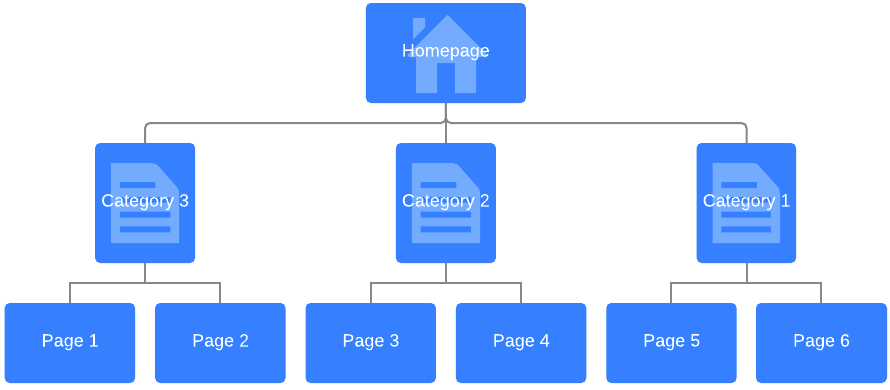
The Hierarchical (Silo) Structure is universally considered the best website architecture for real estate SEO. In this structure, the home page sits at the top tier, category/navigation pages (buyer hub, seller hub, neighborhoods, property types) form the second tier, and individual location and listing pages form the bottom tier.
Image Source: Papayasearch.com
This hierarchical structure ensures three things that are critical for real estate SEO in 2026:
Crawl efficiency: Every important page is reachable within 3 clicks from your homepage — making it easy for Google’s crawler to index your entire site quickly.
Internal link equity: High-authority pages (your homepage, city landing pages) pass their SEO value down to neighborhood pages and individual listing pages through strategic internal links.
Topical authority signaling: A siloed architecture tells Google that your site comprehensively covers real estate in your target market — which is the foundation of ranking for thousands of keyword variations simultaneously.
An easy-to-navigate, logically structured website encourages visitors to explore multiple pages, browse more listings, and engage with your content — all positive behavioral signals that reinforce your rankings.
5. Shortlist Properties
At this stage, an aspiring buyer has identified several properties they are interested in but needs more information to narrow their decision. Your role is to make that comparison process as easy as possible.
Ensure every property page provides complete, decision-supporting information: professional photos, detailed specs, neighborhood profile, nearby schools and amenities, commute time estimates, HOA and tax information, and a virtual or video tour. The more useful information you provide, the less likely a buyer is to leave your site to find it elsewhere — and the more likely they are to contact you directly when they are ready to move forward.
6. Negotiation
This is when a motivated buyer has identified their preferred property and begins negotiating on price, terms, and conditions. While this stage is primarily transactional, content created around negotiation builds tremendous trust and showcases your expertise as a skilled agent.
Create blog posts and guides on: how to make a competitive offer in today’s market, negotiation tactics that actually work in a seller’s market, how to handle a counteroffer, and what contingencies to always include to protect buyers. Sharing this type of content positions you as an expert advisor — the kind of agent a buyer wants by their side when it matters most.
If a buyer reads your negotiation content and realizes you understand this process better than their current agent, you may earn a new client. And if they are already browsing your listings and blog, they may decide to use you from the start on their next search.
7. Documentation
Both parties have agreed on a price and the transaction moves into documentation, contracts, and legal review. This stage creates an excellent content opportunity that most agents overlook.
Explain your role at this stage on your site. What documents does the buyer need to review and sign? What should they verify from the seller? What is the role of escrow? What happens during the title search? Creating clear, reassuring content on these topics reduces buyer anxiety, builds confidence, and reinforces why they should have an experienced agent — like you — guiding them through the process.
8. Home Inspection
A home inspection is a critical step where the property is verified for construction quality, structural integrity, amenities, and safety compliance. Buyers who understand what to expect from a home inspection are more confident, move faster, and are less likely to develop cold feet.
Share practical content on home inspection: what inspectors look for, red flags to never overlook, how to handle repair requests after an inspection, and when to walk away from a deal. You can also explore guest posting opportunities on reputable home inspection websites for additional authority and backlinks.
9. Property Registration
At this final stage, the buyer gains legal ownership of the property. Your content here should reassure buyers that you will guide them through every step — from signing the final documents to receiving the keys — so they can rely on you until the very end of the process.
Beyond registration, you can also create content on related topics that newly minted homeowners care about: home loan refinancing strategies, interior decoration ideas for new homeowners, moving and packing checklists, and home maintenance schedules by season. Why?
The idea is to position yourself as a one-stop digital resource where potential property clients — buyers, sellers, and even current homeowners — can turn to no matter where they are in their property journey. This approach earns referrals, repeat business, and the kind of long-term brand authority that no paid ad can replicate.
Covering topics across the entire buyer and seller journey helps you naturally target all the keywords your potential clients are searching — from the very first moment of financial awareness through to post-purchase homeownership. The result: your site becomes a topical authority in your local real estate market, ranking for thousands of keyword variations simultaneously.
This buyer-journey content approach will powerfully help you:
Research and discover the right keywords for every stage of the buying process
Add the most relevant, high-intent keywords to your site in the right context
Include necessary location-specific and neighborhood-level keywords throughout your site
Optimize real estate listings with useful, conversion-focused content that property buyers actually want
Attract, engage, and build trust with aspiring buyers through compelling, authoritative content
Give buyers exactly what they want: high-quality property photos, virtual tour videos, expert advice, and hyperlocal information they can’t find anywhere else
Local SEO for Real Estate Agents: Dominate Your Market Area
For real estate agents, all business is inherently local — and local SEO is the single most impactful strategy for independent agents competing against national portals like Zillow and Realtor.com. When someone searches “real estate agent near me” or “homes for sale in [your city],” Google’s Local Pack (the top 3 map results) appears prominently before any organic listings and captures a significant share of clicks.
Fully optimize your Google Business Profile: Complete every field — business name, address, phone, website, service areas, business hours, services offered. Upload real team photos (not stock images), office images, and photos of recently sold properties. Post GBP updates weekly: new listings, recent sales, market stats, open house announcements.
Build and manage local citations: Ensure your NAP (Name, Address, Phone) is 100% consistent across Zillow, Realtor.com, Yelp, Bing Places, Apple Maps, and all local directories. Even a small inconsistency — “St.” vs. “Street” — can dilute your local authority.
Actively collect and respond to Google reviews: According to BrightLocal’s 2026 research, 97% of consumers read reviews for local businesses and 74% specifically care about reviews from the last three months. A steady stream of authentic, recent reviews is one of the strongest local ranking signals available to agents.
Build neighborhood authority pages: Create dedicated pages for every neighborhood, subdivision, and zip code you serve — each with local market statistics, a lifestyle overview (schools, restaurants, parks, commute times), testimonials from clients in that area, and IDX-integrated listings.
Schema Markup for Real Estate Websites: Help Google and AI Understand Your Content
Schema markup (structured data) is code added to your web pages that tells search engines — and AI-powered answer engines like Google’s AI Overviews, ChatGPT, and Perplexity — exactly what your content means, in precise, machine-readable terms. For real estate agents in 2026, schema markup is no longer optional. Agents ranking in positions 1–5 for competitive real estate search terms consistently implement proper schema. Those stuck on page 2 typically do not.
The most important schema types for real estate websites include:
RealEstateAgent / RealEstateAgency: Implement on your homepage, about page, and contact page. Include business name, address, phone, logo, service areas, geographic coordinates, and social media profiles. This establishes your entity in Google’s Knowledge Graph.
RealEstateListing / House / Apartment / Residence: Apply to every individual property listing page with listing price, bedroom/bathroom count, square footage, property type, full address, listing status (active/pending/sold), and image gallery.
LocalBusiness: Reinforces your Google Business Profile connection and improves Local Pack rankings. Use a parent-child structure if you operate multiple offices.
FAQPage: Add to any page featuring a Q&A or FAQ section — eligible for rich snippet display in Google that significantly boosts click-through rates.
BreadcrumbList: Implement site-wide to improve URL display in search results and help Google understand your site’s hierarchy.
Always use JSON-LD format (Google’s preferred method) and validate your schema using Google’s Rich Results Test before publishing. Our technical SEO services include full schema implementation and validation specifically optimized for real estate websites and IDX integrations.
AI Search Optimization and E-E-A-T: Winning Google’s AI-First Real Estate Rankings
In 2026, Google’s AI Overviews appear at the top of many real estate search results, providing direct answers before users click any link. While this has reduced some click-through traffic for generic queries, it has created a massive opportunity for agents with demonstrable expertise. Agents whose content is cited in AI Overviews get brand visibility and traffic that bypasses even the #1 organic result.
To earn citations in AI-generated search results and strengthen your E-E-A-T (Experience, Expertise, Authoritativeness, Trustworthiness) signals:
Add a detailed author bio to every blog post — include credentials, years of experience, market specialization, transaction count, and a professional photo. E-E-A-T is Google’s quality framework for high-stakes topics like real estate.
Create a 60-second video bio explaining why you specialize in a specific neighborhood or property type. “Lived Experience” is a powerful E-E-A-T signal that AI models and Google’s quality raters look for — and one that no competitor can replicate.
Publish original market data, quarterly price trend reports, and neighborhood analyses with statistics that journalists and bloggers can cite — building your authority both on-site and off-site simultaneously.
Include a 50–75 word summary answer at the top of every major page and blog post — AI systems prefer concise, direct answers before diving into detail, making this format highly eligible for AI Overview citations.
Use clear, semantic HTML structure (proper heading hierarchy, bullet lists, data tables) so AI crawlers can parse and extract your content cleanly and accurately.
Display client testimonials, Google reviews, industry awards, and press mentions prominently — these are trust signals for both users and Google’s quality evaluation systems.
Link Building for Real Estate Websites: Building Off-Page Authority
Backlinks — links from other websites pointing to yours — remain one of Google’s most powerful ranking signals. For real estate agents, earning high-quality backlinks from relevant, authoritative local and industry sources can dramatically accelerate rankings in competitive markets. Our dedicated link building services are designed specifically for this purpose.
The most effective link building strategies for real estate agents in 2026 include:
Guest posting on local news and real estate sites: Write expert articles for local lifestyle blogs, city news outlets, and regional real estate publications. Include a natural, contextual link back to a relevant page on your site.
Original market research and reports: Publish quarterly market trend reports with your own data (median price, days on market, inventory levels). Journalists, bloggers, and industry analysts frequently link to original data sources — earning you high-authority editorial backlinks.
Local business partnerships: Partner with mortgage brokers, home inspectors, interior designers, and moving companies for mutual referral links on each other’s websites. These are highly relevant, locally authoritative links.
Community sponsorships: Sponsor local events, charity drives, or neighborhood associations — these frequently earn links from community websites and local news coverage.
HARO (Help A Reporter Out): Respond to journalist queries about the housing market, home buying trends, or local real estate conditions to earn high-authority media citations and backlinks from major news outlets.
Frequently Asked Questions: SEO for Real Estate Agents
How long does real estate SEO take to show results?
Most real estate agents begin seeing meaningful ranking improvements within 3–6 months of consistent SEO implementation. In highly competitive markets (New York, Los Angeles, Miami), achieving top-10 rankings for primary keywords may take 6–12 months. Long-tail and neighborhood-specific keywords often rank within 4–8 weeks. SEO is a long-term investment — agents who start today will dominate their markets in 12 months while competitors who wait will be months behind.
What is the difference between real estate SEO and local SEO?
Local SEO is a component of the broader real estate SEO strategy. Local SEO focuses specifically on Google Business Profile optimization, map pack rankings, and citation building. Full real estate SEO also includes IDX optimization, neighborhood page architecture, property listing schema markup, buyer and seller content funnels, link building, technical performance, and AI search optimization. Both are essential for agents who want to dominate their local market.
How do I rank for “real estate agent near me” searches?
To rank for “near me” searches: (1) Fully optimize your Google Business Profile with accurate location, service areas, and consistent reviews. (2) Implement LocalBusiness and RealEstateAgent schema markup. (3) Ensure NAP is consistent across all directories. (4) Earn positive Google reviews consistently — 74% of consumers specifically look for reviews from the last 3 months. (5) Build hyperlocal neighborhood content pages that signal your geographic expertise to Google.
Should real estate agents use WordPress for SEO?
Yes — WordPress is the most SEO-friendly CMS for real estate agents. It offers full control over title tags, meta descriptions, URL structures, schema markup, and performance optimization. Combined with an SEO plugin (Yoast or RankMath) and an SEO-compatible IDX plugin, WordPress provides the flexibility to implement every strategy in this guide. Our WordPress SEO services are specifically tailored for real estate websites.
We know all of this can feel overwhelming while you are running your real estate business and actively serving clients. That is exactly why we are here. Whether you are a real estate agent in London, New York, Dubai, Metro Manila, or anywhere else in the world, you can trust Media Search Group to build and execute a complete Real Estate SEO strategy that covers everything discussed in this guide — and much more — to ensure your real estate business becomes the most visible, most trusted, and most contacted agency in your market area.
Vijaya Raj Laxmi Tyagi has been an avid content writer for over five years with a keen interest in writing SEO articles and blogs. She also finds great enthusiasm in writing about a vast variety of topics, including gardening, interior designing, health & wellness, and tourism. Her educational background in Computer Science and Engineering has given her an edge to write about technologies that tend to mark a great impression on daily lifestyle and behaviour, while her intrigue towards Mother Nature drives her to discuss green topics.