Recently updated: July 16th, 2026
Digital marketing helps small and medium businesses compete with much bigger brands by giving them affordable, measurable, and highly targeted ways to reach customers. Instead of spending on billboards or newspaper ads that are impossible to track, an SMB can run a campaign today, see exactly who clicked, and adjust it tomorrow.
That shift matters more than ever. Nearly 95% of Gen Z now turns to technology first when looking for information, and global internet usage has passed 5 billion people. For a small or medium business, that is not a threat. It is an open door, because search engines and social platforms reward relevant, useful content over deep pockets.
In this guide, we will break down what digital marketing actually means for an SMB, the specific ways it drives growth, what it costs, how to measure it, and which trends matter heading into 2026.
What Is Digital Marketing?
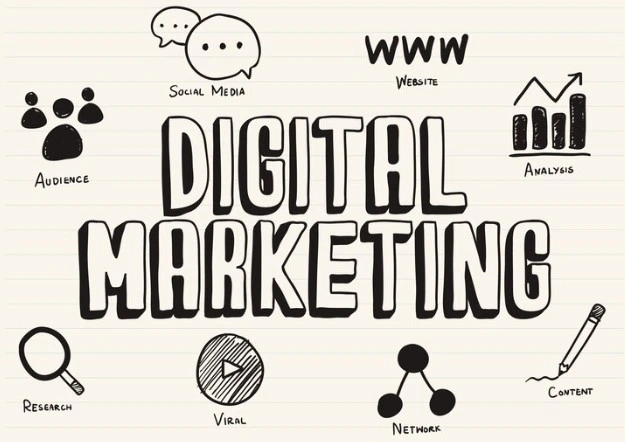
Digital marketing is any marketing activity that uses the internet or digital devices to reach, engage, and convert customers, with every step measurable in real time. Unlike a TV spot or a flyer, you can see exactly how many people saw it, clicked it, and bought from it.
For small and medium businesses, digital marketing usually includes a mix of the following channels:
- Search Engine Optimization (SEO): improving your website so it ranks higher on Google for the terms your customers actually search
- Pay-Per-Click Advertising (PPC): paid ads on Google Ads and Meta Ads where you only pay when someone clicks
- Content Marketing: blogs, videos, and guides that attract and educate your audience before they are ready to buy
- Social Media Marketing: building a presence and driving engagement on Facebook, Instagram, LinkedIn, and similar platforms
- Email Marketing: personalized campaigns that nurture leads and bring existing customers back
- Local SEO: optimizing your Google Business Profile so you show up for “near me” searches and the local map pack
- Conversion Rate Optimization (CRO): improving your website so more of your existing visitors turn into paying customers
New businesses launch every day, and both new and established companies need a way to build awareness and stay in front of their audience without burning through cash. Digital marketing gives every one of them, regardless of size, a realistic path to brand building, lead generation, and steady growth. Heading into 2026, that also means AI-assisted personalization, voice search, short-form video, and social commerce, all of which are now well within reach for a small team.
Who Counts as a Small or Medium Business?
Small and medium businesses, often called SMBs or SMEs, make up the backbone of most economies. They account for over 90% of all businesses worldwide and are a major source of employment and local economic activity. Classification usually comes down to three factors: number of employees, annual revenue, and total assets.
| Business Type |
Typical Employees |
Market Reach |
Digital Marketing Priority |
| Small Business |
Fewer than 50 |
Local or regional |
Local SEO, Google Business Profile, social media, basic email |
| Medium Business |
50 to 250 |
Regional or national |
Full-funnel SEO, paid ads with retargeting, CRM-integrated automation, CRO |
Small businesses tend to run lean, with fast decision-making and direct owner involvement. That agility is exactly what makes digital marketing such a strong fit for them: campaigns can launch and adjust in days, not months. If you want a deeper look at why this pairing works so well, we cover it in detail in why small businesses need digital marketing.
Medium-sized businesses sit between small companies and large corporations. They usually have more budget and staff, but they are still competing against enterprise-level marketing teams. Digital marketing gives them the targeting precision and reporting depth to compete without matching a big brand’s spend dollar for dollar.
Here is a number worth sitting with: 60% of small businesses are not investing in SEO, and 61% are not running search advertising. Every SMB that does invest starts with a real advantage over most of its competitors before a single sale is made.
Why Small and Medium Businesses Need Digital Marketing
Before digital channels existed, small businesses relied on posters, newspaper ads, brochures, and the occasional radio spot. These cost real money, took weeks to produce, and gave almost no way to know whether they worked. Digital marketing solves all three problems at once: it is affordable to start, fast to launch, and every result is trackable.
It also removes the geographic ceiling that used to cap small businesses. Through SEO, social media, and paid ads, an SMB can reach a hyper-local audience five kilometers away or a national one, often in the same week, using the same budget. Platforms like Google Ads and Meta Ads let you define an audience by location, interests, behavior, and even purchase intent, so your budget reaches people who are actually likely to buy, not just anyone scrolling past.
There is a trust dimension too. Most people now research a business online before they buy from it, and they lean toward brands that look credible and respond to feedback. 56% of customers say a company’s response to a review changed how they felt about that business. A digital presence is not just a sales channel; it is where trust gets built or lost.

10 Ways Digital Marketing Drives Growth for Small and Medium Businesses
Here is exactly how that plays out in practice, channel by channel.
1. It Levels the Playing Field Against Big Brands
Search engines rank content on relevance and quality, not on company size or ad budget. A small business with a genuinely useful, well-optimized page can outrank a Fortune 500 company for the same search query. In Google Ads, a high Quality Score can let a small business win ad placements over competitors bidding higher amounts. Investing in SEO services built for small businesses is often the fastest way to put this to work.
2. It Delivers a Measurable, Trackable ROI
Every rupee spent on digital marketing can be traced back to a result, something traditional advertising simply cannot offer. Email marketing alone returns an average of $36 for every $1 spent. Content marketing generates roughly 3x more leads than outbound marketing at 62% lower cost, and well-optimized PPC campaigns typically see around 200% ROI once tuned. SEO compounds further still: a single well-ranked page keeps sending free traffic for years after it is published.
3. It Targets the Right People, Not Just More People
Instead of paying for a billboard that everyone drives past, a pay-per-click campaign puts your business in front of people actively searching for what you sell, filtered by location, demographics, and intent. That precision cuts wasted spend and consistently produces a stronger ROI than broad, untargeted advertising.
Also Read: How Can Advertising Be Effective Through Digital Marketing?
4. It Builds Brand Awareness That Sticks
Before anyone buys from you, they need to recognize you. Online advertising can lift brand awareness by as much as 80% when it runs consistently across channels. Social media marketing, a complete Google Business Profile, and retargeting ads all keep your brand visible at every stage of the buying journey, while a proactive approach to online reputation management makes sure that visibility works in your favor.
5. It Generates Qualified Leads Around the Clock
SEO-optimized content, PPC landing pages, and email nurture sequences work even while you sleep. Inbound marketing driven by content and SEO produces 54% more leads than outbound methods like cold calling, and at a lower cost per lead. A single blog post that ranks on page one can send hundreds of interested visitors to your site every month, with no ongoing ad spend required.
6. It Strengthens Local Visibility Through Local SEO
For SMBs serving local customers, local SEO is arguably the single highest-intent channel available. That means a fully optimized Google Business Profile, consistent name, address, and phone details across directories, and a steady stream of customer reviews. Businesses that show up in Google’s Local 3-Pack typically see a real jump in calls and walk-ins, without spending anything on ads to get there.
7. It Keeps Your Business Open 24/7
A physical store closes at 6 PM. A well-built website, an automated email sequence, and a Google Business Profile with click-to-call do not. Chatbots and automated lead nurturing let an SMB answer questions and capture enquiries around the clock without adding headcount, something that used to be an enterprise-only advantage.
8. It Puts AI and Automation Within Reach of Small Teams
Tools that were once exclusive to enterprise marketing departments are now affordable for a two-person team. According to Salesforce research, 91% of SMBs using AI tools report a revenue boost, and 90% say it makes their operations more efficient. In practice, that means AI-assisted content creation, behavior-triggered email automation through platforms like Mailchimp, and SEO tools like SEMrush that surface keyword opportunities and technical issues automatically.
9. It Supports Fast Testing and Continuous Optimization
A printed ad cannot be edited once it is live. A digital campaign can be tested, tweaked, and relaunched the same day. A/B testing headlines, subject lines, and landing page layouts means your marketing keeps improving month over month instead of staying frozen until the next print run.
10. It Scales With You Instead of Starting Over
You can start with a modest monthly budget and grow into a multi-channel strategy without rebuilding your marketing from scratch. SEO content keeps compounding, email lists keep growing, and PPC budgets can flex up or down instantly based on performance. That compounding nature is what makes digital marketing the most sustainable long-term investment available to a growing SMB.
Also Read: Top 50 Digital Marketing Strategies for Small Business
Digital Marketing for Small vs. Medium Businesses: What Changes?
Both business types rely on the same core channels, but the depth and sophistication of the strategy shifts as a business grows.
| Focus Area |
Small Business |
Medium Business |
| SEO |
Local SEO and Google Business Profile |
Full-funnel SEO across informational, commercial, and transactional keywords |
| Paid Advertising |
Small, targeted PPC tests |
Google Ads and Meta Ads with retargeting at every funnel stage |
| Email Marketing |
Basic retention campaigns |
Automated, CRM-integrated sequences (HubSpot, Salesforce) |
| Analytics |
Core GA4 tracking |
Custom dashboards and attribution modeling |
| Content |
Occasional blog posts |
Scheduled publishing plus video and thought leadership |
In short, a small business usually gets the most out of local SEO, a couple of social platforms, and a solid, mobile-friendly website. A medium-sized business needs that same foundation plus conversion rate optimization, retargeting, and marketing automation to make the most of its larger traffic volume.
How Much Does Digital Marketing Cost for SMBs?
The honest answer is that digital marketing works at almost any budget. What matters is choosing channels that match your business stage and goals, not the size of the number.
| Budget Tier |
Monthly Range (INR) |
What’s Included |
Best For |
| Starter |
₹15,000 to ₹50,000 |
Basic SEO, Google Business Profile optimization, 2 social platforms |
New businesses building an initial presence |
| Growth |
₹50,000 to ₹1,50,000 |
Full SEO, content marketing, social media, a basic PPC campaign |
Established SMBs pushing for consistent traffic and leads |
| Scale |
₹1,50,000+ |
Multi-channel SEO, Google Ads plus Meta Ads, email automation, CRO, full analytics |
Medium-sized businesses targeting real market share |
A focused strategy on a modest budget consistently beats a scattered strategy on a large one. Start with whichever channel offers the strongest ROI for your specific business type, measure it honestly, and reinvest in what is actually working. You can see how these tiers translate into real packages on our digital marketing packages page.
How to Measure Digital Marketing Success
Unlike traditional marketing, where ROI is mostly a guess, digital marketing gives you full visibility into what is working and what is not, in real time. SMBs that build a habit of tracking this data consistently are the ones that turn a marketing budget into predictable growth.
Track these key metrics on a monthly basis:
- Organic traffic: monthly visitors arriving via search engines, tracked in GA4
- Keyword rankings: where your target keywords sit on Google, tracked via Search Console
- Conversion rate: the percentage of visitors who complete an enquiry, purchase, or sign-up
- Cost per acquisition (CPA): total marketing spend divided by new customers acquired
- Click-through rate (CTR): how compelling your listings and ads are; see our guide on improving CTR in organic search results
- Email open and click rate: engagement with your campaigns, with a healthy benchmark around 20 to 25% open rate
- Return on ad spend (ROAS): revenue generated for every rupee spent on paid advertising, explored further in our breakdown of display ad networks and ROI
- Customer lifetime value (CLV): total revenue a customer generates across their relationship with your business
Set a baseline for each metric, review it on a fixed schedule, and use what you find to adjust your strategy. That discipline is the real difference between SMBs that grow steadily online and ones that treat marketing as guesswork.
Digital Marketing Trends SMBs Should Watch in 2026
The channels above are the foundation, but a few shifts are worth planning around this year.
AI-powered personalization is now mainstream rather than experimental. SMBs are using AI to personalize on-site content, generate first drafts of content at scale, and run predictive analytics that flag high-value leads automatically. Our guide to AI-driven SEO strategies covers how to apply this without losing quality.
Voice search keeps growing as smart speakers and voice assistants become part of daily routines. Content written to answer natural, conversational questions performs better here than content stuffed with keyword fragments.
Short-form video on Instagram Reels and YouTube Shorts now delivers some of the strongest organic reach of any format, and it does not require a production budget to get started.
Zero-click content is becoming harder to ignore as Google leans into AI Overviews and direct answers. Structuring content around featured snippets and People Also Ask questions helps SMBs capture visibility even when a user never clicks through.
Local, “near me” search remains one of the highest-intent query types out there, and the volume keeps climbing. For any SMB with a physical location, this is not optional in 2026, it is a baseline requirement.
Frequently Asked Questions
How does digital marketing help small businesses?
Digital marketing helps small businesses by increasing online visibility, enabling precise audience targeting, generating qualified leads, and delivering measurable ROI, all at a fraction of traditional advertising costs. It gives SMBs access to the same tools larger brands use, including SEO, PPC, social media, content marketing, and email marketing, with full analytics to track every rupee spent.
Is digital marketing worth it for small businesses?
Yes. Digital marketing is the most cost-effective marketing investment available to small businesses. Email marketing alone delivers an average ROI of $36 for every $1 spent, and SEO drives compounding organic traffic for months or years from a single piece of content. Done consistently, it outperforms traditional channels by a wide margin.
How much does digital marketing cost for a small business in India?
Costs typically range from ₹15,000 to ₹1,50,000 per month depending on the services and goals involved. Basic SEO and social media management can start around ₹15,000 to ₹50,000 per month, while a full growth plan covering SEO, content, and PPC usually runs ₹50,000 to ₹1,50,000 per month.
Can small businesses really compete with large corporations online?
Yes. Search engines rank content based on relevance and quality, not company size or budget. A small business with a genuinely helpful, well-optimized page can outrank a Fortune 500 company for the same keyword, and targeted PPC or local SEO can let an SMB dominate its specific market segment.
What are the most important digital marketing channels for a small business?
The five most important channels are SEO for sustainable organic traffic, Google Business Profile for local visibility, social media marketing for brand awareness, email marketing for retention, and Google Ads for fast, intent-based traffic when speed matters more than cost.
How long does digital marketing take to show results?
It depends on the channel. PPC can generate enquiries within 24 to 48 hours of launch. SEO usually shows measurable ranking improvements within 3 to 6 months, with stronger organic traffic growth by month 6 to 12. Social media and email build engagement over 1 to 3 months of consistent activity.
Conclusion
Digital marketing is the most reliable growth engine available to small and medium businesses today. It levels the competitive playing field, delivers ROI you can actually measure, targets the customers most likely to buy, and scales with you instead of forcing you to start over as you grow.
The SMBs that commit to SEO, social media, email, content, and local search now, backed by real analytics instead of guesswork, are the ones that will still be growing steadily a year from now. If you have been putting it off, this is the moment to start.
Ready to grow? Explore our digital marketing packages built for small and medium businesses, browse real results in our case studies, or talk to our team for a free strategy consultation.