Recently updated: June 8th, 2026
In 2026, having a great product or service is no longer enough. If your small business isn’t visible online, you’re handing customers directly to competitors who are. Digital marketing is how small businesses get found, build trust, and grow — without needing the advertising budget of a large corporation.
Digital marketing is an effective way to build a strong online presence and reach a large, targeted audience. As the internet continues to evolve — with AI-powered search, social commerce, and zero-click results reshaping how people find businesses — digital marketing has never been more essential for small businesses.
The global digital advertising and marketing market is projected to reach $786.2 billion by 2026, growing at a 9% annual rate — a clear signal that businesses of every size are investing heavily in digital channels.
A well-crafted digital marketing strategy helps small businesses identify their target market, choose the right channels to reach them, and allocate their budget where it matters most. Key strategies include search engine optimisation (SEO), pay-per-click (PPC) advertising, social media marketing, content marketing, and email marketing. Together, these tools give small businesses a genuine opportunity to compete with — and even outperform — much larger brands.
In this guide, we’ll cover exactly why small businesses need digital marketing in 2026, the core benefits, which strategies to use, and how to get started.
Benefits of Digital Marketing for Small Businesses
Digital marketing offers small businesses a level playing field that traditional advertising never could. It allows business owners to use their limited resources strategically — promoting their brand, engaging their audience, and measuring every result in real time.
Digital marketing is the most powerful way to build authority, brand awareness, and customer loyalty in today’s marketplace. Business owners can engage directly with their target audience through social media, email, and content to understand what consumers want and build authentic, lasting relationships.
Here are the core benefits of digital marketing for small businesses:
1. Increased Reach at a Lower Cost
Digital marketing gives small businesses the ability to reach a far wider audience than traditional marketing — at a fraction of the cost. Digital ads are cost-effective, highly targeted, and available at every budget level, which is why small businesses consistently choose digital channels over print, TV, or radio.
Today’s consumers spend hours online every day — browsing on mobile devices, watching videos, scrolling social feeds, and searching for products and services. Small businesses can use content marketing, social media marketing, email campaigns, and paid ads to reach these customers precisely where they already are.
Unlike a billboard or newspaper ad with a fixed geographic limit, a well-optimised digital campaign can reach potential customers locally, nationally, or globally — all from the same modest budget.
2. Precision Targeting: Reach the Right Customer at the Right Time
Digital marketing tools allow small businesses to identify and target customers who are actively looking for their products or services. Instead of broadcasting a message to everyone and hoping for the best, digital marketing lets you define your audience by demographics, location, interests, online behaviour, and purchase intent.
This is the power of audience segmentation and buyer personas. When you understand who your ideal customer is, you can create messaging that speaks directly to their needs — resulting in higher engagement, better conversion rates, and a stronger return on investment (ROI).
Platforms like Google Ads and Meta allow small businesses to set precise targeting parameters, run retargeting campaigns, and pay only for the clicks or impressions that matter. This precision is something traditional advertising simply cannot replicate.
3. Higher Flexibility and Real-Time Optimisation
One of digital marketing’s biggest advantages over traditional methods is flexibility. If a campaign isn’t performing well, you can pause it, adjust the creative, change the targeting, or shift your budget — all in real time, without losing your entire investment.
In contrast, a print ad or TV commercial requires weeks of planning and production. If it doesn’t land, there’s nothing you can do until the next campaign cycle. Digital marketing eliminates this rigidity entirely.
This agility is especially valuable for small businesses. You can run A/B tests on ad copy, experiment with different content formats, and respond to market trends or seasonal demand within hours — not months.
4. Measurable ROI and Transparent Performance Data
With digital marketing, every action is measurable. You can track impressions, clicks, conversions, cost-per-click (CPC), customer lifetime value (CLV), and revenue — all from a single dashboard using tools like Google Analytics 4 (GA4) and Google Search Console.
This level of transparency is transformational for small businesses. Instead of guessing whether your marketing is working, you can see exactly which channels are driving traffic, which campaigns are converting customers, and where your budget is generating the best returns.
You can choose the metrics that align with your goals — whether that’s website visits, lead form submissions, phone calls, or online sales — and track how your digital marketing campaigns affect conversion rates with precision.
5. Greater Credibility and Social Proof
Consumers today research before they buy. In fact, 97% of people search online to find local businesses — and they judge credibility based on what they find. A business with a professional website, positive reviews, active social media profiles, and consistent content signals trustworthiness. A business with no online presence raises doubts.
Digital marketing helps small businesses build and maintain this social proof. Encouraging customer reviews on Google, responding to comments on social media, and publishing helpful content all contribute to a reputation that converts browsers into buyers.
You can also collaborate with niche influencers or local content creators — one of the most cost-effective ways to extend your reach, add credibility, and build brand identity with a targeted audience.
6. Email Marketing: The Highest-ROI Channel for Small Businesses
Email marketing consistently delivers the highest return on investment of any digital channel — with an average ROI of 4,400%, or $44 for every $1 spent. For small businesses with limited budgets, this makes email an essential tool for nurturing leads, re-engaging past customers, and driving repeat sales.
Modern email platforms make it easy to automate welcome sequences, promotional campaigns, and follow-up messages — saving time while keeping your audience engaged. Building and owning your email list also means you’re not dependent on algorithm changes from social media platforms.
Why Is Digital Marketing Important For Small Businesses in 2026?
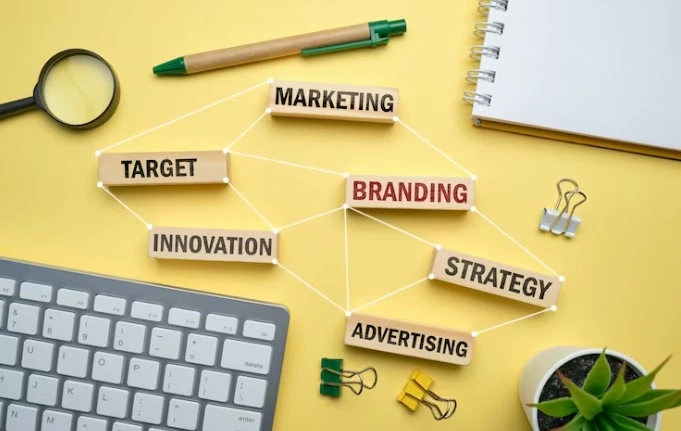
Digital marketing is important for small businesses because it allows them to reach more customers, build trust at scale, and compete effectively — all within a budget that makes sense. Unlike traditional marketing, digital marketing provides targeted, measurable results so businesses can track performance accurately and make data-driven decisions.
In 2026, the stakes are higher than ever. Consumers now discover businesses through Google Search, social media, YouTube, AI-powered search results, and AI Overviews — not just by walking past a shopfront. If your small business isn’t present and optimised across these digital touchpoints, you’re invisible to a growing portion of your potential customer base.
Beyond visibility, digital marketing helps small businesses build meaningful customer relationships. It allows you to engage your audience with relevant content, respond to their questions and reviews, and personalise their experience — all of which strengthen loyalty and increase customer lifetime value.
Digital marketing is also far more than building trust and maintaining brand reputation. A well-structured digital presence guides customers through every stage of their purchase journey — from first discovery to final conversion — with content, ads, and touchpoints designed to meet them wherever they are.
An effective digital marketing strategy starts with clarity: who your customer is, what problems you solve, and which channels will reach them most effectively. Digital media — videos, infographics, blog posts, podcasts — provide the context and depth that help your brand stand out and convert.
How Does Digital Marketing Help Small Businesses?
Digital marketing makes it easy for small businesses to promote themselves, connect with their customers, and grow sustainably. It provides access to powerful analytics tools that reveal who your customers are, how they behave, what they’re searching for, and where they drop off in your sales funnel — intelligence that was previously only available to large corporations.
Here are the specific ways digital marketing helps small businesses succeed:
Digital marketing strategy helps small businesses build a path to success.
A clear digital marketing strategy gives small businesses direction and efficiency. It ensures that limited time, money, and energy are focused on the channels and tactics most likely to generate leads, convert customers, and drive sustainable growth — rather than being spread thin across too many platforms with no measurable outcome.
With a proper plan in place, you can set clear goals, define your target audience, choose the right digital channels, and create AI-driven SEO strategies that compound over time. Small businesses with a documented digital marketing strategy consistently outperform those that market reactively — because they know where they’re going and how to measure whether they’re getting there.
Digital marketing strategy helps small businesses reach their target audience.
Small businesses that don’t invest in digital marketing miss out on an enormous and growing pool of potential customers. Digital marketing allows businesses to target their advertising to a precisely defined audience — using data to understand the demographics, interests, search behaviour, and purchase intent of the people most likely to buy.
This audience-first approach means your marketing budget works harder. Instead of paying to reach thousands of people who will never buy from you, you’re reaching hundreds of people who are actively looking for what you offer — and are far more likely to convert.
By using digital marketing, small businesses can reach their target audiences more effectively, build stronger customer relationships, save money compared to traditional advertising, and generate a measurable return on every pound or dollar spent.
Digital marketing strategy helps small businesses focus their marketing efforts and budget.
Without a digital marketing strategy, small businesses often waste budget on channels that don’t perform, or spread themselves too thin without a clear priority. A strategy solves this by identifying which channels deliver the best ROI for your specific business and audience — whether that’s local SEO, Google Ads, social media, or email marketing.
By measuring website traffic, conversion rates, cost-per-acquisition, and other engagement metrics using tools like GA4 and Google Search Console, small businesses can see exactly what’s working and reallocate budget accordingly. This data-driven approach to marketing is what separates businesses that grow from those that stagnate.
Digital marketing strategy helps small businesses focus their efforts and budget on the right channels, track their performance consistently, and use AI-driven SEO strategies to grow at a higher level — compounding results over time.
Digital marketing strategy makes campaigns flexible and continuously effective.
A digital marketing strategy can be adapted quickly as market conditions, consumer behaviour, or business goals change — making it uniquely valuable for small businesses that need to be agile. If a campaign isn’t delivering results, you can adjust the messaging, shift the budget, or pivot to a different channel without losing your entire investment.
Digital marketing is not only flexible but compounding in its effectiveness. Small businesses that commit to consistent SEO and content marketing build organic traffic that grows month over month, without paying for every click. Those that invest in paid ads can scale spending up or down based on seasonal demand. This flexibility means digital marketing works for small businesses in both lean periods and periods of growth.
Digital marketing strategy allows small businesses to measure and track their results.
One of the clearest advantages of digital marketing is accountability. Every campaign, post, and ad can be tracked — giving small businesses a transparent view of what’s working and what isn’t. By defining goals upfront and implementing the right tracking (GA4, Google Search Console, UTM parameters), businesses can measure traffic, leads, conversions, and revenue with accuracy.
Small businesses that take the time to build a data-driven digital marketing strategy are better positioned to compete in the market. They use insights to refine their approach, cut wasted spend, and double down on what generates results. Over time, this iterative process creates a compounding advantage that’s very difficult for competitors to replicate.
Effective digital marketing strategies don’t need to be complex. Even a straightforward plan — a well-optimised website, consistent SEO content, an active Google Business Profile, and a monthly email to your list — can produce significant results when executed consistently and reviewed regularly.
Digital marketing strategy maintains a strong, always-on online presence.
Unlike a physical shopfront with opening hours, your digital presence works 24 hours a day, 7 days a week. A well-optimised website, active social media profiles, and a claimed Google Business Profile mean potential customers can discover, evaluate, and contact your business at any time — even while you sleep.
A strong online presence also builds credibility through consistency. When a prospective customer searches for your business and finds a professional website, recent social activity, positive reviews, and helpful content, their trust increases — and so does the likelihood they’ll choose you over a competitor with a weaker digital footprint.
Traditional marketing strategies can be prohibitively expensive for small businesses, whereas digital marketing delivers a strong online presence at a fraction of the cost. With a digital marketing strategy, you can reach your target audience without a large advertising budget — and track every result to continuously improve your approach.
Many digital marketing consultants can help you create and implement a strategy tailored to your business goals, audience, and budget.
Digital marketing strategy helps small businesses grow and succeed in the online market.
Every business — whether a local café, a boutique retailer, or a service provider — needs a clear marketing strategy to grow. In today’s market, that strategy must be digital. Digital marketing strategies help small businesses reach new customers through SEO and paid ads, engage existing customers through social media and email, and promote products or services to audiences that traditional marketing could never access.
Digital marketing is particularly powerful for small businesses because it levels the playing field. With the right strategy, a small business can outrank a large corporation for a niche keyword, build a more engaged social media community, and deliver a more personalised customer experience — all without a multimillion-dollar marketing budget.
How Small Businesses Can Compete With Big Brands Using Digital Marketing
One of the most powerful — and often overlooked — advantages of digital marketing is that it genuinely levels the competitive playing field. A small business with a smart digital strategy can consistently outperform large corporations in targeted areas. Here’s how:
SEO: Where Relevance Beats Budget
Google’s search algorithm ranks pages based on relevance, authority, and user experience — not on how much a company spends on ads. This means a small business that produces highly relevant, well-optimised content for a specific niche query can outrank a global brand that publishes generic content on the same topic.
Local SEO amplifies this advantage even further. When someone searches “best [service] near me” or “[service] in [city]”, Google’s local algorithm prioritises proximity, Google Business Profile completeness, and review quality — factors where a local small business has a natural edge over a national chain.
Niche Targeting: The Small Business Superpower
Large brands must market broadly to serve millions of customers. Small businesses can do the opposite — go deep into a specific niche, build genuine expertise, and become the go-to authority for a highly targeted audience. This hyper-specific positioning is something large brands struggle to replicate authentically.
Through content marketing, social media, and email, small businesses can build a loyal community around their niche — one that a corporate competitor with a generic brand voice simply can’t compete with.
Agility: Move Faster Than Your Bigger Competitors
Small businesses can respond to market trends, customer feedback, and seasonal opportunities in hours — not weeks. This speed and flexibility is a genuine competitive advantage in digital marketing, where timing often determines whether a campaign breaks through or gets lost in the noise.
Local SEO: The Essential Digital Strategy for Small Businesses
For small businesses that serve a specific geographic area, local SEO is one of the highest-impact digital marketing strategies available. Local SEO optimises your online presence so that your business appears prominently when people in your area search for the products or services you offer.
Key local SEO tactics include:
- Google Business Profile (GBP) optimisation — Claim, verify, and fully complete your GBP listing with accurate business hours, photos, services, and regular posts. A well-optimised GBP is the single most important factor for appearing in Google’s local map pack.
- Local citations — Ensure your business name, address, and phone number (NAP) are consistent across directories like Yelp, TripAdvisor, and local business listings.
- Near-me search optimisation — Create locally relevant content and use location-specific keywords so your business appears for “near me” and city-specific searches.
- Customer reviews — Actively encourage satisfied customers to leave Google reviews. Review quantity, quality, and recency are key ranking signals for local search.
Local SEO is cost-effective, sustainable, and delivers highly qualified traffic — people in your area who are actively looking for exactly what you offer.
AI-Powered Digital Marketing Tools Small Businesses Can Use in 2026
Artificial intelligence is no longer just for large enterprises. In 2026, AI-powered marketing tools are accessible, affordable, and genuinely transformative for small businesses. Here are some practical ways small businesses are using AI in their digital marketing:
- Content creation — Tools like ChatGPT and Claude help small businesses draft blog posts, social captions, email newsletters, and ad copy faster and more consistently.
- Design and visual content — Canva’s AI features allow small businesses to create professional-quality graphics, social media posts, and video content without a dedicated designer.
- CRM and email automation — Platforms like HubSpot and Mailchimp use AI to personalise email sequences, segment audiences, and predict the best send times.
- Google Ads smart bidding — Google’s AI-powered bidding strategies automatically optimise your ad spend for conversions, reducing wasted budget.
- Analytics and insights — GA4’s AI-powered insights surface anomalies, predict churn, and highlight opportunities your team might otherwise miss.
According to recent Salesforce research, 91% of small and medium-sized businesses using AI report a boost in revenue, and 90% say it makes their operations more efficient. The key is starting with one specific use case, measuring the impact, and then expanding.
How to Get Started With Digital Marketing: A 7-Step Guide for Small Businesses
If you’re new to digital marketing — or looking to build a more structured approach — here’s a practical step-by-step framework to get started:
Step 1: Define Your Business Goals and Target Audience
Before choosing any channel or tactic, clarify what you want to achieve (more leads, higher sales, greater brand awareness) and who your ideal customer is. Build a simple buyer persona — their demographics, pain points, online habits, and buying triggers.
Step 2: Build a Professional, Mobile-Optimised Website
Your website is your digital headquarters. It needs to be fast, mobile-friendly, easy to navigate, and built around clear calls to action. Target a Google PageSpeed score above 90 and ensure your Core Web Vitals (LCP, CLS, INP) pass Google’s thresholds.
Step 3: Set Up and Optimise Your Google Business Profile
Claim your free Google Business Profile listing and complete every field — business name, category, address, hours, photos, services, and a compelling description. This is the fastest way to appear in local search results and Google Maps.
Step 4: Launch an SEO and Content Strategy
Identify the keywords your target customers use to search for your products or services, and create high-quality content that answers their questions. A consistent blog, optimised service pages, and a clear internal linking structure build organic traffic that compounds over time.
Step 5: Build Your Social Media Presence
Choose 1–2 platforms where your target audience is most active — don’t try to be everywhere at once. Post consistently, engage with your followers, and use social media to humanise your brand and build community.
Step 6: Run Targeted Paid Ads
Start small — even a $5–$10 per day test campaign on Google Ads or Meta can generate valuable data. Use the results to refine your targeting, messaging, and landing pages before scaling your ad spend.
Step 7: Track, Measure, and Optimise
Set up GA4 and Google Search Console from day one. Define your key performance indicators (KPIs) — organic traffic, conversion rate, cost-per-lead, and revenue — and review them monthly. Let the data guide where you invest more and where you cut back.
Frequently Asked Questions About Digital Marketing for Small Businesses
How much does digital marketing cost for a small business?
Costs vary widely depending on the channels and scope. Basic social media marketing can start from as little as $300–$500 per month if managed in-house. SEO services typically range from $500–$2,000 per month with an agency. Email marketing tools often cost $50–$300 per month depending on list size. A comprehensive strategy covering SEO, content, social, and paid ads typically ranges from $1,500–$5,000 per month when outsourced to an agency.
How long does it take to see results from digital marketing?
Timelines vary by channel. PPC advertising can generate leads within days. Social media marketing builds engagement over 1–3 months. SEO typically takes 3–6 months to show meaningful organic ranking improvements, but the results are more durable and compounding over time. Email marketing delivers results from the moment you send — if your list is engaged and your offer is relevant.
Can a small business do digital marketing without a large budget?
Absolutely. Many of the most impactful digital marketing tactics are free or very low cost: setting up Google Business Profile, creating and publishing blog content, posting organically on social media, and building an email list. A modest, consistent investment in SEO and content marketing can generate significant long-term returns without requiring a large advertising budget.
Which digital marketing channel is best for small businesses?
It depends on your goals. For local discoverability, Google Business Profile and local SEO are essential. For customer retention, email marketing delivers the highest ROI. For brand awareness and community building, social media is most effective. For fast lead generation, PPC advertising delivers immediate results. Most successful small businesses use a combination of 2–3 channels aligned to their specific goals and audience.
How is digital marketing different from traditional marketing?
Traditional marketing (print, TV, radio, billboards) is broad, expensive, and difficult to measure. Digital marketing is targeted, cost-effective, and fully measurable. With digital, you can see exactly who saw your ad, who clicked, who converted, and what revenue each campaign generated — and adjust in real time. For small businesses with limited budgets, this measurability makes digital marketing far more efficient.
How is social media marketing important for small businesses?
Social media gives small businesses a direct, low-cost channel to reach and engage their target audience, build brand awareness, and drive traffic to their website. Platforms like Instagram, Facebook, and LinkedIn allow for highly targeted advertising, community building, and customer service — all in one place. Organic social content also builds long-term trust and brand familiarity that paid ads alone cannot replicate.
Conclusion
Digital marketing is no longer optional for small businesses — it is the foundation of sustainable growth in 2026 and beyond. A well-executed digital marketing strategy allows small businesses to reach a wider audience on a limited budget, compete directly with larger brands in targeted niches, build lasting customer relationships, and measure every result with precision.
Using the right digital channels — SEO, local search, social media, email, content marketing, and paid ads — small businesses can achieve increased visibility, reach a broader audience, and compete effectively against much larger competitors. The cost-effectiveness, targeting precision, and measurability of digital marketing make it the most powerful tool available for optimising limited resources and maximising return on investment.
Critically, digital marketing also future-proofs your business. As AI-powered search, social commerce, and zero-click results continue to reshape how consumers discover and buy, businesses with a strong, optimised digital presence will be the ones that thrive. Those without one will find it increasingly difficult to be found at all.
Embracing digital marketing is not just a smart option for small businesses — it is a strategic necessity for staying visible, relevant, and competitive in today’s digital-first marketplace. Whether you’re just getting started or looking to take your existing strategy to the next level, the time to invest is now.