
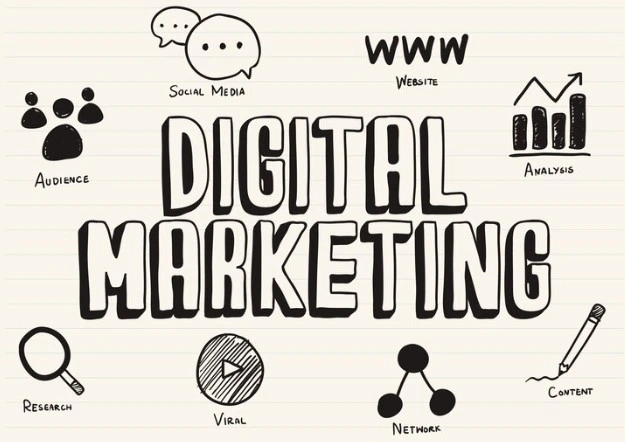
Digital marketing has completely transformed the way small and medium businesses connect with their target audience, generate leads, and compete with larger brands. Today, businesses of every size have access to a wide range of online channels — from SEO and social media to email marketing and PPC advertising — that deliver measurable results at a fraction of traditional marketing costs.
Our daily routine revolves around the digital world, where almost 95% of the new age generation is solely dependent on technology for seeking information. With over 5 billion active internet users worldwide, having a strong digital presence is no longer optional — it is the single most important growth lever available to SMBs today.
Digital marketing offers cost-effective alternatives to traditional advertising. It allows businesses to precisely target specific demographics, measure every campaign in real time, adjust strategies instantly, and achieve a significantly higher return on investment (ROI) compared to print, TV, or radio.
Search engine optimization (SEO), social media marketing, email marketing, pay-per-click (PPC) advertising, and content marketing are powerful tools that allow small and medium businesses to engage with customers, build brand awareness, drive qualified traffic, and boost sales — all within a controlled budget.
In this complete guide, we will explore exactly how digital marketing helps small and medium businesses grow, compete, and thrive in 2026.
Basic Understanding of Small And Medium Businesses
Small and medium businesses (SMBs), also referred to as small and medium-sized enterprises (SMEs), form the backbone of economies worldwide. They collectively account for over 90% of all businesses globally and contribute significantly to employment, innovation, and local economic growth.
A common classification of small and medium-sized businesses is based on the number of employees, annual revenue, and total assets:
Small businesses are typically characterized by fewer than 50 employees and modest annual revenues. These enterprises often operate within local or regional markets and span diverse industries including retail, services, hospitality, and technology. Small businesses are known for their agility, flexibility, and direct decision-making structures — advantages that digital marketing amplifies significantly.
Medium-sized businesses generally employ between 50 and 250 people and operate at a larger scale than small businesses, often serving regional or national markets. While they benefit from greater resources, they still compete in an environment dominated by large corporations. Digital marketing gives medium-sized businesses the targeting precision and analytics depth they need to punch above their weight class.
The success and sustainability of small and medium-sized businesses are crucial for economic development. They collectively contribute to employment, innovation, and enhancing competition in various sectors. Their success is not only important for the business owners but also for the communities and economies they serve. In today’s digital age, it is crucial to recognize that small businesses need digital marketing to thrive in the competitive business landscape.
Key stat: According to recent data, 60% of small businesses are not investing in SEO, and 61% are not running search advertising — meaning businesses that do invest in digital marketing gain an immediate competitive edge over the majority of their peers.
What Is Digital Marketing?
Digital marketing refers to any marketing activity that uses electronic devices, the internet, or digital platforms to deliver promotional messages and measure their impact throughout the customer journey. It encompasses a broad ecosystem of strategies designed to attract, engage, convert, and retain customers online.
Core digital marketing channels include:
- Search Engine Optimization (SEO) — optimizing your website to rank higher on Google and other search engines for relevant keywords
- Pay-Per-Click Advertising (PPC) — paid ads on Google Ads, Meta Ads, and other platforms where you only pay when a user clicks
- Content Marketing — creating valuable blogs, videos, infographics, and guides that attract and educate your target audience
- Social Media Marketing (SMM) — building brand presence and driving engagement on platforms like Facebook, Instagram, LinkedIn, and TikTok
- Email Marketing — sending targeted, personalized campaigns to nurture leads and retain existing customers
- Local SEO — optimizing your Google Business Profile and local citations to capture “near me” searches and local map pack rankings
- Conversion Rate Optimization (CRO) — improving your website experience to turn more visitors into customers
Many new businesses start every day in this digital world, and both new and existing businesses need to spread awareness and attract their target audience. Digital marketing is a great platform for all businesses for brand-building, lead generation, and sustainable growth.
Digital marketing allows you to use different digital channels — such as social media, pay-per-click advertising, search engine optimization, and email marketing — to connect with existing customers and reach people who are actively searching for your products or services.
When technology continues to evolve rapidly, digital marketing continuously shapes the way companies connect with their audiences and achieve their marketing objectives. In 2026, this includes AI-powered personalization, voice search optimization, short-form video, and social commerce — all of which are now within reach for even the smallest SMB.
Why Digital Marketing Is Important for Small and Medium Businesses
Cost-Effective Marketing at Scale
Before digital media, small businesses relied on traditional marketing methods such as printing posters, placing ads in newspapers, producing brochures, or investing in television and radio spots. These channels required significant time, money, and effort — with limited targeting and almost no measurable ROI.
Businesses now use digital marketing techniques to promote their products and services at a fraction of the cost. Social media marketing, SEO, and email marketing can be started with modest budgets and scaled as results grow. Email marketing, for example, delivers an average return of $36 for every $1 spent — a level of ROI that no traditional marketing channel can match.
Compared to traditional advertising like TV or print ads, digital marketing is not just more cost-effective — it is also more precise, measurable, and actionable.
Reach a Wider, More Targeted Audience
Traditional marketing limits businesses to their local geographic area. Digital marketing removes those walls entirely. Through social media platforms, search engines, and websites, small and medium businesses can reach a global audience instantly — or laser-target a hyper-local audience within a specific city or neighborhood.
More importantly, digital marketing allows you to target the right people, not just more people. Platforms like Google Ads and Meta Ads allow you to define your audience by demographics, location, interests, behaviors, and even purchase intent — ensuring your marketing budget reaches the people most likely to become customers.
Build a Trustworthy Online Presence
In today’s era, people search for any brand or product online before making a purchase. They typically buy from businesses that are visible online and appear credible. That is why it is essential for SMBs to use digital tools to build trust and authority with potential customers.
Through social media platforms, email marketing, and valuable content, digital marketing encourages two-way communication between brands and consumers. This engagement builds trust, loyalty, and a sense of community around the brand. 56% of customers say a company’s response to a review changed their perspective on the business — a powerful reminder that your digital presence shapes purchasing decisions daily.
Adapt Quickly and Stand Out in a Competitive Market
Digital marketing strategies can be quickly adapted to changing market trends and consumer behaviors. Traditional marketing campaigns require extensive planning, production lead times, and large upfront investments. Digital campaigns can be launched, tested, refined, and scaled within hours — giving SMBs unmatched agility in a competitive market.
This flexibility enables small and medium businesses to stay relevant, respond to competitor activity, and capitalize on emerging opportunities in real time.
Achieve a Measurable Return on Investment (ROI)
Every business — from a local startup to a growing SME — wants to see a return on its marketing investment. Digital marketing is the only channel that gives you complete, real-time visibility into your ROI at every stage of the customer journey.
Businesses that become successful consistently leverage Return on Investment (ROI) tracking to refine their strategies. By increasing sales at a lower cost and measuring exactly what drives conversions, digital marketing allows SMBs to maximize profitability with a data-driven approach.
Precisely Target and Segment Your Ideal Audience
Digital marketing enables precise audience targeting based on demographics, interests, behaviors, location, device type, and more. Small and medium-sized businesses can focus their budget on reaching their ideal customers — those most likely to convert — rather than wasting money on broad, untargeted campaigns.
This targeted approach optimizes marketing resources, reduces customer acquisition costs (CAC), and dramatically increases the chances of generating high-quality leads and sales. Platforms like Google Ads, Meta Ads, and LinkedIn Ads give SMBs targeting capabilities that were previously only available to enterprise-level marketers.
Track Measurable Results with Real-Time Analytics
Digital marketing tools provide detailed analytics and metrics that allow small and medium-sized businesses to measure the performance of every campaign with precision. Using tools like Google Analytics 4 (GA4) and Google Search Console, businesses can track organic website traffic, conversion rates, click-through rates (CTR), bounce rates, and customer acquisition costs in real time.
These insights provide the data needed for smarter decisions, better allocation of marketing budgets, and continuous campaign optimization — all contributing to a stronger return on investment.
Generate Consistent Leads Through Online Platforms
Lead generation is critical for business growth, and digital marketing is one of the most efficient ways to generate a consistent pipeline of qualified leads. Through SEO-optimized content, PPC landing pages, social media lead ads, and email nurture sequences, businesses can attract, capture, and convert leads on autopilot.
For example, an optimized blog post or landing page that ranks on Google’s first page can drive hundreds of potential customers to your website every month — completely free of ongoing ad spend. Inbound marketing, fueled by SEO and content, drives 54% more leads than outbound marketing methods like cold calling.
As a result of a well-executed digital marketing strategy, small and medium businesses can generate a consistent flow of new leads while also nurturing existing customers to increase lifetime value.
Also Read: Why Do Small Businesses Fail At Digital Marketing?

Role of Digital Marketing In Promoting Small And Medium Businesses
Understanding the role of digital marketing is one thing — but seeing exactly how it creates tangible outcomes is what motivates business owners to invest. Here are 12 proven ways digital marketing directly promotes and accelerates the growth of small and medium businesses.
1. Digital Marketing Gives Every Business Equal Chances to Compete
One of the most powerful aspects of digital marketing is that it levels the playing field between small businesses and large corporations. In the digital world, small and medium-sized businesses have the same competitive opportunities as enterprises with multimillion-dollar budgets — because search engines rank content based on relevance and quality, not company size or spending power.
Many businesses invest in search engine optimization (SEO) to improve their search engine rankings. A local SMB with a well-optimized, genuinely helpful blog post can outrank a Fortune 500 company for the same search query.
Google and other major search engines use algorithms that generate results based on relevance to the user’s search intent. If your content is more relevant, more helpful, and better structured than that of a larger competitor, you will rank higher — regardless of your company’s revenue or advertising budget.
In Google Ads, the PPC advertising platform also rewards relevance over budget — a high Quality Score can allow a small business to win ad placements over larger competitors bidding higher amounts. This democratic model makes digital marketing the great equalizer for SMBs.
2. Digital Marketing Helps You Earn a High Return on Investment
In comparison to traditional marketing, digital marketing is dramatically more cost-effective and delivers a significantly higher return on investment (ROI). Every rupee or dollar invested in digital marketing can be tracked, measured, and optimized — something traditional channels like print or billboard advertising simply cannot offer.
Consider these benchmarks:
- Email marketing: average ROI of $36 for every $1 spent
- SEO: delivers compounding returns — a well-ranked page drives free organic traffic for months or years
- PPC advertising: with proper optimization, businesses typically see a 200% ROI (Google Economic Impact data)
- Content marketing: generates 3x more leads than outbound marketing at 62% lower cost
To achieve your business objectives and optimize your marketing budget, digital marketing is not an optional investment — it is the most reliable path to a strong, measurable ROI.
3. Digital Marketing Allows You to Reach Customers Worldwide and Locally
Digital marketing helps you connect with customers across two dimensions simultaneously: globally and hyper-locally. You can advertise your business to people who fit your exact target audience profile — whether they are located across the country or just five kilometers away.
Traditionally, small businesses were limited to reaching local customers through physical channels. Digital marketing removes those geographical barriers entirely. Through SEO, social media, and paid advertising, SMBs can now reach people across cities, states, or even internationally.
If you run a pay-per-click (PPC) campaign, you can target people based on specific location, search intent, demographics, and behavior — reaching exactly those who are actively searching for your products or services, rather than spending on broad, untargeted billboard placements.
For brick-and-mortar businesses, Local SEO and Google Business Profile (GBP) optimization are game-changers. “Near me” searches have surged dramatically — appearing in the local 3-Pack on Google can generate immediate, high-intent foot traffic and phone calls without any paid advertising spend.
Precise targeting allows you to save time, reduce wasted spend, and generate a higher ROI from every marketing rupee invested.
Also Read: How Can Advertising Be Effective Through Digital Marketing?
4. Digital Marketing Builds Unstoppable Brand Awareness
Brand awareness is the foundation of every customer relationship — before anyone buys from you, they need to know you exist. Digital marketing is the most effective and cost-efficient way for SMBs to build brand visibility at scale.
Online advertising can increase brand awareness by as much as 80%. Through consistent SEO content, social media presence, display advertising, and email campaigns, your brand can stay top-of-mind across every stage of the customer journey — from initial discovery to final purchase decision.
Key channels for brand awareness for small and medium businesses include:
- Social media marketing — regular content posting on Facebook, Instagram, and LinkedIn builds brand recognition and community
- Content marketing — valuable blogs and videos establish your brand as an authority in your industry
- Google Business Profile (GBP) — a fully optimized GBP listing ensures your brand appears prominently in local search results and Google Maps
- Display and retargeting ads — keep your brand visible to users who have previously visited your website
5. Digital Marketing Drives Quality Website Traffic and Qualified Leads
Driving traffic to your website is only valuable when that traffic consists of people genuinely interested in your products or services. Digital marketing excels at attracting qualified traffic — users with real purchase intent — rather than random visitors who never convert.
SEO-optimized content targets users at precisely the right moment in their buying journey. When someone searches “affordable digital marketing agency for small businesses in India,” they are already in decision-making mode. Ranking for that search query means capturing a highly qualified lead at the exact moment of intent.
Inbound marketing, fueled by content and SEO, drives 54% more leads than traditional outbound methods — and at a significantly lower cost per lead. For SMBs with limited budgets, this makes content-driven digital marketing one of the highest-leverage investments available.
6. Digital Marketing Delivers Real-Time Analytics and Measurable ROI
One of the most transformative aspects of digital marketing for small and medium businesses is the ability to measure everything. Unlike traditional advertising, where ROI is guesswork, digital marketing provides complete transparency into every metric that matters.
Using tools like Google Analytics 4 (GA4), Google Search Console (GSC), Meta Business Suite, HubSpot, and SEMrush, SMBs can track:
- Organic traffic — how many users find you through search engines
- Conversion rate — percentage of visitors who take a desired action (enquiry, purchase, sign-up)
- Click-Through Rate (CTR) — how compelling your search listings and ads are
- Cost Per Acquisition (CPA) — how much it costs to acquire each new customer
- Customer Lifetime Value (CLV) — the total revenue a customer generates over their relationship with your business
- Bounce rate — how engaged visitors are with your content
These insights allow small and medium businesses to make data-driven decisions, continuously optimize their strategies, and ensure every marketing rupee is allocated to what works best.
7. Digital Marketing Enhances Local Visibility Through Local SEO
For SMBs that serve local customers, Local SEO is arguably the single most impactful digital marketing channel available. “Near me” searches have grown exponentially — consumers who search locally are typically ready to buy, making local search one of the highest-intent traffic sources available.
Key local SEO strategies for small and medium businesses include:
- Optimizing your Google Business Profile (GBP) with complete business information, categories, photos, and regular posts
- Maintaining consistent NAP (Name, Address, Phone) information across all online directories
- Building local citations on platforms like Justdial, Sulekha, IndiaMart, and Yelp
- Actively collecting and responding to customer reviews — a critical trust signal for local search rankings
- Creating location-specific landing pages and locally optimized content
Appearing in Google’s Local 3-Pack for relevant local searches can generate a significant surge in phone calls, website visits, and walk-in customers — all without any paid advertising spend.
8. Digital Marketing Builds Customer Trust, Loyalty, and Long-Term Relationships
Trust is the currency of modern business. Customers who trust your brand buy more, refer others, and stay loyal longer. Digital marketing provides SMBs with powerful tools to build and sustain trust at every stage of the customer relationship.
Through consistent content publishing, authentic social media engagement, proactive review management, and personalized email communication, small businesses can create genuine connections that drive repeat purchases and customer advocacy. User-generated content (UGC), customer testimonials, and case studies further amplify social proof — one of the strongest conversion triggers in digital marketing.
56% of customers say a company’s response to a review changed their perspective on that business. For SMBs, this means that actively managing your online reputation is not just good practice — it is a direct revenue driver.
9. Digital Marketing Enables 24/7 Sales and Customer Engagement
Unlike a physical store that closes at 6 PM, your digital marketing works around the clock. An optimized website with clear calls-to-action, automated email sequences, a Google Business Profile with click-to-call functionality, and a social media presence means your business is always available to answer questions, capture enquiries, and process sales — even while you sleep.
E-commerce functionality, chatbots (available through platforms like WhatsApp Business API and Intercom), and automated lead nurturing sequences allow SMBs to deliver a responsive customer experience without requiring a large team. This 24/7 accessibility is a significant competitive advantage over businesses that rely solely on traditional, time-limited channels.
10. Digital Marketing Supports Rapid Testing and Agile Optimization
One of digital marketing’s greatest strengths is its testability. Unlike a printed newspaper ad or a TV commercial that cannot be changed once it is live, digital campaigns can be tested, refined, and optimized in real time based on actual performance data.
A/B testing allows SMBs to experiment with different ad headlines, email subject lines, landing page designs, CTA button colors, and content formats — measuring precisely which version drives better results. This iterative, data-driven approach to marketing means your strategy continuously improves over time, reducing wasted spend and increasing conversion rates month over month.
The agility of digital marketing is particularly valuable for small businesses that need to respond quickly to market changes, competitor activity, or seasonal shifts in consumer behavior.
11. Digital Marketing Empowers SMBs with AI Tools and Marketing Automation
Artificial intelligence and marketing automation have fundamentally changed what is possible for small and medium businesses operating with limited teams and budgets. Tools that were once exclusive to enterprise marketers are now accessible and affordable for SMBs.
According to recent Salesforce research, 91% of SMBs using AI tools report a boost in revenue, and 90% say it makes their operations more efficient. AI-powered marketing tools available to SMBs in 2026 include:
- AI content creation — tools like ChatGPT and Jasper AI help produce SEO-optimized content at scale
- Email marketing automation — platforms like Mailchimp and Klaviyo send hyper-personalized campaigns triggered by user behavior
- Social media scheduling — tools like Buffer and Hootsuite automate posting and analyze optimal engagement times
- Predictive analytics — AI identifies which leads are most likely to convert, allowing smarter budget allocation
- AI-powered SEO tools — platforms like SEMrush and Ahrefs surface keyword opportunities, track rankings, and audit technical issues automatically
Marketing automation means that routine tasks — follow-up emails, lead scoring, social posting, ad bid management — run on autopilot, freeing business owners to focus on strategy and growth.
12. Digital Marketing Scales Seamlessly as Your Business Grows
Perhaps the most underappreciated advantage of digital marketing for SMBs is its scalability. Digital channels grow with your business — there is no need to rebuild your marketing infrastructure as your revenue increases. You can start with a modest budget of ₹20,000–₹50,000 per month and scale to a multi-channel enterprise strategy without starting from scratch.
SEO content compounds over time — a blog post published today continues to drive organic traffic for years. Email lists grow with every new customer. Social media audiences build month over month. PPC budgets can be increased or decreased instantly based on business performance. This scalable, compounding nature of digital marketing makes it the most sustainable long-term marketing investment available to small and medium businesses.
Digital Marketing for Small vs. Medium Businesses: What Is the Difference?
While both small and medium-sized businesses benefit enormously from digital marketing, their needs, budgets, and strategic priorities differ. Understanding these differences helps ensure you invest in the right mix of channels for your business stage.
Small Businesses typically benefit most from starting with:
- Local SEO and Google Business Profile optimization for immediate local visibility
- Social media marketing (Facebook and Instagram) for brand awareness and community building
- Basic email marketing for customer retention and repeat sales
- A well-optimized, mobile-friendly website as the foundation of all digital activity
Medium-Sized Businesses require a more sophisticated, full-funnel approach:
- Multi-channel SEO strategy covering informational, commercial, and transactional keywords
- Google Ads and Meta Ads campaigns with retargeting for each stage of the buyer journey
- Advanced email marketing automation and CRM integration (HubSpot, Salesforce)
- Conversion Rate Optimization (CRO) to maximize value from existing traffic
- Comprehensive analytics setup with GA4, custom dashboards, and attribution modeling
- Content marketing at scale — regular blog publishing, video production, and thought leadership
The core digital marketing channels are the same for both — but the depth of investment, level of automation, and strategic sophistication increase significantly as the business scales from small to medium.
How to Measure Digital Marketing Success for Your SMB
Small and medium-sized businesses that take time to develop a digital marketing strategy are better positioned to compete, because they can use data and analytics to measure results and track progress continuously.
To empower small and medium-sized businesses with effective digital marketing strategies, consider exploring tailored digital marketing pricing options. From basic packages to comprehensive plans, strategic and affordable digital marketing pricing packages ensure that businesses of all sizes can access professional digital marketing services that drive growth and success.
Traditional marketing strategies are difficult to evaluate because you cannot accurately measure whether your efforts influenced your audience. With digital marketing, you can monitor your campaigns in real time and see exactly what is working.
Key performance indicators (KPIs) every SMB should track:
- Organic Traffic — monthly visitors arriving via search engines (track in GA4)
- Keyword Rankings — position of your target keywords on Google (track via GSC or SEMrush)
- Conversion Rate — percentage of visitors completing your goal action (enquiry, purchase, call)
- Cost Per Acquisition (CPA) — total marketing spend ÷ number of new customers acquired
- Email Open Rate and Click Rate — engagement with your email campaigns (benchmark: 20–25% open rate)
- Social Media Engagement Rate — likes, comments, shares, and saves as a percentage of followers
- Return on Ad Spend (ROAS) — revenue generated per rupee spent on paid advertising
- Customer Lifetime Value (CLV) — total revenue expected from a customer over their relationship with your brand
Set monthly baselines for each KPI, review them consistently, and use the insights to refine your strategy. This measurement discipline is what separates SMBs that achieve compounding digital growth from those that treat marketing as a guessing game.
Also Read: How Digital Marketing Helps Small And Medium Businesses?
2026 Digital Marketing Trends Small and Medium Businesses Must Know
The digital marketing landscape evolves rapidly. Staying ahead of emerging trends is not just beneficial for SMBs — it is essential for maintaining a competitive edge. Here are the most important digital marketing trends shaping SMB growth in 2026:
1. AI-Powered Personalization and Content Creation — AI tools are now mainstream. SMBs are using AI to personalize website experiences, generate content at scale, automate customer service chatbots, and run predictive analytics that identify high-value leads automatically.
2. Voice Search Optimization — with the proliferation of smart speakers and voice assistants, a growing percentage of searches are conversational. SMBs need to optimize content for natural language queries (“What is the best digital marketing agency near me?”) and target featured snippet positions that voice assistants read aloud.
3. Short-Form Video Dominance — short-form video (TikTok, Instagram Reels, YouTube Shorts) now generates the highest ROI among all digital marketing formats. Even small businesses with no production budget can achieve massive organic reach with authentic, helpful short videos.
4. Zero-Click Content and Featured Snippets — as Google evolves with AI Overviews and direct answers, SMBs must optimize for featured snippets, People Also Ask boxes, and structured data to capture SERP real estate without requiring a click.
5. Hyper-Personalization at Scale — customers in 2026 expect tailored experiences. Email segmentation, behavior-triggered campaigns, and personalized website content are no longer luxury features — they are baseline expectations that drive engagement and conversion.
6. Social Commerce — platforms like Instagram Shop, Facebook Marketplace, and TikTok Shop allow SMBs to sell products directly within social media platforms, removing friction from the path to purchase and creating new revenue streams.
7. Local SEO and “Near Me” Search Optimization — “near me” searches remain one of the highest-intent query types, and the volume continues to grow. For local SMBs, optimizing your Google Business Profile, collecting reviews, and creating locally targeted content is a non-negotiable priority in 2026.
How Much Does Digital Marketing Cost for Small and Medium Businesses?
One of the most common questions from small and medium business owners is: how much should we budget for digital marketing? The honest answer is that digital marketing can deliver results at almost any budget level — what matters is investing wisely in the channels that match your business goals and growth stage.
Typical digital marketing investment ranges for SMBs in India:
- Starter (₹15,000–₹50,000/month) — covers basic SEO + Google Business Profile optimization + 2 social media platforms. Ideal for new businesses building their initial digital presence.
- Growth (₹50,000–₹1,50,000/month) — full SEO + content marketing + social media + basic PPC campaign. Suitable for established SMBs looking to increase traffic and lead generation consistently.
- Scale (₹1,50,000+/month) — multi-channel strategy including advanced SEO, Google Ads + Meta Ads, email automation, CRO, and analytics. For medium-sized businesses targeting significant market share growth.
The most important principle for SMB digital marketing budgeting is to start with channels that offer the highest ROI for your specific business type, measure results rigorously, and reinvest in what works. A focused strategy with a modest budget consistently outperforms a scattered approach with a large one.
Also Read: Digital Marketing Strategies Followed By Top Brands
Frequently Asked Questions (FAQs)
How does digital marketing help small businesses?
Digital marketing helps small businesses by increasing online visibility, enabling precise audience targeting, generating qualified leads, and delivering measurable ROI — all at a fraction of traditional advertising costs. It levels the playing field against larger competitors by giving SMBs access to the same tools that big brands use: SEO, PPC, social media, content marketing, and email marketing, with full analytics to track every rupee spent.
Is digital marketing worth it for small businesses?
Yes — digital marketing is the most cost-effective marketing investment available to small businesses. Email marketing alone delivers an average ROI of $36 for every $1 spent. SEO drives compounding organic traffic for months or years from a single piece of content. When executed consistently with clear goals, digital marketing delivers far superior returns compared to any traditional marketing channel.
How much does digital marketing cost for a small business in India?
Digital marketing costs for small businesses in India typically range from ₹15,000 to ₹1,50,000 per month depending on the services included and goals targeted. Basic SEO and social media management can start at ₹15,000–₹50,000/month, while a comprehensive growth plan including SEO, content, and PPC typically runs ₹50,000–₹1,50,000/month. Explore our digital marketing packages for detailed pricing.
Can small businesses compete with large corporations using digital marketing?
Absolutely. Search engines rank content based on relevance and quality — not company size or budget. A small business with a well-optimized, genuinely helpful blog post or landing page can outrank a Fortune 500 company for the same keyword. Targeted PPC, local SEO, and niche content strategies further enable SMBs to dominate in their specific market segments.
What are the most important digital marketing channels for small businesses?
The five most important digital marketing channels for small businesses are: (1) SEO for sustainable organic traffic, (2) Google Business Profile for local visibility, (3) Social media marketing (Facebook, Instagram, LinkedIn) for brand awareness and engagement, (4) Email marketing for customer retention and conversions, and (5) Google Ads (PPC) for immediate, intent-based traffic when you need fast results.
How do I measure the success of my small business’s digital marketing?
Track these 8 key metrics monthly: organic traffic (GA4), keyword rankings (Google Search Console), conversion rate, cost per acquisition (CPA), email open and click rates, social media engagement rate, return on ad spend (ROAS), and customer lifetime value (CLV). Set monthly baselines and use consistent reporting to identify trends and optimization opportunities.
How long does digital marketing take to show results for a small business?
Results vary by channel: PPC campaigns can generate enquiries within 24–48 hours of launch. SEO typically shows measurable ranking improvements within 3–6 months, with significant organic traffic growth at 6–12 months. Social media and email marketing build engagement over 1–3 months of consistent activity. Content marketing delivers its strongest compounding returns at the 6–12 month mark.
What are the key digital marketing trends for small businesses in 2026?
The most important 2026 digital marketing trends for SMBs are: AI-powered personalization and content automation, voice search optimization for conversational queries, short-form video marketing on TikTok and Instagram Reels, zero-click content optimization for featured snippets, hyper-personalized email campaigns based on behavioral data, and social commerce enabling direct product sales on Instagram and TikTok Shop.
Conclusion
Digital marketing is the single most powerful growth engine available to small and medium-sized businesses today. It levels the competitive playing field, delivers measurable and trackable ROI, enables precise audience targeting, builds lasting brand awareness, and scales seamlessly as your business grows — all within a cost-effective budget that works for SMBs at every stage.
By implementing the right combination of SEO, social media, email marketing, content marketing, PPC, and local SEO — supported by real-time analytics and AI-powered tools — small and medium businesses can compete effectively with larger brands, engage their ideal customers at every stage of the buyer journey, and achieve sustainable, compounding growth in 2026 and beyond.
By using the most effective digital marketing strategies for your brand, all types of businesses can access cost-effective methods that level up their positioning against larger competitors. The ability to precisely target audiences, measure analytics in real time, automate routine tasks, and continuously optimize every campaign makes digital marketing an indispensable strategic asset for every ambitious SMB.
The businesses that invest consistently in digital marketing today will be the market leaders of tomorrow. If you are ready to grow, the time to start is now.
Ready to accelerate your growth? Explore our tailored digital marketing packages designed specifically for small and medium businesses — or contact our team for a free strategy consultation today.