Recently updated: June 12th, 2026
Semrush, HubSpot, ClickBank, Amazon Associates, Shopify, NordVPN, and Elementor are the seven affiliate programs that consistently deliver the highest earnings in 2026 — with commission rates from 1% to 75%, cookie durations from 24 hours to 120 days, and earning potential from $50 to over $10,000 per month.
The difference between a $300/month affiliate income and a $3,000/month affiliate income is rarely about traffic volume. It is about program selection. A content creator sending 2,000 visitors per month to Amazon Associates earns fundamentally less per referral than the same creator sending identical traffic to a 40% recurring SaaS program — even if their audience size and content quality are identical.
This guide builds from the entity level up: first defining what affiliate commission structures actually are and how they differ, then mapping each of the seven programs against the attributes that determine real earnings — commission structure, cookie duration, payout threshold, niche fit, and recurring vs. one-time income — and finally answering whether affiliate marketing is structurally worth pursuing in 2026. All original programs are covered. No programs have been removed.
What Is an Affiliate Marketing Program?
An affiliate marketing program is a performance-based partnership in which a merchant pays a publisher — called an affiliate — a commission when the publisher drives a measurable action: a sale, a lead, a free trial signup, or a click, depending on the program’s commission model.
The affiliate does not create products, manage inventory, process payments, or handle customer service. The affiliate’s only role is promotion — publishing content that sends qualified traffic to the merchant through a unique tracking link. When that traffic converts within the program’s cookie window, the commission is earned.
Every affiliate program operates through three components that determine whether it earns real income for a publisher: the commission structure (how and how much you get paid), the cookie duration (how long you stay credited for a visitor after they click your link), and the payout model (when and at what minimum threshold you can withdraw earnings). A program with a 75% commission rate but a 24-hour cookie window earns less per piece of content than a 30% recurring program with a 90-day window, because a 24-hour window loses most delayed purchase conversions.
The global affiliate marketing industry reached $37.3 billion in 2026 (Influencer Marketing Hub, 2026) and is projected to grow to $48 billion by 2027 — a 29% increase driven by brands shifting marketing spend toward performance-based channels that only pay for confirmed results.
Before selecting any program, understanding the six commission structures that all affiliate programs use is essential — because the structure type determines your income ceiling more than the headline percentage rate.
What Are the Types of Affiliate Commission Structures?
The six affiliate commission structures are Pay-Per-Sale (PPS), Pay-Per-Lead (PPL), Pay-Per-Click (PPC), Recurring Commissions, Flat-Fee / High-Ticket, and Hybrid models — and each one rewards a different type of publisher behavior and content strategy.
Most beginner affiliates evaluate programs by commission percentage alone. That approach misses the structural difference between a 10% one-time commission and a 10% recurring commission: the one-time commission pays once per referral, while the recurring commission pays every month that referred customer stays subscribed. Over 12 months, a 10% recurring commission on a $200/month product earns $240 from one referral. The one-time version of the same rate earns $20 total.
Pay-Per-Sale (PPS) — How Does It Work?
Pay-Per-Sale pays a percentage or fixed amount for each completed purchase. The commission triggers only when a transaction is confirmed and refund windows have passed. PPS is the standard model for e-commerce programs (Amazon Associates: 1–10%, eBay Partner Network: 1–4%) and digital product marketplaces (ClickBank: 40–75%). High-volume, high-purchase-intent content — product reviews, comparison articles, “best of” lists — performs best under PPS models.
Pay-Per-Lead (PPL) — When Does It Pay Without a Sale?
Pay-Per-Lead pays for a qualified action that does not require a purchase: a free trial signup, a demo request, an email subscription, or a form completion. Semrush pays $10 per free trial signup under a PPL model — meaning an affiliate earns $10 each time a visitor starts a free trial, before any paid subscription begins. PPL is valuable for programs with long sales cycles where trial-to-paid conversion rates are strong.
Recurring Commissions — What Makes Them the Most Valuable Model?
Recurring commissions pay a percentage of every renewal payment a referred customer makes — every month, for as long as that customer remains subscribed. HubSpot pays 30% recurring for 12 months. ClickFunnels pays 40% recurring indefinitely. NordVPN pays 40% recurring indefinitely. A single referral on a $200/month plan at 30% recurring earns $60/month — $720 from one conversion over 12 months, growing as new referrals accumulate without replacing old ones. This compounding structure is why recurring commissions are the single most valuable model for building sustainable affiliate income.
Flat-Fee / High-Ticket — When Does a Fixed Dollar Amount Win?
Flat-fee programs pay a fixed dollar amount per referral, regardless of plan price. Shopify pays $70 per new merchant. BigCommerce pays 200% of the customer’s first monthly plan — up to $1,500 per enterprise referral. Flat fees suit affiliates who promote to audiences with high purchase intent for a specific product, where volume of referrals is predictable and the per-referral value justifies content investment.
Hybrid — What Is a Hybrid Commission Model?
Hybrid models combine an upfront flat fee with an ongoing recurring percentage. Cloudways pays $30 per sale plus 7% of the referred customer’s monthly recurring revenue indefinitely. This structure rewards both immediate conversions and long-term customer retention, making it particularly strong for hosting and software categories where customers stay subscribed for years.
Two-Tier Programs — Can You Earn From Other Affiliates’ Sales?
Two-tier programs pay commissions on both direct referrals and on sales generated by affiliates the publisher recruits into the program. If a content creator teaches affiliate marketing and recruits 50 new affiliates, a two-tier structure earns a percentage of every sale those 50 affiliates make. This model adds a structural passive income layer beyond product sales and is most relevant for affiliate marketing educators and community builders.
Programs with recurring commission structures now account for the fastest-growing share of affiliate program launches in the SaaS category — with platforms like PartnerStack reporting that 70%+ of their 300+ brand programs offer some form of recurring payout (PartnerStack, 2025).
With commission structures defined, the next section evaluates each of the seven programs against the six structural attributes that determine actual earnings: commission rate, cookie duration, payout threshold, niche fit, recurring vs. one-time model, and conversion rate drivers.
Which Affiliate Programs Pay the Highest Commissions in 2026?
The table below maps every program covered in this guide against its five determining attributes — use it to compare programs before reading the individual breakdowns.
| Program |
Commission Rate |
Cookie Duration |
Min. Payout |
Recurring? |
Best For |
| Amazon Associates |
1–10% |
24 hours |
$10 |
❌ |
All niches, beginners |
| Semrush |
Up to $200/sale + $10/trial |
120 days |
$50 |
✅ |
SEO & marketing creators |
| Shopify |
$70 per referral |
30 days |
$25 |
❌ |
Ecommerce educators |
| HubSpot |
30% recurring (12 months) |
90 days |
$10 |
✅ |
B2B & SaaS audiences |
| ClickBank |
40–75% |
60 days |
$10 |
✅ (some) |
Digital product creators |
| NordVPN |
Up to 100% (1st month) or 40% |
30 days |
$10 |
✅ |
Privacy & tech audiences |
| Elementor |
50% per sale |
90 days |
N/A |
❌ |
WordPress & web design creators |
| ClickFunnels |
40% recurring |
45 days (sticky) |
N/A |
✅ |
Marketing educators |
| Rakuten Advertising |
Varies by merchant |
Varies |
$50 |
❌ (mostly) |
E-commerce publishers |
| ShareASale |
Up to 50%+ |
Avg 30–90 days |
$50 |
✅ (some) |
Diverse niche bloggers |
| eBay Partner Network |
1–4% |
24 hours |
$10 |
❌ |
Collectibles, auctions |
| Cloudways |
$125/sale or $30 + 7% MRR |
Lifetime |
$250 |
✅ (hybrid) |
Web hosting & dev |
| Awin |
Varies by advertiser |
Varies |
€20 |
✅ (some) |
International publishers |
| BigCommerce |
200% of 1st month (up to $1,500) |
90 days |
$100 |
❌ |
Ecommerce platform promoters |
| PartnerStack |
30–50% recurring |
90 days |
$5 |
✅ |
B2B SaaS audiences |
The 7 Best Affiliate Marketing Programs: Full Breakdown
Each program below is structured around the five attributes that determine real earning potential: commission structure, cookie duration, payout model, conversion rate drivers, and niche alignment. Reading each attribute in order reveals why some programs outperform their headline commission rate — and why others underperform it.
1. Amazon Associates — What Commission Does It Pay and Who Is It Best For?
Commission structure: Amazon Associates pays between 1% and 10% per completed sale, with rates determined by product category. Luxury beauty products and Amazon Games pay 10%. Physical video games and grocery items pay 1–3%. The cookie duration is 24 hours — the shortest of any program in this guide — and extends to 90 days only if the visitor adds a product to their cart within the session.
The 24-hour cookie is the program’s fundamental limitation. A visitor who clicks an affiliate link on Monday but completes their purchase on Wednesday generates no commission. For content covering products where readers research before buying — electronics, furniture, software — this window loses a significant percentage of eventual conversions. Amazon Associates performs best when content targets purchase-ready audiences with short decision cycles.
Where Amazon Associates overperforms its low commission rate is brand trust and conversion rate. Amazon’s purchase infrastructure — saved payment methods, Prime membership, one-click checkout — produces conversion rates that are typically 2–3x higher than lesser-known retailers. A 4% Amazon commission on a $150 product with a 12% conversion rate often generates more revenue per 100 visitors than a 10% commission on a competing retailer with a 3% conversion rate. The math favors Amazon in high-purchase-intent content niches, even with compressed commission rates.
Over 900,000 active affiliates use Amazon Associates. Its catalog of 350 million+ products across every category makes it the only affiliate program capable of monetizing almost any content topic — from survival gear to cosmetics to cloud software. For new affiliates still identifying which content topics drive conversions, this product breadth makes it the lowest-friction starting point in affiliate marketing.
Amazon Associates has cut commission rates multiple times since 2017 — rates dropped over 50% from peak levels following the April 2020 commission restructuring. Affiliates who built income strategies exclusively on Amazon Associates absorbed losses of 40–60% of monthly earnings overnight. That structural risk is the program’s most important caveat.
- Commission Rate: 1–10% (category-based)
- Cookie Duration: 24 hours (90 days if cart-added)
- Payout Method: Direct deposit, gift card, or check
- Minimum Payout: $10
- Best For: Beginners, lifestyle bloggers, product review sites, gift guides, all niches
- Risk factor: Commission rate cuts without warning — always pair with a secondary program
2. Semrush (BeRush) — What Makes Its 120-Day Cookie the Highest Earning Advantage?
Commission structure: Semrush pays up to $200 per new subscription sale and $10 per free trial signup (Pay-Per-Lead model). Subscription renewals also generate recurring commissions. The cookie duration is 120 days — the longest of any program reviewed here — meaning an affiliate receives credit for conversions that happen up to four months after the original click.
The 120-day cookie does not simply extend the earning window. It fundamentally changes which content format is viable. With a 24-hour cookie, an affiliate must publish high-purchase-intent content targeting readers who are ready to buy immediately. With a 120-day cookie, an affiliate can publish broad educational content — “how to do keyword research,” “what is domain authority,” “how to run a site audit” — and earn commissions from readers who discover Semrush organically through the tutorial and convert weeks later. This opens an entirely different and typically lower-competition content strategy.
Semrush subscription plans range from $108 to $449 per month. The trial-to-paid conversion rate in professional software categories is historically strong when the free trial provides genuine value — and Semrush’s free trial gives access to meaningful tool functionality. A single referred subscriber on an annual plan at $108/month, with the affiliate earning the $200 first-sale commission plus recurring renewal commissions, generates substantial long-term income from a single conversion.
The program is administered through the BeRush platform, which provides affiliates with real-time earnings dashboards, promotional banners, and landing pages. Payouts are made via PayPal or wire transfer once the $50 minimum threshold is reached — a threshold achievable from a single sale plus several trial signups.
Semrush is used by over 10 million marketing professionals globally (Semrush, 2026). With brand recognition this strong in the SEO and digital marketing space, affiliates writing for marketing, SEO, or business audiences encounter pre-warmed audiences where conversion is confirmation rather than cold persuasion — producing above-average conversion rates relative to the traffic invested.
- Commission Rate: Up to $200/sale + $10/trial signup
- Cookie Duration: 120 days
- Payout Method: PayPal or wire transfer
- Minimum Payout: $50
- Best For: SEO bloggers, marketing educators, content agencies, course creators in digital marketing
3. Shopify — How Does a Flat $70 Per Referral Compare to Percentage-Based Programs?
Commission structure: Shopify pays a flat $70 for every new merchant who signs up for a paid Shopify plan through the affiliate’s link. The commission is fixed regardless of which paid plan the merchant selects. The cookie duration is 30 days, and the minimum payout threshold is $25 — the second-lowest of any direct program in this guide.
The flat-fee structure creates income predictability absent in percentage-based models. An affiliate sending 15 qualified referrals per month earns exactly $1,050 — regardless of whether those merchants chose Basic ($29/month), Shopify ($79/month), or Advanced ($299/month) plans. For affiliates in the entrepreneurship and online business space, where audiences actively seek e-commerce tools, this predictability makes revenue forecasting straightforward compared to variable-commission programs.
Shopify powers over 4 million online stores globally, making it the most recognized e-commerce platform brand available for affiliate promotion. Audiences already familiar with Shopify — entrepreneurship bloggers, YouTube channels covering side hustles, podcasts about starting online businesses — convert at higher rates because the affiliate’s role is endorsement rather than introduction. The 30-day cookie window captures the free-trial-to-paid conversion cycle that most Shopify prospects move through before committing to a plan.
For context on flat-fee vs. percentage comparison: a $70 flat fee requires the referred merchant to be on a plan worth $700+ for a 10% commission to match it. Since Shopify’s Basic plan is $29/month, a 10% PPS model would pay only $2.90 per referral. The flat fee overcompensates relative to what a percentage model would produce — by design, because Shopify values new merchant acquisition over per-referral commission efficiency.
- Commission Rate: $70 per new paid merchant
- Cookie Duration: 30 days
- Payout Method: PayPal
- Minimum Payout: $25
- Best For: Ecommerce educators, entrepreneurship YouTubers, side-hustle bloggers, business podcast hosts
4. HubSpot — What Is the Difference Between Its Recurring and Flat Bounty Models?
Commission structure: HubSpot offers two commission models. The recurring model pays 30% of the referred customer’s plan payment every month for 12 months. The flat bounty model pays $250–$1,000 per referral depending on which HubSpot product the customer purchases. The cookie duration is 90 days. The minimum payout is $10 — the joint-lowest of any major program in this guide.
The choice between models is a cash flow decision. The flat bounty ($250–$1,000) delivers a larger immediate payment per referral. The recurring model (30% for 12 months) delivers more total income per referral if the customer stays subscribed — and with HubSpot’s churn rates among the lowest in the enterprise SaaS category, most referred customers do stay for the full 12-month window. A referral on HubSpot’s $500/month Professional plan under the recurring model earns $150/month × 12 months = $1,800 total — significantly more than the flat $500 bounty for the same plan.
HubSpot’s product range spans free CRM tools accessible to solo businesses through to enterprise Marketing Hub plans priced at thousands per month. This wide price spectrum means B2B content creators can promote HubSpot to audiences at different stages of business maturity — startup founders, growing marketing teams, and enterprise sales organizations — with different plan conversions generating different commission amounts under the same affiliate link.
The 90-day cookie window is particularly important for B2B software, where purchase decisions typically involve multiple stakeholders, a procurement process, and evaluation periods. A 90-day window covers the majority of B2B software evaluation cycles and makes HubSpot viable to promote through top-of-funnel educational content, not only bottom-of-funnel comparison and review pieces.
HubSpot is used by over 200,000 companies in more than 120 countries (HubSpot, 2026). Its brand authority in the B2B marketing and CRM space means that affiliates writing for LinkedIn audiences, marketing agency owners, and B2B founders are promoting a product with near-universal name recognition in those communities — reducing the persuasion workload and improving conversion rates relative to lesser-known alternatives.
- Commission Rate: 30% recurring (12 months) or $250–$1,000 flat bounty
- Cookie Duration: 90 days
- Payout Method: PayPal or direct deposit
- Minimum Payout: $10
- Best For: B2B bloggers, SaaS reviewers, marketing agencies, LinkedIn creators, CRM content
5. ClickBank — Why Do Commission Rates Reach 75% and What Does Gravity Score Measure?
Commission structure: ClickBank pays between 40% and 75% per sale on digital products — ebooks, video courses, membership sites, and software. Commission rates this high exist because digital products carry near-zero marginal cost: no manufacturing, inventory, or shipping. Creators pass the majority of the sale price to affiliates as incentive to generate promotions and traffic. The cookie duration is 60 days. Weekly or bi-weekly payouts are available once the $10 threshold is reached.
The 40–75% commission rate is the highest percentage available in any program reviewed here, but the headline rate requires context. ClickBank hosts both high-quality products and low-quality ones with high refund rates. A product paying 75% commission with a 30% refund rate effectively pays 52.5% on confirmed, non-refunded sales — while also creating audience trust risk if the product delivers poorly. Two metrics distinguish reliable products from risky ones.
The Gravity Score measures how many unique affiliates have earned a commission from a product in the past 12 weeks. A Gravity Score above 20 indicates a product that converts across multiple independent traffic sources — evidence that the product sells based on its quality, not just aggressive promotion. A score above 100 indicates a highly competitive product where affiliate saturation may suppress returns. The optimal range for an affiliate entering a product promotion is typically 20–80.
The EPC (Earnings Per Click) measures the average earnings generated per click on a product’s affiliate link across all affiliates. An EPC of $1.50 means the average affiliate earns $1.50 per visitor sent to the product’s sales page. Multiplying EPC by expected click volume gives a realistic revenue estimate before committing content resources to a promotion.
ClickBank’s marketplace spans health and wellness, personal finance, fitness, relationships, and computing — categories with large, active audiences and strong purchase intent for information products. Weekly payouts via multiple methods (check, direct deposit, wire transfer, Payoneer) make it the fastest-paying program in this guide for affiliates who need regular cash flow.
ClickBank has processed over $6.2 billion in sales since its founding in 1998 and currently hosts over 100,000 product creators serving a marketplace of more than 100 million buyers globally (ClickBank, 2025). That buyer pool is a structural advantage: conversion infrastructure, payment processing, and sales page optimization are handled by ClickBank, not the affiliate.
- Commission Rate: 40–75% per sale (some products offer higher on upsells)
- Cookie Duration: 60 days
- Payout Method: Check, direct deposit, wire transfer, Payoneer
- Minimum Payout: $10
- Best For: Health and wellness bloggers, personal finance creators, self-improvement content, fitness niche
- Quality filter: Always check Gravity Score (aim for 20–80) and refund rate before promoting
6. NordVPN — When Should an Affiliate Choose the 100% First-Month vs. 40% Recurring Model?
Commission structure: NordVPN offers two structures. The first-month model pays up to 100% of the customer’s first month payment — meaning the affiliate earns the full cost of the subscription for one month as a commission. The recurring model pays 40% of every renewal payment for the lifetime of the customer’s subscription. The cookie duration is 30 days. The minimum payout is $10 via the Impact platform.
The choice between 100% first-month and 40% recurring is a time preference decision. An affiliate who needs immediate cash flow per referral benefits from the 100% first-month model — one conversion yields the maximum per-referral payment immediately. An affiliate building long-term passive income benefits from the 40% recurring model — one conversion on a 2-year NordVPN plan generates 40% commission on every renewal payment, compounding over the subscription lifetime.
VPN adoption is driven by three audience segments with different content entry points. Privacy-conscious consumers seek VPNs for general data protection — reachable through cybersecurity and digital privacy content. International travelers seek VPNs for secure public Wi-Fi access and geo-restriction bypassing — reachable through travel content. Remote workers seek VPNs for secure corporate network access — reachable through productivity and work-from-home content. Each segment represents a distinct content strategy with separate keyword clusters, meaning NordVPN is promotable through multiple independent content verticals without audience overlap.
NordVPN provides affiliates with pre-built landing pages localized for different markets, conversion-tested promotional banners, and performance tracking through the Impact platform dashboard. These assets reduce the creative workload and allow affiliates to launch promotions without designing custom landing pages.
NordVPN has over 14 million users across 60+ countries (NordVPN, 2025) and consistently ranks among the top two or three VPN brands in independent review comparisons. High brand recognition converts to higher affiliate conversion rates: a reader already familiar with NordVPN from independent sources requires less persuasion from an affiliate recommendation than a reader encountering a lesser-known VPN brand for the first time.
- Commission Rate: Up to 100% first month or 40% recurring
- Cookie Duration: 30 days
- Payout Method: Impact platform
- Minimum Payout: $10
- Best For: Tech bloggers, cybersecurity creators, privacy advocates, travel content creators, remote work audiences
7. Elementor — How Does a 50% Commission on a 90-Day Cookie Perform in the WordPress Niche?
Commission structure: Elementor pays 50% of every sale — the highest percentage commission of any single product reviewed in this guide. Plans range from $59 to $399 per year, making per-sale commissions between $29.50 and $199.50. The cookie duration is 90 days. There is no minimum payout threshold — commissions are paid via PayPal as they accumulate.
The 50% commission on a 90-day cookie window creates a high conversion window for a product that most WordPress users already know. Elementor has over 10 million active installs, making it the most widely installed WordPress page builder globally. In the WordPress ecosystem, an affiliate promoting Elementor is typically recommending a tool the reader has already heard of, tried, or has bookmarked to evaluate — not introducing an unknown product. This pre-existing awareness compresses the persuasion cycle and improves conversion rates relative to what a 50% commission on an unknown product would produce.
Elementor plans at $59/year (at 50% = $29.50 commission) target individual WordPress site owners and bloggers. Plans at $199/year and $399/year (at 50% = $99.50 and $199.50 commission) target freelancers and agencies managing multiple client sites. An affiliate whose audience includes professional web designers and agency owners can earn near-$200 commissions on premium plan referrals — competitive with flat-fee high-ticket programs on a per-referral basis.
The 90-day cookie window is appropriate for the WordPress buyer’s journey. A developer evaluating page builders typically tests two or three options over a period of weeks. A 90-day window captures the full evaluation-to-purchase cycle, including readers who find an affiliate’s comparison article early in their research and convert after completing their own testing.
The WordPress ecosystem powers 43% of all websites globally (W3Techs, 2026) — a buyer pool of hundreds of millions of site owners. Even a fraction of that market actively evaluating page builders represents a substantial addressable audience for Elementor affiliate content. WordPress tutorial sites, web design blogs, and agency-owner publications all have natural audience alignment with Elementor promotion.
- Commission Rate: 50% per sale ($29.50–$199.50 per referral)
- Cookie Duration: 90 days
- Payout Method: PayPal
- Minimum Payout: None
- Best For: WordPress bloggers, web designers, developers, digital agency owners
What Other Affiliate Programs Pay High Commissions in 2026?
The seven programs above cover the highest-earning opportunities for the majority of content niches. The following programs serve specific verticals and audience types with strong structural commission models that justify inclusion for creators whose audiences align with them.
ClickFunnels — How Does a 40% Recurring Commission Compound Over Time?
ClickFunnels pays 40% recurring commission on all subscription plans — $97, $197, or $297/month — for as long as the referred customer stays subscribed. That translates to $39, $79, or $119 per referred customer per month. The program uses sticky cookies: any future visit from a prospect through any of the affiliate’s links permanently credits the affiliate, even beyond the standard 45-day window.
At 40 active referrals on the $197/month plan, the affiliate earns $79 × 40 = $3,160/month in base recurring income — from content published once. Each new referral adds to that base without removing old ones. The sticky cookie ensures affiliates retain credit for leads who initially hesitated and returned months later after seeing additional content. This compounding structure is why ClickFunnels is a cornerstone program for marketing educators with audiences of course creators, coaches, and digital entrepreneurs.
- Commission Rate: 40% recurring
- Cookie Duration: 45 days (with permanent sticky cookie attribution)
- Best For: Online marketing educators, course creators, business coaches, funnel strategy content
Rakuten Advertising — Why Do Merchant-Negotiated Rates Suit Established Publishers?

Rakuten Advertising connects publishers with premium brand advertisers — Walmart, Macy’s, Booking.com, and thousands of others — with commission rates and cookie durations negotiated per brand partnership. Operating since 1996 across 190+ countries with 50+ currency support, it is the strongest network for international publishers seeking household-name brands that require minimal audience persuasion.
Variable commission rates suit established publishers with demonstrable traffic who can negotiate favorable terms directly with brand advertiser managers. Entry-level affiliates building traffic benefit less from this structure because negotiating leverage requires proven referral volume. The $50 minimum payout and detailed analytics dashboard support campaign optimization once volume thresholds are consistently met.
- Commission Rate: Varies by merchant (negotiated per brand)
- Minimum Payout: $50
- Best For: E-commerce publishers, deal and coupon sites, lifestyle bloggers, international affiliates
ShareASale — What Does Access to 25,000+ Merchant Programs Mean for a Niche Blogger?

ShareASale hosts over 25,000 merchant programs across virtually every content vertical — fashion, travel, financial services, home goods, software, and more. Commission rates reach 50%+ on SaaS and subscription merchants; average 30–90 day cookie windows apply depending on the merchant. Now part of the Awin Group, ShareASale provides standardized tracking, monthly payouts at a $50 threshold, and dedicated affiliate managers.
For niche bloggers whose audiences span product categories not well-served by a single direct program — a home decor site, a personal finance blog, a fitness platform — ShareASale’s breadth means finding relevant merchant programs within one dashboard without managing separate accounts across multiple direct programs. This consolidation of tracking, payment, and reporting reduces operational overhead significantly for affiliates managing five or more active merchant promotions.
- Commission Rate: Up to 50%+ (varies by merchant)
- Cookie Duration: 30–90 days average
- Minimum Payout: $50
- Best For: Bloggers in any niche, lifestyle creators, coupon sites, deal publishers
eBay Partner Network — When Does a 1–4% Commission Rate Make Sense?
eBay Partner Network pays 1–4% per sale across 1.2 billion live listings — category-based rates with a 24-hour cookie window. Those rates are low by any measure. The structural justification for promoting eBay despite low rates is product exclusivity: eBay’s inventory of vintage items, rare collectibles, limited-edition products, and one-of-a-kind auction listings is not available on any other platform.
A collectibles blogger, vintage clothing site, antique market platform, or rare sneaker content creator is not choosing between eBay and a higher-commission alternative — they are choosing between eBay and no monetization, because the products their audience buys exist only on eBay. In that context, 1–4% on high-value collectibles items (a $2,000 vintage watch at 4% = $80 per sale) produces meaningful income from audience purchases that have no higher-commission alternative.
- Commission Rate: 1–4% (category-based)
- Cookie Duration: 24 hours
- Minimum Payout: $10
- Best For: Collectibles bloggers, vintage and antique niches, rare item content, auction deal hunters
Cloudways — What Is the Difference Between the Slab and Hybrid Commission Models?
Cloudways offers two distinct commission models. The Slab model pays a flat fee per referral on a tiered scale — up to $125 per referral, with the per-referral rate increasing as monthly referral volume grows (more referrals = higher per-referral rate). The Hybrid model pays $30 per confirmed signup plus 7% of the customer’s monthly recurring revenue indefinitely. The cookie duration is a lifetime cookie — no expiration, ever.
The lifetime cookie is structurally unique among all programs in this guide. It means a visitor who clicks a Cloudways affiliate link today and converts in 18 months still generates commission for the affiliate. For hosting review content that attracts long-tail research traffic over time, this eliminates the primary earning risk of standard cookie-window programs — the conversion delay problem that causes most programs to lose earnings from undecided prospects.
- Commission Rate: Up to $125/sale (Slab) or $30 + 7% MRR (Hybrid)
- Cookie Duration: Lifetime
- Minimum Payout: $250
- Best For: Web hosting bloggers, developer content creators, agency owners, WordPress site builders
BigCommerce — How Does 200% of the First Month Compare to Other E-Commerce Programs?
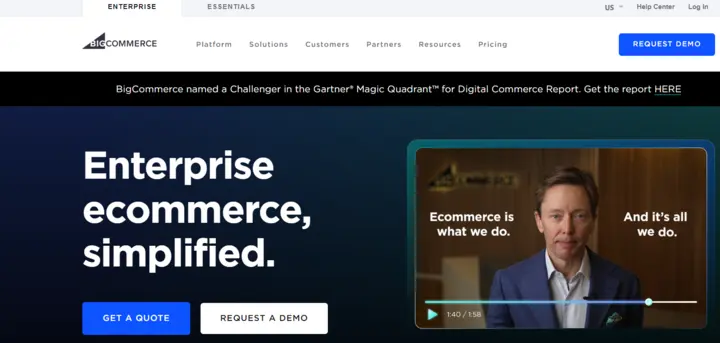
BigCommerce pays 200% of the referred customer’s first monthly plan payment — up to $1,500 for enterprise plan referrals. On a Standard plan ($29/month), that is $58. On an Enterprise plan ($750/month), that is $1,500. No other e-commerce platform affiliate program offers a commission ceiling this high.
The 200% structure means BigCommerce overpays on conversion relative to the customer’s first-month lifetime value — by design. BigCommerce prioritizes new merchant acquisition aggressively because enterprise merchants generate high lifetime revenue. For affiliates who write for B2B e-commerce audiences, agency owners evaluating platforms for clients, or enterprise-focused content that reaches decision-makers, a single enterprise referral can generate commissions equivalent to dozens of standard referrals on other programs.
- Commission Rate: 200% of first month (up to $1,500)
- Cookie Duration: 90 days
- Minimum Payout: $100
- Best For: Ecommerce platform reviewers, B2B content creators, agency owners
PartnerStack — Why Is It the Leading Network for B2B SaaS Affiliates?
PartnerStack is a B2B-only affiliate network connecting publishers with 300+ SaaS brands including Gorgias, Webflow, and Omnisend. Commission rates of 30–50% recurring with 90-day cookie durations are standard across most programs. The $5 minimum payout via Stripe or PayPal is the lowest threshold of any network in this guide — making first-earnings achievable faster for affiliates in the early traffic-building phase.
PartnerStack’s exclusive focus on B2B software means every program on the platform targets buyers rather than consumers — businesses evaluating tools that solve operational problems. B2B buyer conversion cycles are longer than consumer purchases, but the per-referral commission values are higher and churn rates are lower, making lifetime commission earnings per referral higher than most consumer software programs.
- Commission Rate: 30–50% recurring (varies by brand)
- Cookie Duration: 90 days
- Minimum Payout: $5
- Best For: B2B content creators, SaaS reviewers, marketing technology bloggers, startup-focused content
Awin — What Makes It the Strongest Network for International Affiliates?
Awin operates across 180+ countries and facilitated over $20 billion in advertiser sales in its most recent annual report. Commission rates and cookie durations are negotiated per advertiser, spanning retail, telecom, finance, and travel verticals. The €20 minimum payout requires a small refundable joining deposit (€5–€20) to prevent fraudulent signups — returned upon reaching the first payout threshold.
For publishers whose audiences are geographically diverse — international travel blogs, multi-language sites, global comparison platforms — Awin’s cross-border infrastructure and multi-currency payout system (BACS, wire transfer, PayPal) eliminates the operational friction of managing affiliate partnerships across separate country-specific networks. Access to premium household-name brands that already have strong brand recognition in multiple countries produces higher conversion rates than promoting lesser-known regional alternatives.
- Commission Rate: Varies by advertiser
- Minimum Payout: €20
- Best For: International publishers, retail bloggers, voucher and cashback sites, lifestyle content creators
Which Affiliate Program Is Best for Your Niche?
Niche alignment is the attribute that determines whether a high commission rate converts or wastes content investment. The mapping below pairs content categories with the programs that produce the highest conversion rates within them — based on audience intent alignment, not headline commission rate.
Which Programs Are Best for E-commerce and Retail Content?
Amazon Associates, eBay Partner Network, Rakuten Advertising, and ShareASale serve e-commerce and retail content best. Amazon’s 350 million+ product catalog covers any product category. eBay serves collectibles, vintage, and auction-specific content that Amazon cannot. Rakuten and ShareASale provide access to major retail brand programs — Walmart, Macy’s, fashion brands — for lifestyle, deal, and product comparison content. The 24-hour cookie on Amazon and eBay limits earnings from delayed purchases, so pairing them with a 30–90 day program for the same audience is advisable.
Which Programs Are Best for SaaS and Marketing Software Content?
Semrush, HubSpot, ClickFunnels, and PartnerStack serve SaaS and marketing software audiences best. Semrush suits SEO and digital marketing audiences. HubSpot suits B2B and CRM audiences. ClickFunnels suits course creator and digital entrepreneur audiences. PartnerStack provides access to 300+ SaaS brands for publishers who cover multiple software categories. All four offer recurring commission models — structurally superior for long-term income than the one-time commission models typical in e-commerce programs.
Which Programs Are Best for WordPress and Web Development Content?
Elementor and Cloudways serve WordPress and web development audiences best. Elementor’s 50% commission with a 90-day cookie is the strongest single-product offering in the WordPress ecosystem. Cloudways’ lifetime cookie and hybrid commission model (flat + recurring MRR) makes it the optimal pairing for hosting content alongside page builder recommendations — a natural content combination for WordPress tutorial sites and web design blogs.
Which Programs Are Best for Online Business and Ecommerce Platform Content?
Shopify and BigCommerce serve entrepreneurship and online business platform content best. Shopify’s $70 flat fee suits content targeting first-time store owners and side-hustle entrepreneurs. BigCommerce’s 200% first-month commission (up to $1,500) suits content targeting established businesses evaluating enterprise e-commerce platform migrations — a smaller audience but dramatically higher per-referral value.
Which Programs Are Best for Privacy and Security Content?
NordVPN serves privacy, cybersecurity, and travel content best. Its dual commission model (100% first month or 40% recurring) gives affiliates structural flexibility based on cash flow needs. The product’s broad audience applicability — privacy advocates, travelers using public Wi-Fi, remote workers — makes it promotable across multiple distinct content verticals without audience overlap.
What Is the Difference Between an Affiliate Network and a Direct Affiliate Program?
An affiliate network hosts programs from multiple brands under a single dashboard — ShareASale, Awin, Rakuten Advertising, and PartnerStack are networks. A direct affiliate program is operated by a single brand for its own products — Amazon Associates, Shopify, HubSpot, and Semrush are direct programs.
The distinction matters for four practical reasons: commission rates, support quality, payout consolidation, and program diversity. Direct programs typically offer higher commission rates because no network middleman takes a percentage. Networks offer dashboard consolidation — one login manages dozens of merchant programs rather than separate accounts per brand. Networks also provide standardized tracking and payment infrastructure that direct programs must build independently.
For a new affiliate promoting one or two products, direct programs are preferable: no network joining requirements, often simpler approval, and potentially higher commission rates. For an established affiliate managing 10+ merchant promotions across multiple niches, a network like ShareASale or Awin consolidates tracking data, payout schedules, and program management into a single operational workflow — reducing the time cost of affiliate portfolio management significantly.
Awin’s network processed over $20 billion in publisher-driven sales in its most recent annual report. ShareASale hosts 25,000+ merchant programs. These scale figures indicate that network infrastructure supports affiliate income at every level — from first-month beginners to publishers generating six-figure monthly commissions across hundreds of merchant partnerships.
How Much Can You Realistically Earn With Affiliate Marketing in 2026?
Beginner affiliates (0–12 months) typically earn $0–$2,000/month. Intermediate affiliates (1–3 years) earn $2,000–$10,000/month. Advanced affiliates (3+ years with recurring commission portfolios) earn $10,000–$100,000+/month. These ranges assume consistent content publication, targeted traffic acquisition, and program alignment — not raw traffic volume.
Income projections without traffic context are misleading. The variable that determines earnings is not monthly visitor count alone — it is the product of visitor count × conversion rate × average commission value. A site with 5,000 monthly visitors converting at 3% on a $200 Semrush sale generates $300/month. The same site converting at 3% on Amazon Associates at an average $8 commission generates $12/month. Program selection is the multiplier.
What Are Realistic Monthly Earnings Per Program?
Based on moderate traffic with strong audience alignment:
- Semrush: $500–$5,000/month — requires 10–25 monthly referrals; recurring renewal commissions compound over time
- HubSpot: $500–$10,000+/month — B2B audience essential; single enterprise referral on recurring model = $1,800 over 12 months
- ClickFunnels: $500–$5,000/month — 40 active referrals on the $197 plan = $3,160/month baseline recurring
- Amazon Associates: $50–$2,000/month — requires high traffic volume; best for product review sites with broad, purchase-intent audiences
- BigCommerce: $1,000–$5,000+/month — 3–5 enterprise referrals per month at maximum commission outperforms volume programs
- Elementor: $200–$3,000/month — 50% commission; agency-owner audience on premium plans generates near-$200 per referral
- NordVPN: $300–$3,000/month — broad audience applicability across tech, travel, and privacy verticals
The compounding math of recurring commissions is the structural reason experienced affiliates earn more from smaller audiences than beginners earn from larger ones. An affiliate with 200 active HubSpot referrals at 30% recurring on an average $300/month plan earns $60 × 200 = $12,000/month — without publishing a single new piece of content, as long as those referrals remain subscribed.
Is Affiliate Marketing Still Worth Pursuing in 2026?
The Short Answer
Yes — for content creators who select programs based on audience alignment and prioritize recurring commission models over one-time payouts. Affiliate marketing is not worth pursuing for creators who approach it as a passive add-on to unrelated content.
When Is Affiliate Marketing Worth Pursuing?
Affiliate marketing produces reliable, scalable income when three conditions are met: the affiliate already creates content that naturally covers the promoted product’s use case; the affiliate’s audience actively searches for or already uses the product category; and the affiliate selects programs with recurring commission structures that compound monthly income from previously published content. Under these conditions, affiliate income compounds over time without proportional increases in content production volume.
The global industry valuation of $37.3 billion in 2026 — projected to reach $48 billion by 2027 — reflects that brands are actively increasing affiliate channel investment, not reducing it. More brands launching programs means more program options, more competitive commission rates, and more niche-specific programs available to publishers whose audiences were previously underserved by mass-market networks.
When Is Affiliate Marketing Not Worth the Investment?
Affiliate marketing underperforms expectations when an affiliate promotes products misaligned with their audience, relies entirely on a single program with rate-cut risk (Amazon Associates history is the clearest example), or targets only one-time commission programs without building a recurring income foundation. Affiliates who cannot attract targeted traffic — visitors with genuine purchase intent for the promoted products — find that even high commission rates produce negligible income from non-converting general traffic.
The Verdict
Affiliate marketing in 2026 is structurally more valuable than display advertising for most content publishers — because the per-visitor earning ceiling is higher, recurring commission programs compound monthly without new content, and program selection quality now matters more than traffic volume. An affiliate with 10,000 monthly visitors, strong niche alignment, and three recurring-commission SaaS programs will consistently outperform an affiliate with 100,000 monthly visitors running mismatched programs at 1–3% one-time commissions. Start with two programs that match your existing content. Track which converts before scaling. The income compounds from there.
Frequently Asked Questions About Affiliate Marketing Programs
What is the highest paying affiliate program in 2026?
By per-referral ceiling: BigCommerce pays up to $1,500 per enterprise referral (200% of first month). By total lifetime value per referral: HubSpot’s 30% recurring model on a $500/month plan generates $1,800 over 12 months. By commission percentage: ClickBank pays 40–75% per sale. The highest-paying program for any individual affiliate is the one whose product aligns most precisely with their audience — a mismatched $200/sale program earns less than a well-matched $20/sale program if the former fails to convert.
What is a good commission rate for affiliate marketing?
For physical products: 5–7% is standard. For digital products and SaaS: 20–50% is strong. For recurring models: 20–30% on a monthly subscription is more valuable long-term than a 50% one-time rate on the same product, because recurring commissions compound monthly from a single referral. A 30% recurring commission on a $100/month product earns $360+ annually per referral versus $100 on a one-time 100% model.
What is cookie duration in affiliate marketing?
Cookie duration is how long a tracking cookie stays active in a visitor’s browser after clicking an affiliate link. If the visitor completes the target action — purchase, signup, form fill — within that window, the affiliate earns the commission. Durations range from 24 hours (Amazon Associates, eBay Partner Network) through 30, 60, 90, and 120 days (Semrush). Longer durations capture delayed purchase conversions from readers who research before buying. Cloudways uses a lifetime cookie with no expiration.
Are recurring affiliate commissions better than one-time payouts?
Recurring commissions are structurally superior for building sustainable income. A 30% recurring commission on a $100/month SaaS subscription earns $30 every month the customer stays subscribed. At 50 active referrals, that is $1,500/month in baseline income that grows as new referrals are added. A one-time $100 commission on the same product earns $100 total per referral — with no carry-forward income. For affiliates building long-term income, recurring models compound in a way one-time models cannot replicate.
Can a beginner earn with affiliate marketing in 2026?
Yes — with the right program selection and realistic timeframe expectations. Beginners earn most reliably by starting with Amazon Associates (fast approval, $10 minimum payout, 350 million+ product options) or ShareASale (25,000+ merchants, free to join). Earnings in the first 6–12 months are typically $0–$500/month while organic traffic builds. The affiliate income curve is non-linear: slow early growth followed by accelerating returns as content rankings compound, existing referrals continue generating recurring commissions, and program selection improves based on observed conversion data.
What is the difference between an affiliate network and a direct affiliate program?
A direct program is run by a single brand for its own products — Amazon Associates, HubSpot, Shopify. A network hosts programs from multiple brands in one dashboard — ShareASale, Awin, PartnerStack, Rakuten Advertising. Direct programs typically offer higher commission rates because no network intermediary takes a percentage. Networks offer operational convenience — one login managing multiple merchant relationships, consolidated payouts, and standardized tracking across all programs in the portfolio.
Do affiliate programs cost anything to join?
No legitimate affiliate program charges publishers to join. Application and participation are always free for affiliates. Awin charges a small refundable deposit (€5–€20) to prevent fraudulent program signups — this is returned when the first payout threshold is reached. All other programs in this guide are free to join with no ongoing fees for affiliates.
Which affiliate programs pay weekly?
ClickBank offers weekly or bi-weekly payouts after the $10 minimum threshold is met. ShareASale pays bi-weekly once threshold conditions are satisfied. Most direct programs and major networks — Amazon Associates, HubSpot, Semrush, Shopify — pay monthly. Weekly payment programs are more common on digital product marketplaces and CPA networks, making ClickBank the primary option for affiliates who need fast cash flow cycles during income-building phases.
What are two-tier affiliate programs?
Two-tier programs pay commissions on both the affiliate’s direct referrals and on sales generated by affiliates they recruit into the program. If an affiliate brings 30 new publishers into a two-tier program and those publishers collectively generate sales, the original affiliate earns a percentage of the commissions earned by all 30 recruits. This creates a structural passive income layer beyond product sales, most relevant for affiliate marketing educators, community builders, and publishers with large followings in the performance marketing space.
Conclusion
The seven best affiliate marketing programs for high earnings in 2026 are Semrush, HubSpot, ClickBank, Amazon Associates, Shopify, NordVPN, and Elementor — each one the strongest option for a specific audience type, commission structure, and content strategy. The decision between them is not a ranking exercise. It is an attribute-matching exercise: commission structure aligned to content strategy, cookie duration matched to audience purchase cycle length, and niche fit confirmed before any content investment is made.
Three principles determine long-term affiliate income above all others. First: recurring commission programs compound monthly from content published once — prioritize them over equivalent one-time programs. Second: cookie duration determines how much delayed purchase traffic you capture — for review content, a 120-day window (Semrush) earns more from the same traffic than a 24-hour window (Amazon), regardless of commission percentage. Third: program fit matters more than commission rate — a 3% commission on a perfectly aligned product converts more visitors than a 50% commission on a product your audience has no need for.
Start with two programs that align with content you already publish. Track which generates conversions at your current traffic level. Expand into recurring SaaS programs as traffic grows. Affiliate income in 2026 is not a passive side effect of publishing — it is the compound result of deliberate program selection applied to targeted content over time.