Recently updated: April 6th, 2026
Running a small business and trying to attract local customers online has never been more competitive — or more achievable with the right strategy. Whether you own a hair salon, laundry service, cleaning company, restaurant, medical facility, or any other locally-focused business, your competitors are vying for the same pool of nearby customers searching on Google every single day.
The good news? Local SEO for small businesses is the single most powerful and cost-effective strategy available to level the playing field — allowing a neighbourhood barbershop to outrank a national chain, or a family-run restaurant to dominate the results page over a franchise. According to BrightLocal’s Local Consumer Survey, 78% of consumers use the internet to find local businesses more than once a week, and 21% search every single day. More importantly, local searches with high purchase intent — like “dentist near me” or “best plumber in [city]” — frequently result in visits or purchases within 24 hours.
In 2026, local SEO has evolved significantly. Google’s AI Overviews, the local 3-pack, Google Maps, and voice search now shape how customers discover, evaluate, and choose businesses before they ever visit a website. This guide covers every strategy, tactic, and technical element you need to build a dominant local search presence — and it includes the freshest 2026 best practices used by businesses ranking at the very top.
Whether you’re just starting out or looking to strengthen an existing strategy, explore our local SEO packages for small businesses to find a plan tailored to your goals.
What Is Local SEO for Small Businesses?
Local SEO (Search Engine Optimisation) for small businesses is the practice of optimising your online presence so that your business appears prominently in location-based search results. This includes Google’s local 3-pack (the map block at the top of search results), Google Maps listings, and increasingly, AI-generated answers that Google surfaces directly in search.
Unlike broad or national SEO — which aims for visibility across a wide geographic area — local SEO targets people in your specific city, town, neighbourhood, or service radius who are actively searching for what you offer right now.
When someone searches “hair salon near me” or “best pizza in Delhi,” Google immediately detects local intent and switches to a different set of ranking signals — prioritising relevance (does your business match the query?), distance (how close are you to the searcher?), and prominence (how well-known, trusted, and active is your business online?).

These three factors — relevance, distance, and prominence — are the foundation of every local SEO strategy. Your job is to send the strongest possible signals for all three across your website, Google Business Profile, citations, reviews, and content.
How Local SEO Differs from Traditional SEO
While both local and traditional (organic) SEO share the same ultimate goal — earning visibility in search results — they differ significantly in focus, ranking factors, and the type of results they target.
- Local SEO targets location-based queries like “dentist near me” or “restaurant in Delhi.” It optimises your Google Business Profile, builds local citations, and improves your ranking in the map pack and local search results. Success is measured in map pack appearances, direction requests, calls, and foot traffic.
- Traditional (general) SEO focuses on ranking for broader, non-location-specific keywords like “best digital marketing strategies” or “SEO tips for beginners.” It relies more heavily on domain authority, backlink volume, and content depth across a wider audience.
For small businesses that depend on foot traffic, phone calls, or local service appointments, local SEO almost always delivers a faster and higher ROI than general SEO. The competition is narrower, the searcher intent is stronger, and the path to conversion is shorter.
Why the Google Local 3-Pack Changes Everything
The Google local 3-pack (also called the map pack) is the prominent block of three business listings that appears at the very top of search results for most local queries — above organic results and often above paid ads. It displays business names, star ratings, addresses, hours, and a map.
Why does it matter so much? Because the 3-pack captures the majority of clicks for local searches — especially on mobile devices where it dominates the screen. Businesses listed here are perceived as Google’s top recommended options. If you’re not in the map pack, you are effectively invisible to the largest segment of high-intent local searchers.
In 2026, the map pack has become even more powerful as Google’s AI Overviews now pull directly from these listings to generate answer-style responses — meaning your GBP data can surface in AI answers even before a user clicks anything.
Why Local SEO Matters More Than Ever in 2026
Local SEO is not just still relevant in 2026 — it is more essential than ever. The way people discover local businesses has fundamentally shifted.
The Rise of AI Overviews and Zero-Click Searches
Google’s AI-powered search experience (AI Overviews, previously known as Search Generative Experience) now generates direct answers at the top of many search results — including local queries. This means that more than half of local searches now result in zero clicks to websites, with users getting directions, phone numbers, reviews, and recommendations directly from Google Maps and AI snapshots.
This is a double-edged sword. Businesses that are well-optimised — with complete Google Business Profiles, consistent citations, and strong reviews — are the ones being surfaced in these AI answers. Businesses that aren’t optimised are simply invisible, regardless of how much they’ve invested in traditional SEO.
To be cited in Google’s AI Overviews, your business needs:
- A fully-complete and actively-managed Google Business Profile
- Consistent NAP (Name, Address, Phone) data across all platforms
- High-quality, keyword-rich customer reviews
- LocalBusiness schema markup on your website
- Entity consistency across your website, GBP, and third-party directories
Key Statistics: How Local Search Drives Real Revenue
- 78% of consumers search for local businesses online more than once a week (BrightLocal Consumer Survey)
- 60% of consumers click on AI-generated overviews for local searches (Rio SEO 2025)
- 84% of consumers search online every day for local businesses
- Local searches with high intent frequently result in in-store visits or purchases within 24 hours
- Businesses with neighbourhood-specific content rank 40% higher in “near me” searches for those areas (Search Engine Journal)
Effective Local SEO Strategies for Small Businesses
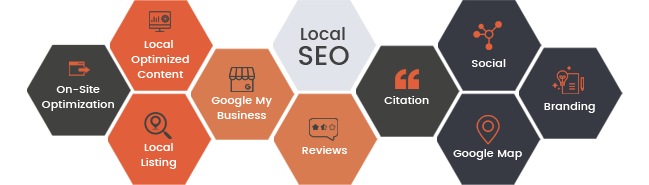
1. Optimise Your Google Business Profile (GBP) the Right Way
Your Google Business Profile (GBP) — formerly Google My Business — is the single most important asset in your local SEO strategy. In 2026, Google has transformed GBP into an AI-powered local marketing platform. It directly feeds Google Maps results, the local 3-pack, and AI Overviews. For many customers, your GBP is the first — and sometimes only — thing they see before deciding whether to contact you.
To fully leverage it, follow our step-by-step Google Business Profile setup and optimisation guide, but here are the core actions:
- Complete every field: Business name, address, phone, website, hours, categories, services, and description
- Choose the right primary category: This is the most important GBP ranking signal — be specific (e.g., “Indian restaurant” not just “restaurant”)
- Add detailed service descriptions: Write short, declarative sentences about each service you offer. Google’s AI parses these to match your business to relevant queries
- Upload fresh photos weekly: Profile activity — including photo uploads — is a top-tier ranking signal in 2026
- Post regular GBP updates: Treat your GBP like a social feed. Post at least twice a week with offers, announcements, or helpful content
- Respond to every review: Engagement signals (including review responses) are now a primary ranking factor
- Add multiple locations if applicable: Each location should have its own independently-managed GBP profile
You can also explore our professional local SEO services to have your GBP managed and optimised by experts.
2. Ensure NAP Consistency Across All Platforms
NAP stands for Name, Address, and Phone number — the three core pieces of information that define your business identity online. In 2026, Google’s local algorithms are highly sensitive to inconsistencies in this data. Even minor differences — like “St.” vs “Street” or an old phone number on one directory — can confuse search engines and weaken your local authority.
NAP consistency must be maintained across:
- Your website (header, footer, contact page)
- Google Business Profile
- Yelp, Apple Maps, Bing Places, TripAdvisor, Facebook
- Industry-specific directories
- Your LocalBusiness schema markup
Tools like BrightLocal, Moz Local, and Semrush’s Listing Management can audit and correct NAP inconsistencies across hundreds of directories simultaneously.
3. Target the Right Local Keywords
Keyword research for local SEO follows the same principles as traditional SEO but adds a geographic layer. You need to identify keywords that combine your service or product + location and are actively searched by people in your target area.
Effective local keyword categories include:
- Geo-modified keywords: “dentist in Bangalore,” “HVAC repair Delhi”
- Near me keywords: “best pizza near me,” “accountant near me” — see our guide on optimising for local near me searches
- Hyper-local keywords: Neighbourhood and zip code level (“coffee shop in Connaught Place”)
- Voice search / conversational: “Where can I find a plumber open on Sunday in [city]?”
Once identified, integrate your target keywords naturally into your page titles, meta descriptions, headers, body content, image alt text, GBP description, and service page copy. Refer to our complete SEO checklist for local small business websites for a systematic approach.
Avoid targeting only high-volume keywords. A keyword with low monthly searches but strong local intent can generate more real revenue than a broad keyword with thousands of national searches.
4. Build and Manage Local Citations
A local citation is any online mention of your business’s NAP — on a directory, review site, social platform, or news article. Citations help Google verify that your business exists, is legitimate, and is located where you claim to be.

Priority citation sources for most businesses include:
- Business name
- Accurate Business Address
- Correct Phone Number for Each Store
- Your Business Website Address
- Business Description
While mass citation building provides less value than it once did, high-quality citations on authoritative directories remain a foundational local SEO signal. Focus on quality over quantity: a listing on Yelp, Apple Maps, or an industry-specific directory carries far more weight than 50 low-authority general directories.
Many users also use these directories to give ratings and reviews about your business and services. The more and more people writing positive reviews about your business will increase your chances to appear in top results.
5. Develop a Local Link Building Strategy
Local link building remains one of the most powerful ranking signals for local businesses. While national link building focuses on domain authority from high-traffic publications, local link building focuses on relevance and community authority.
Effective local link building tactics include:
- Guest blogging on locally-relevant websites and local news publications
- Sponsoring local events, charities, or sports teams in exchange for a mention and link on their website
- Partnering with complementary local businesses for cross-referrals and co-marketing content
- Getting listed in local Chambers of Commerce or business association directories
- Creating locally-useful content (guides, local statistics, area resources) that earns organic links from community sites
- Competitor backlink analysis using tools like Ahrefs to identify citation and link opportunities your rivals are using
Remember: the goal of local link building is first to get your NAP accurately represented (citation signal), and second to earn a genuine dofollow link (authority signal). Both move the needle.
6. Leverage Social Signals and Local Hashtags
Social media profiles and consistent activity act as prominence signals to Google — reinforcing that your business is active, legitimate, and engaged with its community. Google monitors engagement across platforms like Facebook, Instagram, and TikTok as indicators of brand authority.
Local social media tactics that support your SEO optimisation efforts include:
- Using Facebook Places to display your business description, location, website, and service hours
- Tagging your location in Instagram posts and Stories
- Using local hashtags (#DelhiRestaurants, #MumbaiSalon) on Twitter and Instagram
- Sharing GBP posts cross-platform to amplify reach and engagement
- Encouraging customers to check in at your location on social platforms
When users visit your website from your social profiles, it improves on-page engagement metrics that further support your SEO performance.
7. Generate and Manage Customer Reviews
Customer reviews are one of the most powerful ranking factors in local SEO — and in 2026, they’ve taken on even greater importance as Google’s AI uses review content as a primary “source of truth” for generating local AI Overviews.
Google evaluates reviews on three dimensions: quantity, recency, and quality (keyword richness and sentiment). Businesses that consistently earn positive, detailed reviews outperform competitors across every local search category.
Best practices for review management in 2026:
- Actively ask happy customers for reviews — after a purchase, service appointment, or positive interaction
- Guide customers to mention specific services, products, or locations in their review (e.g., “If you enjoyed our deep-cleaning service, please mention it!”) — this gives AI more usable context
- Respond to every review — positive and negative — within 24 hours. Google treats this as an engagement signal and a marker of authenticity
- Target a 4.5★ or higher average with at least 20 recent reviews. A perfect 5.0 with no negative feedback is now sometimes flagged as suspicious by AI filters
- Encourage reviews on multiple platforms: Google, Yelp, Facebook, TripAdvisor, and any industry-specific review site
High-scoring ratings and reviews help your business rank higher in search results with rich snippets that increase click-through rates.
8. Optimise for Voice Search and Conversational Queries
Voice search has become a major channel for local discovery. People use voice assistants to ask natural language questions like “Where’s the nearest car wash open right now?” or “Who’s the best electrician in [neighbourhood]?” These queries are longer, more conversational, and usually carry very high purchase intent.
To optimise for voice search:
- Write content that answers common questions in plain, conversational language
- Create an FAQ section that addresses the exact questions your customers ask aloud
- Ensure your GBP hours, phone number, and address are accurate — voice assistants pull directly from GBP to answer “Is [business] open right now?”
- Include neighbourhood and landmark references in your content
- Implement FAQPage schema — structured data makes your answers more likely to be surfaced by voice assistants and AI chatbots
9. Implement LocalBusiness Schema Markup
Schema markup (structured data) is one of the most underutilised yet high-impact local SEO tactics for small businesses. LocalBusiness schema (JSON-LD format) tells Google’s AI exactly who you are, where you are, what you offer, and when you’re open — in a format that machines can read and trust instantly.
In 2026, Google cross-references your website’s LocalBusiness schema against your GBP data. Mismatches suppress rankings; alignment reinforces your prominence signal.
Your LocalBusiness schema should include:
- Exact business name, address, phone number, and website URL
- Geographic coordinates (latitude and longitude)
- Opening hours for each day
- Service area
- Business type and description
Also add FAQPage schema to your FAQ section to unlock People Also Ask (PAA) boxes in search results — an additional source of SERP real estate that top-ranking local businesses leverage.
10. Build Hyper-Local Landing Pages
If your business serves multiple neighbourhoods, suburbs, or cities, hyper-local landing pages are one of the most powerful tools in your local SEO arsenal. These are dedicated pages targeting one service in one specific area — designed to clearly signal to Google, AI systems, and users exactly where you operate and who you serve.
Each hyper-local page should include:
- A unique title tag and H1 featuring both the service and location (e.g., “Plumbing Services in South Delhi”)
- Original, area-specific content — not just a city name swap
- Location-specific photos and testimonials from that area
- References to local landmarks, community events, or neighbourhood context
- An embedded Google Map showing your location or service area
- LocalBusiness schema with GeoCoordinates for that specific location
Businesses with neighbourhood-specific content consistently rank higher in hyper-local “near me” searches for those areas — making this investment one of the highest-ROI content strategies for local businesses.
Technical SEO Essentials for Local Businesses
Core Web Vitals and Page Speed
Technical performance is a direct Google ranking factor and a critical part of local SEO. In 2026, users expect websites to load in under three seconds — and Google’s Core Web Vitals measure exactly that. A slow website doesn’t just frustrate visitors; it actively hurts your local search rankings.
Key technical metrics to optimise:
- Largest Contentful Paint (LCP): Target under 2.5 seconds
- Cumulative Layout Shift (CLS): Target below 0.1
- Interaction to Next Paint (INP): Target under 200ms
Use Google Search Console and PageSpeed Insights to regularly audit your performance and identify issues.
Mobile-First Optimisation
The vast majority of local searches happen on mobile devices — someone on the move looking for the nearest option. Google indexes your site’s mobile version first (mobile-first indexing), so your website must be fully responsive, fast on mobile, and easy to navigate on a small screen.
Make sure your phone number is click-to-call, your address links to Google Maps, and your contact form or booking button is prominent above the fold on mobile.
On-Page SEO: Title Tags, Meta Descriptions, and URL Structure
Strong on-page SEO signals help both search engines and AI systems understand what your page is about and why it’s relevant to local queries.
- Title tags: Include your primary local keyword + city/region and keep under 60 characters
- Meta descriptions: Write compelling 155-character descriptions that include your keyword and a clear call to action
- URL structure: Use short, keyword-rich slugs (e.g., /local-seo-for-small-business/)
- Header tags: Use H1 for your primary keyword, H2 for secondary topics, H3 for subtopics
- Image alt text: Describe images using relevant local keywords naturally
- Internal linking: Connect related service pages and blog content with descriptive anchor text
For a comprehensive breakdown of all on-page factors, explore our on-page SEO services and our detailed expert local SEO tips to improve your rankings.
Local SEO vs. Traditional SEO: Key Differences Explained
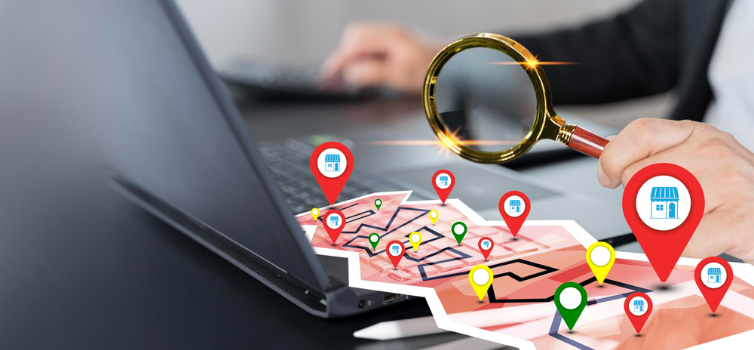
SEO for local and general (also known as traditional SEO) have the same objective – increasing the visibility of your site in search engines. However, they are focused on different types of users.
- Local SEO is a search engine that focuses on location-based keywords like “dentist near me” or “restaurant in Delhi.” It improves you Google Business Profile, local keyword citations and localized citations to improve your ranking within search results in the “map pack” and local results in search results.
- General SEO, on the other hand, focuses on improving visibility for broader, non-location-specific keywords such as “best digital marketing strategies” or “SEO tips for beginners.”
Shortly, general SEO casts an expansive broad and is a great way to get your business noticed. However, the local search engine is focused on attracting customers within your area of service or neighborhood. For small businesses that depend on the foot or local lead local SEO is usually the more important method.
Your 90-Day Local SEO Action Plan for Small Businesses
Getting started with local SEO can feel overwhelming. Here’s a practical, phased plan that any small business can follow:
Month 1 — Foundation (Days 1–30)
- Claim, verify, and fully complete your Google Business Profile
- Audit NAP consistency across all directories and fix discrepancies
- Install Google Analytics 4 and Google Search Console on your website
- Conduct local keyword research and map target keywords to each page
- Implement LocalBusiness schema (JSON-LD) on your website
- Submit your business to top-priority directories (Yelp, Apple Maps, Bing Places, Facebook)
Month 2 — Growth (Days 31–60)
- Publish two authoritative local blog posts targeting question-based keywords
- Begin a review generation campaign — ask every satisfied customer for a Google review
- Build 5–10 high-quality local backlinks (guest posts, community sponsorships, Chambers)
- Optimise all on-page elements: title tags, meta descriptions, headers, image alt text
- Start posting on GBP 2–3 times per week; add new photos weekly
Month 3 — Accelerate (Days 61–90)
- Create hyper-local landing pages for each key service area or neighbourhood
- Run a Core Web Vitals audit and fix performance issues
- Add FAQPage schema to your FAQ section
- Review Google Search Console data for new keyword opportunities
- Measure and report on map pack impressions, GBP calls, direction requests, and website traffic from local search
Why Local SEO Matters for Small Businesses?
Local SEO is essential for small-scale businesses since it can help you compete against larger brands in your region. According to Google the website, more than four-fifths of search results are local in nature which means that users are actively searching for local products or services.
The reasons why this is important:
Greater visibility in your local area. Your business is shown on Google Maps and the “local pack”, the places where potential customers are more likely to be tempted to take a look.
- More Trust and Credibility: Positive reviews and precise local listings make your business more credible to customers.
- Higher Conversion Rates: Local searches usually are highly regarded as a source of purchase. For instance, someone who searches for “plumber near me” is likely to be hired immediately.
- Level Playing Field: Local SEO enables small-sized businesses to compete against giant companies by focusing on specific keywords for their location.
By implementing a robust local SEO for small business, small-sized companies can draw more customers from the local area, gain more brand recognition and boost profits without spending a lot on advertisements.
Frequently Asked Questions About Local SEO for Small Businesses
Q: What is local SEO for small businesses?
A: Local SEO for small businesses is the process of optimising your online presence — your website, Google Business Profile, citations, and reviews — so that your business appears prominently when nearby customers search for your products or services on Google, Google Maps, and AI-powered local results. It focuses on driving foot traffic, calls, and local leads rather than broad online visibility.
Q: How long does local SEO take to show results?
A: Most small businesses begin seeing measurable improvements within 3–6 months of consistent optimisation. Initial wins like GBP improvements and citation corrections can appear in 4–8 weeks, while achieving stronger map pack rankings for competitive keywords typically takes 4–6 months.
Q: What is the Google local 3-pack?
A: The Google local 3-pack (map pack) is the block of three business listings that appears at the top of search results for local queries, accompanied by a map. It is one of the most valuable positions in local SEO — capturing the largest share of clicks for location-based searches, especially on mobile.
Q: How do I get my business to show up on Google Maps?
A: To appear on Google Maps, claim and fully optimise your Google Business Profile with accurate NAP information, the correct business category, detailed service descriptions, regular photos, and consistent posts. Supplement this with citation building, positive reviews, and LocalBusiness schema on your website.
Q: What is NAP consistency and why does it matter?
A: NAP stands for Name, Address, and Phone number — your core business identity data. Google’s algorithms compare your NAP across your website, GBP, and all directories. Inconsistencies confuse search engines and reduce your local authority. Consistent, accurate NAP data is a foundational local SEO requirement.
Q: Is local SEO worth it for small businesses?
A: Absolutely. Local SEO consistently delivers one of the highest ROI among all digital marketing channels. With 78% of consumers searching for local businesses more than once a week, and local searches frequently resulting in purchases within 24 hours, the investment pays off quickly — especially when compared to the ongoing cost of paid advertising.
Q: What are local citations?
A: Local citations are online mentions of your business’s name, address, and phone number on directories (like Yelp, Apple Maps, Bing Places), review sites, and social platforms. They help Google verify your business is real, legitimate, and located where you claim — supporting your local authority and rankings.
Q: Do I need a website for local SEO?
A: You can gain some visibility without one, but a website is strongly recommended. In 2026, Google cross-references your website’s content and schema against your GBP data. Without a website, your prominence score is effectively capped, and you miss out on ranking for local keywords in organic results and AI Overviews.
Conclusion
Building a strong local SEO presence in 2026 means going far beyond the basics. It requires a holistic, AI-aware strategy that combines a fully optimised Google Business Profile, consistent NAP data, high-quality citations, authoritative reviews, targeted local content, technical excellence, and structured schema markup — all working together as a connected system.
The businesses that dominate local search in 2026 are not necessarily those with the biggest budgets. They are the ones with the most complete, consistent, and actively-managed online presence — the ones that Google’s AI trusts enough to recommend.
Make sure to check your local SEO scores and signals regularly across all ranking factors to solidify your presence in your locality. And if you’re ready to accelerate your results, our team at Media Search Group has over 15 years of experience and has helped more than 2,000 businesses achieve measurable growth through proven local SEO strategies.
Professional SEO Agencies can help you with suitable local SEO packages for your local SEO for small businesses, with regular SEO practices for the best results.