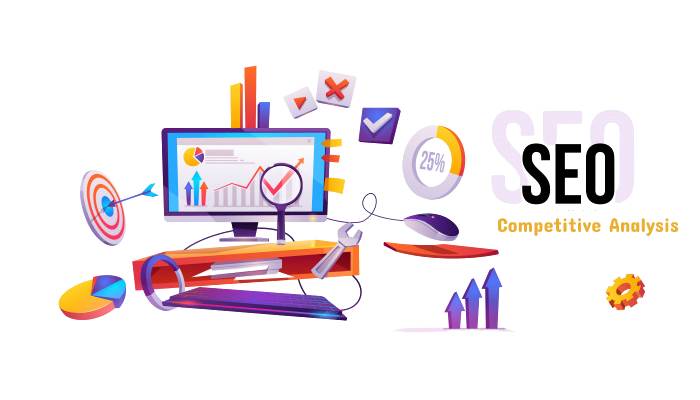
Competitive analysis has become an integral part of almost every successful SEO strategy. Competition in the digital world is too intense. So, you need to pull out all the stops to rank higher on the first Search Engine Result Page (SERP) and increase traffic on your site.
But here’s the truth most guides won’t tell you: having the wrong tool is often worse than having none at all. The wrong platform floods you with data you can’t act on — while your competitors quietly outrank you on keywords that actually drive revenue.
In our previous blog — A Definite Guide on SEO Competitive Analysis, we discussed why it is vital to focus on SEO competitive analysis and how to conduct this analysis efficiently.
In this updated guide, we’ll discuss the best SEO tools for competitive analysis in 2026 — tested across free and paid options — so you don’t have to spend hours figuring out which one is right for you. Whether you’re an agency managing multiple clients, a solo marketer, or an ecommerce business, there’s a tool on this list built for your exact situation.
Quick Navigation:
Free competitive analysis tools we built
These work from a link export you already have, so there is no signup and no trial. Search Console gives every verified site owner a free export.
An SEO competitive analysis tool is software that helps you understand exactly what your competitors are doing to rank higher than you in search engine results — and, more importantly, how you can outperform them.
These platforms track and surface data across several dimensions of your competitors’ digital presence:
Keyword rankings — which search queries are driving their organic traffic
Backlink profiles — which websites are linking to them and why
Content strategy — which pages perform best and what topics they own
Traffic estimates — how much monthly organic and paid traffic they receive
SERP features — which featured snippets, People Also Ask boxes, and AI Overviews they dominate
Ad intelligence — what keywords they’re bidding on and what ad copy they’re running
The business value is straightforward: instead of guessing what might work, you can see exactly what is working for competitors who already rank above you — then build a smarter strategy to overtake them. SEO teams, agencies, in-house marketers, and ecommerce businesses all rely on these tools as the backbone of data-driven SEO.
What to Look for in an SEO Competitive Analysis Tool
Not all competitive SEO tools are built the same. Before investing in any platform, evaluate it against these six criteria:
1. Data Accuracy and Freshness
A tool is only as useful as the data it provides. Check whether keyword rankings and traffic estimates align with what you see in your own Google Search Console. Competitor landscapes shift quickly — look for tools that update data daily or weekly, not monthly. Stale data means you’re reacting to strategies your competitors have already moved on from.
2. Keyword Gap Analysis Capabilities
The best tools don’t just show you what keywords you rank for — they show you what keywords your competitors rank for that you don’t. Look for keyword gap features that categorise opportunities by search intent (commercial, informational, navigational) and prioritise them by traffic potential and keyword difficulty.
3. Backlink Profile Comparison
Backlinks remain one of Google’s most powerful ranking signals. A good tool won’t just count backlinks — it will evaluate link quality through metrics like Domain Rating, Trust Flow, or Citation Flow. The most valuable feature: seeing which websites link to multiple competitors but not to you, so you can target exactly the right link-building opportunities.
4. SERP Feature Tracking
Ranking #1 in organic results matters far less if a competitor owns the featured snippet, the People Also Ask box, or an AI Overview above your result. Make sure your tool tracks which SERP features competitors dominate — not just their position number.
5. AI Search Visibility Tracking (Critical in 2026)
This is the most important new criterion in 2026. With ChatGPT, Perplexity, Google’s AI Overviews, and Gemini now driving significant search traffic, your competitors may be getting recommended by AI engines without ranking on traditional SERPs at all. Look for tools that track brand mentions and citations across AI search platforms — this is the next frontier of competitive intelligence.
6. Pricing and Scalability
Check how the tool prices per domain tracked, per user seat, and per project. If you’re an agency managing multiple clients, those per-seat costs add up fast. Always confirm whether a free plan or free trial is available before committing to an annual subscription.
Quick Comparison: Best SEO Tools for Competitive Analysis (2026)
Here’s a snapshot of all 12 tools covered in this guide. Use this table to compare at a glance, then dive into the full reviews below.
Tool
Best For
Key Competitive Features
Starting Price
Free Plan?
SEMrush
All-in-one competitive research
Keyword Gap, Backlink Gap, Traffic Analytics, Organic Research
$139.95/mo
Limited free
Ahrefs
Backlink & content gap analysis
Site Explorer, Content Gap, Backlink Index (8B+ pages crawled daily)
$129/mo
Free tools only
SpyFu
PPC + SEO competitor tracking
Competitor keyword history, Ad copy analysis, Rank tracking
$39/mo
Limited free
Moz Pro
Domain authority metrics
Link Explorer, DA/PA metrics, Rank Tracker, Keyword Explorer
$49/mo
30-day trial
SE Ranking
Agencies & budget-conscious teams
Competitor Research, Rank Tracking, Backlink Checker, Site Audit
Site crawl, Broken links, Duplicate content, Technical audit
£259/year
✅ Up to 500 URLs
Rank Signals
Backlink & traffic source discovery
Backlink discovery, Traffic sources, Social signals
Free
✅ Yes (free)
Best SEO Tools for Competitive Analysis in 2026: In-Depth Reviews
Each tool below has been evaluated for data accuracy, ease of use, competitive analysis depth, pricing value, and suitability for different team sizes. Let’s break them down.
1. SEMrush — Best All-in-One SEO Competitive Analysis Platform
This competitive intelligence software will come in handy for not only competitive analysis but also various other tasks, such as keyword research, traffic analytics, site audit, backlink analysis, and more. Besides, you will be able to discover high-performing product listing ads of competitors and even find new organic competitors.
Trusted by more than 10 million marketers, SEO services companies and businesses worldwide, this toolkit helps in conducting SEO competitive analysis on any domain. The best thing about SEMrush is that it displays SERPs and keywords that get updated in real-time and also reveals the statistics of branded versus non-branded traffic.
In short, SEMrush provides you with real-time competitive insights that you can further use to:
Locate competitors’ best keywords using the Keyword Gap tool
Discover link opportunities your competitors have with the Backlink Gap tool
Estimate competitor traffic sources down to the referral level via Traffic Analytics
Create an effective SEO campaign backed by data, not guesswork
Write more engaging and trending content using the Content Marketing Toolkit
Track AI Overview appearances and share of voice vs. competitors (new in 2026)
SEMrush has access to a database of over 25 billion keywords across 130+ countries, making it the most comprehensive keyword intelligence platform available. For agencies managing multiple clients or in-house teams that need to justify SEO investment with data-backed reporting, SEMrush is consistently the top choice.
Pros: Largest keyword database in the industry; all-in-one — no need to buy separate tools; excellent reporting and white-label options; tracks AI Overviews and brand mentions in ChatGPT/Gemini.
Cons: Premium price point ($139.95/mo starting); steep learning curve for new users; some traffic estimates can be overstated for smaller sites.
Starting price: $139.95/month (Pro plan) | Best for: Agencies, enterprise teams, and serious in-house SEO teams.
2. Ahrefs — Best for Backlink & Content Gap Analysis
Another popular toolset that can help you with backlink analysis during competitive research is Ahrefs. Its Content Gap Report can definitely help you find the gaps and inconsistencies in your keyword strategy — showing you every keyword your competitors rank for that you currently miss.
Its Site Explorer tool will help you analyse your site’s backlink profile as well as those of your competitors. Be it exploring new ideas for link-building, content creation, social stats and ranking, or advanced analysis, Ahrefs could be a good choice for any SEO professional. Ahrefs crawls over 8 billion pages daily, maintaining what many consider the most accurate backlink index in the industry.
Key competitive analysis features include:
Site Explorer — full backlink profile, organic keywords, and traffic data for any domain
Content Gap — find keywords multiple competitors rank for that you don’t
Competing Domains — discover who your true organic competitors are
SERP Overview — see every ranking page’s metrics side-by-side
Backlink Intersect — find sites that link to competitors but not to you (link-building gold)
Note that, this tool doesn’t include big domains, such as Google, Quora, and Apple in their results. Ahrefs also recently added features for tracking mentions in AI search engines like ChatGPT, Perplexity, and Gemini — staying relevant as search evolves into 2026.
Pros: Gold standard for backlink data; best Content Gap tool available; excellent keyword difficulty scoring; strong educational resources and YouTube channel.
Cons: Expensive ($129/mo minimum); no full free plan (only limited free tools); interface can overwhelm beginners; rank tracking not as precise as dedicated tools.
Starting price: $129/month (Lite plan) | Best for: SEO professionals focused on backlink strategy and content gap analysis.
3. SpyFu — Best for PPC + SEO Competitor Tracking
Originally called GoogleSpy, SpyFu can be your one-stop solution as you can enjoy the benefits of Keyword Research Tools, SEO competitor research, and PPC competitor Research at one platform. Enter any domain and see every place your competitors have shown up on Google, keywords that they have bought on AdWords, organic rank, and much more.
So, if you are interested in knowing how your competitors are attracting organic and paid traffic, try SpyFu and you will be amazed by the information it will reveal. What makes SpyFu particularly powerful is its historical data — you can trace a competitor’s ranking history over years, identifying which algorithm updates helped or hurt them and why.
Standout features for competitive analysis:
Competitor keyword history — see every keyword a domain has ever ranked for
Ad copy analysis — browse every ad a competitor has ever run on Google Ads
Keyword overlap — find shared and unique keywords between your domain and rivals
Ranking history timeline — pinpoint algorithm changes that affected competitor rankings
Kombat tool — three-way keyword comparison between you and two competitors
Pros: Most budget-friendly premium tool ($39/mo); excellent PPC intelligence; historical data going back years; clean, intuitive interface; unlimited data exports.
Cons: Smaller keyword database than SEMrush or Ahrefs; US-focused (weaker for international markets); less accurate for newer or smaller websites.
Starting price: $39/month | Best for: Small businesses and marketers who run both SEO and Google Ads campaigns.
4. Moz Pro — Best for Domain Authority Metrics
Moz Pro introduced the concept of Domain Authority (DA) — the industry-standard metric now used across virtually every SEO tool and conversation. While other tools have created their own authority metrics (Ahrefs’ DR, SEMrush’s AS), Moz’s DA remains the most widely cited in client reports, pitches, and link-building outreach.
For competitive analysis, Moz Pro’s Link Explorer lets you dig deep into any competitor’s link profile — understanding not just how many links they have, but the quality and distribution of those links. Combined with the Keyword Explorer tool and rank tracking, Moz offers a well-rounded competitive intelligence suite at a more accessible price point than Ahrefs or SEMrush.
Key features: Link Explorer, Domain Authority scores, Keyword Explorer with intent data, Rank Tracker, On-Page Grader, and the free MozBar browser extension for quick competitor checks.
Pros: Industry-standard DA metric; user-friendly for beginners; solid rank tracking; free MozBar extension; good community and educational content.
Cons: Smaller backlink index than Ahrefs; fewer advanced competitive features than SEMrush; keyword database not as comprehensive; slower data refresh.
Starting price: $49/month (Starter plan) | Best for: Marketers and agencies who need DA metrics for reporting and link-building outreach.
5. SE Ranking — Best Value for Agencies
SE Ranking has quietly become one of the most recommended competitive SEO platforms for agencies and content marketing teams managing multiple clients. It delivers comprehensive features — competitor research, rank tracking, backlink analysis, site audits, and white-label reporting — at roughly half the price of SEMrush or Ahrefs.
Its Competitive Research module lets you enter any competitor’s domain and instantly surface their top organic keywords, estimated traffic, backlink data, and paid search activity. You can track up to 5 competitors per project and receive alerts when their rankings shift significantly.
Key features: Competitor keyword analysis, daily rank tracking, backlink checker, on-page SEO checker, site audit, white-label reporting, and API access.
Pros: Best price-to-features ratio in the market; excellent rank tracking accuracy; daily updates; strong white-label options for agencies; 14-day free trial.
Cons: Less name recognition than SEMrush/Ahrefs (though data quality is comparable); interface takes some time to learn; content optimisation features are less mature.
Starting price: $52/month (Essential plan) | Best for: Digital agencies and marketing teams managing 3+ client websites.
6. SimilarWeb — Best for Traffic Source Intelligence
With the digital marketing intelligence platform of SimilarWeb, you can easily find out how many unique visitors your competitors generate every month and how exactly their site attracts visitors — from what sources, what geographies, and through which channels. Popular among top brands, SimilarWeb can provide you with the most accurate traffic insights about your competitors available outside of their actual analytics account.
You can even compare traffic statistics from two or more competitors by just clicking on the “Add Competitors” tab. Once you know where your competitors are getting the most and least traffic from — organic search, paid ads, social, email, direct, referral — you can substantially improve your content creation and placement strategy. SimilarWeb collects 10 billion digital data signals per day across its platform, making its estimates among the most reliable in the industry.
Key features: Traffic and engagement metrics, traffic source breakdown, audience demographics, referral analysis, competitor benchmarking, and industry analysis.
Pros: Best traffic estimation accuracy for large sites; unique audience intelligence data (demographics, interests); strong for multi-channel competitive analysis beyond SEO.
Cons: Less accurate for small or newer websites; keyword-level data not as deep as SEMrush/Ahrefs; higher price tier for full access; primarily a traffic intelligence tool, not a full SEO suite.
Starting price: $125/month | Best for: Marketing teams that need to understand where competitors’ traffic comes from across all channels.
7. Majestic — Best for Backlink Quality Metrics
Majestic is a specialist backlink intelligence tool that introduced two metrics now used industry-wide: Trust Flow (TF) and Citation Flow (CF). Trust Flow measures the quality of links pointing to a site, based on the trustworthiness of the linking domains. Citation Flow measures the sheer volume of links. The TF:CF ratio gives you an instant read on whether a competitor’s link profile is healthy and earned — or inflated with low-quality links.
For competitive analysis, Majestic’s Link Context feature goes beyond other tools by showing the topical context in which backlinks appear — helping you understand not just that a competitor has links, but why those links have authority in specific niches.
Key features: Trust Flow, Citation Flow, Link Context analysis, Historical Index (entire crawl history), Bulk Backlink Checker, and Topical Trust Flow by category.
Pros: Industry-standard TF/CF metrics; best for evaluating link quality over time; historical backlink data going back years; affordable for a specialist tool.
Cons: Not an all-in-one platform; keyword research is basic; no rank tracking; interface feels dated; best used alongside another tool like Ahrefs or SEMrush.
Starting price: $49.99/month (Lite plan) | Best for: Link builders and SEOs who need deep backlink quality analysis.
8. Serpstat — Best Budget All-in-One SEO Platform
Serpstat is a comprehensive SEO platform that punches well above its price point. At roughly $44/month, you get keyword research, competitor analysis, rank tracking, backlink analysis, and site auditing — functionality that would cost $200+ on larger platforms.
For competitive SEO analysis, Serpstat’s Domain Analysis feature lets you enter any competitor URL and surface their organic and paid keywords, estimated traffic, keyword positions, and competitor overlap. The Keyword Clustering tool is particularly useful for identifying which topic groups your competitors are dominating that you haven’t addressed.
Key features: Domain analysis, keyword research, rank tracking, backlink analysis, site audit, keyword clustering, and search analytics.
Pros: Excellent price-to-value ratio; strong site audit tool; useful for international SEO research; user-friendly interface; multi-user team accounts.
Cons: Database less comprehensive than SEMrush for US/UK markets; backlink index smaller than Ahrefs; some features feel less polished.
Starting price: $44/month | Best for: Small businesses and solo marketers who need an all-in-one tool on a tighter budget.
9. Ubersuggest — Best for Freelancers & Beginners
Created by Neil Patel, Ubersuggest provides keyword research, competitive analysis, and content ideas at the lowest price point of any premium tool on this list. At just $12/month, it’s an ideal entry point for freelancers, bloggers, and small business owners who are new to SEO competitive research and want to learn the fundamentals without a large financial commitment.
Its competitor analysis feature lets you enter any domain and see their top organic keywords, estimated traffic, top pages by traffic, and backlink overview. It won’t match SEMrush or Ahrefs in depth, but for understanding the basics of why a competitor ranks — and finding your first keyword opportunities — it delivers strong value.
Pros: Extremely affordable ($12/mo); clean, beginner-friendly interface; useful keyword ideas and content suggestions; decent competitive overview for smaller budgets.
Cons: Limited data depth compared to premium tools; smaller keyword and backlink databases; daily search limits even on paid plans; not suitable for agencies or advanced analysis.
Starting price: $12/month | Best for: Freelancers, bloggers, and small business owners just starting with SEO.
10. Wappalyzer — Best Free Tool for Competitor Tech Stack Analysis
Wappalyzer is a free browser extension for competitor analysis. When installed as an add-on to your browser, this cross-platform utility helps you find different technologies that are used on different sites and identify the exact software stack running on any website.
So, all you need to do is click on your competitors’ websites and run a quick scan. In just a few seconds, you will know what CMS they use (WordPress, Shopify, Webflow), which analytics tools they have installed, what marketing automation platforms they run, and even which hosting provider they use. It is a great way to understand what’s powering your competitor’s website — and potentially what’s making it more successful.
Pros: Completely free browser extension; instant results; identifies 1,500+ web technologies; lightweight and easy to use; no account required for basic use.
Cons: Only analyses technology stack — no keyword or backlink data; no historical tracking; premium API plans required for bulk lookups.
Starting price: Free (browser extension) | Best for: Anyone who wants to quickly understand what technology a competitor’s website runs on.
11. Screaming Frog SEO Spider — Best Technical Competitive Crawler
Screaming Frog SEO Spider is the industry-standard desktop tool for technical SEO auditing. While it’s primarily used for crawling your own site, it becomes a powerful competitive intelligence tool when you point it at a competitor’s domain — revealing their site structure, internal linking strategy, heading hierarchy, metadata patterns, and technical optimisation choices.
Unlike cloud-based tools, Screaming Frog crawls a site the way Googlebot does, giving you a ground-level view of how a competitor has structured their content and technical SEO. The free version crawls up to 500 URLs — often enough to audit a competitor’s key landing pages and understand their content architecture.
Key competitive uses: Analyse competitor URL structures, discover their internal linking patterns, identify their H1/H2 keyword strategies, check their canonical and redirect setups, and uncover technical optimisations they’ve implemented.
Pros: Free up to 500 URLs; extremely detailed technical data; crawls competitors exactly as Google would; pairs excellently with Ahrefs or SEMrush for complete analysis.
Cons: Windows/Mac desktop app (no cloud); steep learning curve for non-technical users; no keyword ranking data; requires manual analysis of crawl results.
Starting price: Free (up to 500 URLs); £259/year for unlimited | Best for: Technical SEOs who want to reverse-engineer a competitor’s site architecture.
12. Rank Signals — Best Free Backlink Discovery Tool
When you spy on your competitors’ sites, social network activities, and blogs, you will get deeper insights that will help you come up with better content creation and link-building strategies. Rank Signals is one of the most effective free tools for this kind of work.
Basically, it uncovers SEO backlinks and traffic sources of your competitors. It is necessary to have this type of information because, otherwise, you will not effectively outrank your competitors. When you build a portfolio of trusted, high-quality links that point back to your site, your chances of ranking higher increase significantly. Rank Signals gives you a starting point for identifying those link opportunities — completely free.
Pros: Completely free; quick backlink overview; shows social signals; no account required for basic searches.
Cons: Very limited data compared to paid tools; no keyword data; best used as a supplementary free resource alongside a paid platform.
Starting price: Free | Best for: Marketers on a zero budget who need a quick free backlink check on competitors.
Best SEO Competitive Analysis Tool by Use Case
The “best” tool depends entirely on your situation. Here’s our recommendation matrix based on common use cases:
For Solo Marketers & Bloggers
Best pick: Ubersuggest or SpyFu. Budget-friendly, easy to learn, and provides enough competitive keyword data to identify content opportunities and understand what topics competitors are ranking for. Pair with the free Wappalyzer extension and Rank Signals for a zero-to-low-cost competitive intelligence stack.
For Digital Agencies
Best pick: SE Ranking or SEMrush. Both offer multi-project management, white-label reporting, and the depth of data needed across multiple client industries. SE Ranking is the better value option; SEMrush is the right choice if you need the deepest possible data and your clients expect enterprise-level reporting.
For E-commerce Businesses
Best pick: SEMrush or Ahrefs. Both surface competitors’ top product pages, category keyword gaps, and backlink opportunities at scale. SEMrush’s product listing ad analysis is particularly valuable for e-commerce brands running Google Shopping alongside organic SEO.
For Local Businesses
Best pick: Moz Pro or SE Ranking. Both have strong local SEO features including local rank tracking and Google Business Profile data. Moz’s DA metric is widely used in local link-building outreach, making it particularly useful for local businesses building citations and directory links.
For Technical SEO Specialists
Best pick: Screaming Frog + Ahrefs. Screaming Frog crawls competitors’ site architecture at the technical level; Ahrefs provides the keyword and backlink intelligence layer. Together, they give you a complete picture of both the technical and off-page reasons a competitor outranks you.
AI-Powered SEO Competitive Analysis in 2026: What’s Changed
The SEO landscape has shifted significantly since the early 2020s, and any guide to competitive SEO tools in 2026 needs to address three major changes that affect how competitive analysis works today.
1. AI Overviews Have Changed the Click Landscape
Google’s AI Overviews now appear above organic results for a growing percentage of queries. This means that even if your page ranks #1, a competitor whose content is cited inside the AI Overview gets the visibility — and potentially the traffic. Modern competitive analysis must now track not just traditional organic rankings, but which competitors are being cited in AI-generated summaries. Tools like SEMrush have added AI Overview tracking to their dashboards in response to this shift.
2. ChatGPT, Perplexity, and Gemini Are Search Destinations
Gartner predicted that traditional search volume would drop 25% by 2026 as users shift to AI chatbots for research queries. Whether that exact figure proves accurate or not, the trend is clear: your competitors may be gaining visibility in ChatGPT, Perplexity, and Gemini responses without ranking on Google at all. This is called GEO — Generative Engine Optimisation — and it represents a new layer of competitive intelligence that didn’t exist three years ago. Look for tools that track AI mentions and citations as part of their competitive analysis suite.
3. E-E-A-T Has Raised the Bar for Content Quality
Google’s expanded E-E-A-T framework (Experience, Expertise, Authoritativeness, Trustworthiness) now places significantly more weight on firsthand experience in content. In competitive analysis terms, this means a competitor with a genuine practitioner writing their content — someone who has personally used the tools they review — will consistently outperform AI-generated or generic content. When analysing top-ranking competitor pages, pay attention not just to their keywords and links, but to their authorship, experience signals, and content depth.
How to Do SEO Competitive Analysis: A Step-by-Step Guide
Once you’ve chosen your tool, here’s a repeatable process for conducting competitive analysis that actually moves your rankings:
Step 1: Identify Your True SEO Competitors
Your SEO competitors are not necessarily your business competitors — they are the websites that rank on page 1 for the keywords you want to own. Use SEMrush’s Organic Research or Ahrefs’ Competing Domains to identify who you’re actually competing against in search results. You may find that content sites, affiliate blogs, or comparison platforms are your real SERP rivals, not your direct industry competitors.
Step 2: Analyse Their Keyword Gap
Use SEMrush’s Keyword Gap tool or Ahrefs’ Content Gap to find keywords your top 3-5 competitors rank for that you don’t. Filter by search volume (focus on 500+ searches/month) and keyword difficulty (start with KD under 40 for quicker wins). Export this list — it becomes your content calendar for the next quarter.
Step 3: Review Their Backlink Profile
Use Ahrefs’ Backlink Intersect or SEMrush’s Backlink Gap to find websites that link to multiple competitors but not to you. These are your highest-priority link-building targets — they’ve already demonstrated willingness to link to content in your space. Focus on domains with Domain Rating 40+ and topical relevance to your niche.
Step 4: Study Their Top-Performing Content
In Ahrefs Site Explorer or SEMrush’s Organic Research, sort a competitor’s pages by estimated traffic. Study the top 10 pages — what format do they use? How long is the content? What SERP features do they trigger (featured snippets, People Also Ask)? How recently was it updated? This reveals their content strategy more clearly than any stated strategy ever would.
Step 5: Track SERP Features and AI Visibility
Note which competitors own featured snippets and People Also Ask boxes for your target keywords. In 2026, also check whether competitors are cited in Google AI Overviews. Tools like SEMrush and Ahrefs now flag SERP features in their keyword tracking — use this data to structure your content for snippet capture (concise definitions, numbered steps, comparison tables).
Step 6: Monitor Changes and Iterate
Competitive analysis isn’t a one-time exercise — it’s an ongoing intelligence process. Set up rank tracking for your target keywords and competitor domains. Review your competitive landscape monthly. When a competitor gains or loses significant ranking positions, investigate why — an algorithm update, a content refresh, a new link campaign — and adjust your strategy accordingly.
Frequently Asked Questions About the SEO tools for Competitive Analysis
What is the best free SEO competitive analysis tool?
For free competitive SEO analysis, the best combination is Google Search Console (for your own data), Rank Signals (for competitor backlinks), Wappalyzer (for competitor technology), and Screaming Frog‘s free version (up to 500 URL crawl). Ubersuggest also offers 3 free daily searches for competitor keyword research. While no single free tool matches the depth of paid platforms, these four together give you a solid foundation.
What is the best tool for spying on competitors’ SEO?
Ahrefs is generally considered the gold standard for competitor SEO intelligence, particularly for backlink analysis and content gap research. SEMrush is the better all-in-one choice if you also need PPC intelligence, traffic analytics, and content marketing tools in a single dashboard. For PPC-focused competitor research specifically, SpyFu offers the deepest historical ad and keyword data at the most affordable price.
SEMrush vs Ahrefs: Which is better for competitive analysis?
Both are excellent, and many professionals use both. Ahrefs has a larger, more accurate backlink index and a superior Content Gap tool — making it the better choice if backlink strategy and content gap analysis are your primary goals. SEMrush is the stronger all-in-one platform with better PPC data, traffic analytics, social media tools, and — in 2026 — AI Overview tracking. If budget allows only one, choose based on your primary need: backlinks → Ahrefs; everything else → SEMrush.
How often should I run SEO competitive analysis?
At minimum, conduct a full competitive analysis quarterly. However, for competitive markets, a monthly review of keyword ranking shifts and a weekly glance at your rank tracking dashboard is more appropriate. After major Google algorithm updates, run an immediate analysis to identify which competitors gained or lost visibility and why — these moments often reveal new opportunities.
Can I use multiple SEO competitive analysis tools together?
Absolutely — and most serious SEO teams do. A common 2026 stack is: SEMrush or SE Ranking (primary platform for keywords, rank tracking, and site audits) + Ahrefs (backlink analysis and content gaps) + Screaming Frog (technical audits) + Wappalyzer (competitor tech stack, free). Start with one paid tool and add specialised tools as your needs grow.
What data do SEO competitive analysis tools track?
Most comprehensive SEO competitive analysis tools track: organic keyword rankings and their history, estimated organic traffic, backlink profiles (total links, referring domains, link quality), top-performing pages by traffic, SERP feature ownership (featured snippets, People Also Ask), paid keyword and ad data, and — increasingly in 2026 — AI Overview citations and AI search visibility.
Final Verdict: Which SEO Competitive Analysis Tool Should You Choose?
There is no denying that there are many great SEO tools available in the market for competitive analysis. But not all are ideal for you. So, while choosing one or two of them, consider what you want to focus on the most.
Here’s a simple decision framework based on your situation:
Agency managing multiple clients? → Start with SE Ranking for value, upgrade to SEMrush as you scale.
Need the deepest backlink and content gap data? → Ahrefs is unmatched.
Running Google Ads alongside SEO? → SpyFu or SEMrush for combined PPC + SEO intelligence.
Small business or blogger on a tight budget? → Ubersuggest to start, then Serpstat as you grow.
Need traffic source intelligence beyond keywords? → SimilarWeb is the answer.
Want to understand competitor link quality? → Pair Majestic with your primary tool.
In 2026, the most important shift in competitive analysis is recognising that Google is no longer the only battlefield. As AI search engines like ChatGPT, Perplexity, and Gemini become significant traffic sources, the best SEO teams are expanding their competitive intelligence to cover AI visibility — not just traditional SERP positions.
Whatever tool you choose, the most important thing is to use it consistently. Competitive analysis done monthly — even with a basic tool — will outperform expensive software used only once a quarter. The insight only creates value when it drives action.
Vijaya Raj Laxmi Tyagi has been an avid content writer for over five years with a keen interest in writing SEO articles and blogs. She also finds great enthusiasm in writing about a vast variety of topics, including gardening, interior designing, health & wellness, and tourism. Her educational background in Computer Science and Engineering has given her an edge to write about technologies that tend to mark a great impression on daily lifestyle and behaviour, while her intrigue towards Mother Nature drives her to discuss green topics.