

Voice Search SEO: 7 Tips to Rank Your Business for Siri, Alexa & Google Assistant
Recently updated: April 7th, 2026
Smart speakers. Voice-activated phones. In-car AI assistants. Voice search has fundamentally changed how people find information, products, and services — and if your business isn’t showing up in those moments, you’re being skipped. Whether someone’s asking Siri for a nearby café, checking store hours through Alexa, or getting a quick how-to from Google Assistant, optimizing for spoken queries is no longer optional. It’s expected.
Here’s how urgent this has become: over 8.4 billion voice-enabled devices are now in use worldwide — a number that exceeds the global population. In the United States alone, approximately 153.5 million people used voice assistants in 2025, and voice commerce is projected to surpass $100 billion globally by 2026. Every one of those interactions is a moment your business could be found, or missed.
In this guide, we’ll walk you through seven actionable voice search SEO strategies — backed by 2026 data — to help your content get found and spoken aloud in voice search results on Siri, Alexa, and Google Assistant.
What Is Voice Search SEO and Why Does It Matter in 2026?
Voice search optimization is the process of structuring your website content so that AI assistants can retrieve and speak your information directly to users. Unlike typed search, voice queries are conversational, question-based, and longer — making it essential to rethink your entire keyword and content strategy.
Voice search optimization is no longer optional; it’s pivotal. With voice queries growing year-over-year and smart speakers like Amazon Echo, Google Nest, and Apple HomePod becoming household staples, your business must adapt to stay visible across all platforms where customers are searching — hands-free.
The Numbers Behind the Voice Search Revolution
The scale of voice search adoption in 2026 makes this one of the most important SEO priorities for any business:
- Over 1 billion voice searches are performed monthly worldwide
- 27% of smartphone users rely on voice search daily globally
- 58% of consumers have used voice search to find local business information such as hours, directions, and phone numbers
- Google Assistant leads U.S. voice assistant usage with approximately 88.8 million users, followed by Siri (86.5 million) and Alexa (77.2 million)
- Voice commerce is expected to exceed $100 billion globally by 2026, creating massive transactional opportunities for voice-optimized businesses
- Research shows only 1% answer overlap across Google, Siri, and Alexa for identical queries — meaning you need a multi-platform strategy
How Voice Search Differs From Traditional Text Search
Understanding the difference between typed and spoken search is critical. When someone types, they use fragments: “best dentist Dubai.” When they speak, they use natural sentences: “Who is the best-rated dentist near me that’s open on Friday?” This shift in phrasing — driven by Natural Language Processing (NLP) and Natural Language Understanding (NLU) — means voice SEO requires a completely different optimization approach from traditional keyword targeting.
Voice search is also dominated by three behavioral patterns that set it apart:
- Local intent: Queries like “near me,” “open now,” and “closest to me” dominate voice search, directly driving foot traffic and calls
- Informational intent: Quick “how to” and “what is” questions that seek immediate, spoken answers
- Transactional intent: “Order flowers for same-day delivery” or “Book a table at a restaurant near me” — high-conversion voice queries ready to act
In short: voice search isn’t just a trend. It’s a fundamental shift in how customers find businesses, and implementing voice search optimization now puts you well ahead in today’s conversational, voice-first world.
How Do Voice Assistants Find and Deliver Answers?
Before optimizing for voice search, it’s essential to understand how voice assistants like Siri, Alexa, and Google Assistant actually find and deliver answers. Unlike traditional search engines that return a list of links, voice assistants aim to deliver one accurate, spoken response. That means the competition is higher and the margin for error is much smaller.
Here’s what happens behind the scenes when someone asks a voice assistant a question:
- Query Interpretation: The assistant converts spoken input into a natural language query using NLP. These queries are often longer and more conversational than typed ones — think “What’s the best Thai restaurant open now near me?” rather than just “Thai restaurant.”
- Answer Retrieval: Each assistant uses a different approach, pulling from its own preferred data sources
- Ranking Logic: Voice answers depend on relevance to the query, domain trustworthiness and authority, content formatting (structured content is strongly favored), and page load speed and mobile-friendliness
- Featured Snippet Focus: If your content ranks in Position Zero (the featured snippet), it’s significantly more likely to be selected as a voice response — especially on Google Assistant
Google Assistant — Featured Snippets and Knowledge Graph
Google Assistant pulls answers primarily from featured snippets, the Knowledge Graph, and structured data such as FAQ, HowTo, and Speakable schema. Because Google dominates search with over 90% market share, optimizing for Google’s ranking factors should be the foundation of any voice SEO strategy. Position Zero is your target — it’s the answer Google reads aloud.
Amazon Alexa — Yelp, Bing, and Local Data
Alexa leans heavily on Yelp for local business data, Bing’s search index for general queries, and Amazon’s own cloud infrastructure for commerce-related searches. This means businesses that want to be found via Alexa must maintain accurate, up-to-date Yelp listings and ensure their website performs well on Bing — not just Google. You can also create an “Alexa Skill” to give your brand a direct interaction pathway within the Alexa ecosystem.
Apple Siri — Apple Maps, Yelp, and WolframAlpha
Siri references Apple Maps and Yelp for local queries, and draws from third-party knowledge providers like WolframAlpha for factual answers. For Siri visibility, maintaining an optimized Apple Maps Connect listing is just as important as your Google Business Profile. Siri also uses Google for general web queries, so strong Google rankings directly help your Siri performance as well.
ChatGPT, Perplexity, and the AI Assistant Convergence
The most significant development in 2026 is the blurring line between traditional voice search and conversational AI assistants. When someone speaks to Siri, that’s voice search. When they ask ChatGPT or Perplexity a question by voice, that’s a conversational AI query. From the user’s perspective, these experiences are increasingly identical — and your content needs to work for both.
This convergence is exactly why strategies like Answer Engine Optimization (AEO) and Generative Engine Optimization (GEO) are now essential complements to voice SEO. We’ll cover both in detail in Tip 7.
To win with voice, you’re not aiming to be in the top ten. You’re aiming to be the one result read aloud. And that takes strategic content structure, local signals, and technical alignment with how each assistant processes data.
Tip 1: Research Conversational Long-Tail Keywords & Questions

If you want your business to show up in voice search, you need to understand how people speak, not just how they type. That’s where long-tail, conversational keywords come in. These are full-length phrases or questions that reflect how real people talk to Siri, Alexa, or Google Assistant.
Think about the difference between:
- Typed: “best dentist Dubai”
- Spoken: “Who is the best-rated dentist near me that’s open on Friday?”
The second version is a long-tail voice query — and it’s exactly what voice assistants are listening for. Long-tail keywords with three or more words have relatively lower competition while accurately matching how real people phrase spoken questions. They’re better for voice and traditional SEO simultaneously.
Start with Question-Based Research
Build your voice keyword strategy using these tools and sources:
- AnswerThePublic and AlsoAsked.com to uncover common question phrases
- Google’s People Also Ask section for real-world conversational queries
- Google Search Console to identify long-tail queries already driving impressions to your pages
- Voice search in the wild: try queries on your own devices to see what results appear and from which sources
Focus on Intent, Not Just Keywords
When writing for voice search, think in terms of the complete user context:
- Who your user is and where they are
- What they want to know or do right now
- How they’re likely to phrase it in natural speech
Categorize your target queries by intent:
- Informational: “How do I renew my visa in the UAE?” or “What is speakable schema markup?”
- Transactional: “Order flowers for same-day delivery in Dubai” or “Book a plumber near me”
- Navigational/Local: “Where’s the closest café with WiFi?” or “What time does the pharmacy near me close?”
Optimize for Natural Speech Patterns
Avoid robotic keyword stuffing. Instead, write content that genuinely mirrors natural speech:
- Use full questions as subheadings (H2s and H3s)
- Answer clearly within the first one or two sentences — bottom-load the detail
- Mirror common voice query patterns in your content, especially the question words: who, what, where, when, why, and how
- Use natural connectors (“that’s,” “you’ll,” “here’s”) rather than stiff, formal phrasing
Voice SEO starts with speaking your audience’s language. The more your content mimics how people talk, the more likely it is to match a spoken search and be selected as the answer read aloud.
Tip 2: Structure Your Content for Featured Snippets & Position Zero
When it comes to voice search, featured snippets are gold. That’s because voice assistants often read out the answer from what’s known as Position Zero — the snippet Google highlights above all other results. If your content earns that spot, it becomes the voice assistant’s top choice.
Studies confirm that AI assistants often read the featured snippet verbatim. The strategy is simple but precise: place a 40- to 50-word direct answer immediately under a natural-language question heading, then expand below it with supporting detail. Answer-first content consistently has the highest snippet win rate across SEO audits.
Keep Answers Short and Clear
Most featured snippets are:
- 40–50 words in length (the sweet spot for voice delivery — approximately 20–30 seconds when spoken)
- Written in natural, active voice
- Structured around a clear question and a direct, complete answer in the very first sentence
Example format:
Question: “What is voice search SEO?”
Answer: “Voice search SEO is the process of optimizing your content so it appears in spoken search results from assistants like Siri, Alexa, and Google Assistant. It focuses on conversational language, featured snippet placement, schema markup, and local optimization.”
That kind of clarity is exactly what voice bots are trained to find and read aloud.
Use Snippet-Friendly Formats
Match your content format to the type of query being asked:
- Paragraph snippets: Direct answers in 1–2 sentences for definitional or “what is” questions
- Numbered lists: Step-by-step processes for “How to…” guides
- Bullet points: Summarized tips or comparisons for “best ways to…” queries
- Tables: For product specs, pricing breakdowns, or comparison data
Structure for Scanability
Use H2s and H3s for questions voice users actually ask:
- Frequently asked questions (“What is…”, “Why does…”)
- Conversational headers that mirror spoken phrasing
- Voice-style question formats (“How do I…”, “Can I…”, “Where can I find…”)
If your content is too dense or vague, it won’t be selected. The key is giving both search engines and voice assistants what they want: a fast, accurate, well-formatted answer that requires no follow-up click.
Tip 3: Implement Schema Markup & Speakable Structured Data
Voice assistants rely on more than just readable text — they depend heavily on structured data. That’s where schema markup comes in. By adding structured data to your website, you give search engines (and smart assistants) a clearer, machine-readable understanding of your content and its purpose.
Why Schema Matters for Voice SEO
When Siri, Alexa, or Google Assistant crawl your page, they need explicit signals to understand:
- Who you are (Organization schema)
- Where you operate (LocalBusiness schema)
- What your page answers (FAQ, HowTo, QAPage schema)
- What’s worth “speaking” aloud (Speakable schema)
The more structured signals you provide, the easier it is for voice assistants to pull your content as the spoken result. Schema doesn’t just improve visibility — it helps your content talk back. And in voice search, that’s the whole point.
Expert tip: Use JSON-LD format for your schema markup and place critical definitions directly in the page header. This accelerates crawling by AI bots and voice assistant systems.
Key Schema Types for Voice Search Success
- FAQPage: Great for direct Q&A formats that map directly to voice queries — each question becomes a potential spoken answer
- LocalBusiness: Tells assistants your precise location, opening hours, contact info, and service areas
- Speakable: Highlights specific paragraphs on your page as ideal for text-to-speech delivery by Google Assistant and other systems
- HowTo: Perfect for step-by-step answers and tutorials — aligns with “How do I…” voice queries
- Article: Adds E-E-A-T signals including author, date published, and date modified — critical for content trustworthiness
How to Implement and Validate Your Schema
You can add schema markup using:
- WordPress plugins: Rank Math, Schema Pro, or Yoast SEO (for non-technical users)
- Google’s Structured Data Markup Helper: A free visual tool to generate schema code
- Direct JSON-LD: Added manually to your site’s
<head>section for maximum control
Always ensure your schema is:
- Validated using Google’s Rich Results Test before publishing
- Up to date with the latest Schema.org documentation
- Accurate and not keyword-stuffed — misleading schema can trigger manual penalties
Tip 4: Dominate Local Voice SEO With Google Business Profile & Listings

If you run a business with a physical location or serve a specific geographic area, local voice SEO should be at the top of your checklist. Voice searches are hyper-local by nature. Queries like “near me,” “open now,” and “closest to me” represent some of the most common and highest-intent voice commands — and they drive immediate action.
Research shows that more than 75% of smart speaker users search for local business information, and 58% of consumers have used voice search to find local business details. The user is ready to act. Your job is to be the answer they hear.
Voice assistants prioritize answers that are nearby, relevant, trustworthy, and accurate. They pull this information directly from local data sources — which means your local listing quality directly determines your voice search visibility.
Optimize Your Google Business Profile for Voice
Your Google Business Profile (GBP) is the single most important local signal for Google Assistant. Make sure it is:
- Fully completed with categories, services, and a keyword-rich business description
- Accurate — especially business hours, address, and contact information (inconsistencies confuse voice assistants)
- Regularly updated with fresh photos, posts, and responses to reviews
- Consistent in NAP (Name, Address, Phone number) across every platform and directory listing
AI-powered search engines like ChatGPT and Perplexity also increasingly reference your web presence and GBP data — not just Google listings — so keeping it updated has multi-platform benefits.
Don’t Overlook Siri (Apple Maps) and Alexa (Bing/Yelp)
A comprehensive local voice SEO strategy requires presence beyond Google:
- Siri uses Apple Maps + Yelp — keep your Apple Maps Connect and Yelp listings optimized with current hours, photos, and accurate categories
- Alexa often references Yelp, Bing Places, and Zagat — ensure your Bing listing is claimed and complete
- Use citation management tools like BrightLocal or Yext to sync your business data across all major directories simultaneously and catch NAP inconsistencies
Use Location-Specific Conversational Phrases in Content
Include geo-specific, conversational terms naturally throughout your service pages and location landing pages. Examples:
- “best pediatric dentist in Jumeirah”
- “where to find vegan breakfast in Abu Dhabi”
- “open late hair salons near Downtown Dubai”
- “emergency plumber available today in [City Name]”
Create separate location-specific landing pages for each service area. Use city-specific keywords, maintain consistent NAP, and add local FAQs and testimonials. Pair these with structured content and LocalBusiness schema, and you significantly increase your chance of becoming the top — and often only — answer a user hears.
Tip 5: Improve Technical UX — Page Speed, Core Web Vitals & Mobile-First Design
Voice assistants may sound friendly, but they’re ruthless about one thing: user experience. If your website isn’t fast, mobile-optimized, and technically sound, it won’t be selected as a voice result — regardless of how good your content is.
In practice: if your website takes longer than 1.5–3 seconds to load, voice assistants will prefer a faster source. Speed is not just a ranking factor — it’s a selection criterion for voice answers. Smart devices prioritize pages that load fast, work well on all screen sizes, present clean and accessible content, and avoid technical friction of any kind.
Prioritize Core Web Vitals for Voice Search
Google’s Core Web Vitals are directly tied to voice search eligibility. Target these benchmarks:
- Largest Contentful Paint (LCP): Under 2.5 seconds — measures how quickly your main content loads
- Interaction to Next Paint (INP): Under 200ms — measures page responsiveness; fast INP signals a site AI bots can navigate reliably
- Cumulative Layout Shift (CLS): Under 0.1 — measures visual stability
Audit and optimize your pages using Google PageSpeed Insights, GTmetrix, and Lighthouse. Common fixes include compressing images (use WebP format where possible), minimizing bloated JavaScript and CSS, and improving server response times with caching and a CDN.
Design for Mobile-First Indexing
Most voice searches happen on mobile devices. Google uses your mobile version first for indexing and ranking, so make sure your mobile experience is:
- Fully responsive — not just a resized desktop site, but a genuinely mobile-native layout
- Easy to tap and scroll with appropriately sized touch targets
- Free from intrusive popups and overlays that hinder usability
- Clear in layout, font hierarchy, and visual structure
Our technical SEO checklist covers 30+ actionable steps to ensure your website meets 2026 crawlability and performance standards across both mobile and voice environments.
Enhance Accessibility for AI Crawlers
Voice assistants value clarity and semantic structure as much as human accessibility tools do:
- Use proper HTML headers (H1, H2, H3) in correct hierarchical order — never skip levels
- Write short paragraphs and clean sentences — voice responses need to flow naturally when read aloud
- Add descriptive alt text to all images (supports both accessibility and image indexing)
- Follow WCAG 2.2 guidelines where possible — accessibility signals align directly with what voice crawlers prefer
- Ensure HTTPS is active — Google has flagged HTTPS as a ranking signal, and voice assistants favor secure, trustworthy sources
Technical UX may not feel glamorous, but it’s foundational. The smoother your site performs behind the scenes, the easier it is for AI to navigate, trust, and elevate your content into spoken results.
Tip 6: Create Voice-Friendly FAQ & Conversational Q&A Content
If you want to align your content with how real people speak, FAQ pages and Q&A sections are your most powerful weapon. Voice assistants thrive on question-and-answer formats — and the more closely your content mimics real user speech, the higher your chances of being read aloud as the definitive answer.
Think of your FAQ page as your voice assistant’s script. Every question is a potential voice trigger, and every answer is a potential spoken result.
Write the Way Your Audience Talks
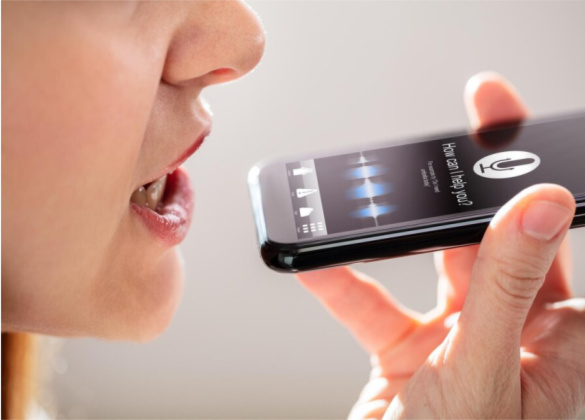
Voice queries tend to be full sentences, conversational in tone, and direct in intent. So instead of robotic phrasing like: “Hours of operation business entity” — write it as real users speak it:
Question: “What time do you open on weekends?”
Answer: “We’re open from 10 AM to 8 PM on Saturdays and Sundays.”
That natural, complete exchange is exactly what voice assistants are designed to find, surface, and speak aloud. Keep your answers to 1–2 sentences for the direct response, then expand with supporting context below it for users who want more detail.
Where to Place Q&A Content on Your Website
Don’t limit conversational Q&A content to a single FAQ page. Distribute it strategically:
- Create a dedicated FAQ page optimized with FAQPage schema for your most common customer questions
- Add mini-FAQ blocks to product, service, and location pages — each one is a potential voice answer for location-specific queries
- Use Q&A style blog intros that frame the article around a direct user question
- Add conversational FAQs to your Google Business Profile in the Q&A section — Alexa and Google Assistant both surface these
Use Structured Formatting for Maximum Snippet Potential
The right format dramatically increases your chances of winning featured snippets and voice answer selections:
- Start with the question as a subheading (H2 or H3) — use the exact phrasing users are likely to speak
- Follow immediately with a direct 1–2 sentence answer — this is the voice-ready response
- Expand below with bullets, examples, or data for users reading the full page
- Apply FAQPage schema in JSON-LD format to signal to search engines that this is structured Q&A content
This layout helps voice assistants read answers clearly, increases your chances of featured snippet selection, reduces bounce rates for human readers who find answers quickly, and signals strong topical authority to Google’s E-E-A-T evaluation systems.
Your goal is to become the go-to source for the kinds of questions your customers actually ask aloud. Think human, think helpful, think conversational — and you’re already halfway to being the voice result users hear.
Tip 7: Build Topical Authority With AEO, GEO & E-E-A-T Signals
If you want voice assistants to consistently trust your content, you need to show them that you’re credible, clearly structured, and authoritative enough to cite. That’s where AEO (Answer Engine Optimization) and GEO (Generative Engine Optimization) come into play — and why both are now essential companions to traditional voice SEO.
These strategies go beyond traditional SEO. They prepare your content to be sourced and spoken by AI systems across the entire conversational search ecosystem — from Google Assistant to ChatGPT to Perplexity. For a full comparison of how AIO, GEO, and AEO work together, see our dedicated guide.
What Is AEO (Answer Engine Optimization)?
Answer Engine Optimization is the practice of structuring content specifically to become the preferred direct response selected by AI-driven platforms like Google SGE, Microsoft Copilot, ChatGPT, and voice assistants. It focuses on:
- Formatting content to answer direct questions immediately and completely
- Creating data-rich, structured, scannable sections that AI can extract and summarize
- Building trust signals such as authorship credentials, citations, and domain expertise
- Implementing FAQ schema, HowTo schema, and other machine-readable formats that help AI parse intent
Search engines like Google and assistants like Alexa use AEO-friendly content to populate voice answers, Knowledge Panels, and AI Overview summaries. With over 50% of all queries now ending without a click, being the direct answer — not just a ranked link — is critical. Our AEO services are engineered specifically for this new era of discovery.
What Is GEO (Generative Engine Optimization)?
Generative Engine Optimization focuses on making your content usable and citable by AI summarizers — like ChatGPT, Gemini, Perplexity, and Google’s AI Overviews. It goes beyond getting ranked to getting referenced. GEO focuses on:
- Making your content digestible by AI systems that synthesize multiple sources into single responses
- Earning mentions and backlinks from authoritative sources — trust signals AI models weight heavily
- Structuring content so it’s quotable, context-rich, and broken into clear, digestible chunks
- Ensuring your site is crawlable, fast, and free of jargon that confuses AI parsers
GEO is especially valuable for long-form content, informational hubs, and industry guides that voice assistants and AI platforms pull insights from — even without reading the full article aloud. For a deeper dive, see how we approach optimization for Google’s Search Generative Experience.
E-E-A-T — Why Search Engines Need to Trust You
Google’s E-E-A-T framework (Experience, Expertise, Authoritativeness, Trustworthiness) is not just for traditional SEO — it’s a core signal voice assistants use to decide whose content is safe to speak aloud as the definitive answer. Strengthen your E-E-A-T for voice SEO by:
- Adding detailed author bios with credentials to every piece of content
- Linking to credible third-party sources and data to support your claims
- Using clear titles, a consistent authoritative tone, and structured formatting throughout your site
- Publishing original, well-researched content that demonstrates real expertise — not just surface-level summaries
- Earning quality backlinks from authoritative domains in your industry — these are trust signals AI models weight heavily
- Maintaining active, positive reviews on Google, Yelp, and Apple Maps — voice assistants often factor star ratings into spoken recommendations
Ultimately, voice assistants want to quote the best answer — not just the first one. If your brand is consistently cited, logically structured, schema-optimized, and verified with strong E-E-A-T signals, you become the default voice users hear.
Bonus: How to Audit & Monitor Your Voice Search SEO Performance
Optimizing for voice search isn’t a one-time setup — it’s an ongoing process. Just like traditional SEO, voice SEO requires regular auditing, tracking, and refinement. But because most voice results are read aloud rather than clicked, performance measurement looks different from standard analytics.
Manual Testing on Smart Devices
Start with the simplest and most direct method:
- Run test queries on your smartphone, smart speaker (Amazon Echo, Google Nest), and voice-enabled apps
- Phrase your target questions in multiple ways — as a local query, as an informational question, and as a transactional request
- Note which answers are returned and from which sources (website, GBP, Yelp, etc.)
- Test on multiple platforms: Google Assistant, Siri, Alexa, and if applicable, ChatGPT and Perplexity by voice
You’ll quickly identify which content types and sources are being selected — and where your gaps are.
Tools to Track Voice Search Performance
While traditional SEO tools don’t always label voice traffic explicitly, these platforms provide the most relevant signals:
- Google Search Console: Filter for long-tail queries with question words (who, what, where, when, why, how) — rising impressions with flat clicks can indicate content being read aloud rather than clicked through
- Semrush and Ahrefs: Track featured snippet positions and long-tail conversational keyword rankings
- AnswerThePublic and Ubersuggest: Identify trending spoken queries in your industry
- Local Falcon: Monitor local map visibility and “near me” ranking positions — essential for voice search with local intent
- BrightLocal: Audit your citation consistency and track local listing accuracy across directories Alexa and Siri pull from
KPIs to Set for Voice SEO Success
Track these metrics specifically for your voice search performance:
- Featured snippet wins: Number of Position Zero rankings you hold, and for which queries
- Long-tail query impressions: Growth in impressions from conversational, question-based queries in GSC
- Local pack visibility: Rankings for “near me” and geo-specific queries
- Mobile organic traffic: Since most voice search happens on mobile, mobile traffic trends are a key proxy metric
- Q&A page engagement: Time on page, bounce rate, and scroll depth for FAQ-style content
- Call and direction requests from GBP: Direct indicators that voice-driven local searches are converting
Keep Iterating — Voice SEO Is Not a One-Time Task
Voice search is evolving faster than almost any other area of digital marketing. New devices, new AI models, and new assistant capabilities are changing the rules every few months. Set a quarterly voice SEO review cadence to re-test queries on new devices, re-optimize underperforming FAQ content, refresh statistics and data, and assess new competitors entering your voice results. In voice SEO, the only constant is refinement.
Common Voice SEO Mistakes to Avoid

Voice SEO comes with its own learning curve, and a few common missteps can quietly block your content from ever being heard. Here’s what to watch out for — and what to fix before your next optimization push.
- Ignoring Conversational Tone
Mistake: Writing copy like a textbook or keyword-stuffed landing page.
Fix: Voice assistants favor content that mirrors human speech. Think short sentences, direct answers, and natural phrasing free of jargon. - Overlooking Schema Markup
Mistake: Assuming search engines “get it” without structured data.
Fix: Use FAQ, HowTo, LocalBusiness, Speakable, and Article schema to help AI parse and deliver your answers correctly. Validate everything through Google’s Rich Results Test. - Targeting Broad, Vague Queries
Mistake: Trying to rank for “best restaurant” without geographic or contextual specificity.
Fix: Go niche. “Best Thai restaurant open late in Al Barsha” is far more likely to trigger a voice result than a broad, unmodified keyword. - Poor Core Web Vitals and Page Speed
Mistake: Having a clunky, slow, or non-mobile-optimized site.
Fix: Voice search depends on fast load times and mobile-first design. Target LCP under 2.5 seconds. Test regularly using PageSpeed Insights and optimize aggressively. - No Local Optimization Across All Platforms
Mistake: Focusing only on Google Business Profile while ignoring Apple Maps, Yelp, and Bing Places.
Fix: These are key data sources for Siri and Alexa specifically. Keep every listing updated and consistent with your NAP information. - Optimizing for Google Only
Mistake: Building a Google-centric voice strategy while ignoring Alexa (Bing-powered) and Siri (Apple ecosystem).
Fix: Claim and optimize your Bing Places listing, maintain your Apple Maps Connect profile, and ensure Yelp reviews are current — each assistant has its own data hierarchy. - Forgetting to Monitor and Iterate
Mistake: Setting up voice SEO optimizations once and moving on.
Fix: Voice SEO is dynamic. Trends shift, AI models update, and new competitors emerge constantly. Regular quarterly testing keeps you in the game and ahead of the curve.
Avoiding these pitfalls can be the difference between being read aloud to thousands of potential customers — or buried in silence while competitors capture the voice traffic you should own.
What Should You Do Next?
Voice search is no longer something to plan for in the future — it’s happening now, at scale, across billions of devices. With smart assistants woven into daily routines, your business has a unique opportunity to show up in the exact moments people are speaking, searching, and ready to act.
Let’s recap the seven proven tips that will help your brand be the answer, not just an option:
- Research conversational long-tail keywords to mirror natural speech patterns and question-based intent
- Structure content for featured snippets — the top source of spoken results and Position Zero answers
- Add schema and speakable markup so search engines can understand, parse, and “read” your content
- Optimize for local voice SEO — especially for “near me,” “open now,” and location-based queries
- Improve your technical experience — prioritizing Core Web Vitals, mobile-first design, and page speed
- Create voice-friendly FAQ and Q&A content that answers real questions clearly and concisely
- Build authority using AEO, GEO, and E-E-A-T strategies so voice assistants and AI platforms trust your site as the definitive source
Each of these steps plays a critical role in helping your content surface in voice responses — from quick informational queries to high-intent, location-based searches that drive foot traffic and direct calls.
Your action plan for the next 30 days:
- Audit your current content for conversational phrasing and featured snippet readiness
- Test your business visibility on smart devices today — ask Siri, Alexa, and Google Assistant about your business
- Add structured FAQ, LocalBusiness, and Speakable schema where it’s missing
- Rewrite at least one service page FAQ section using voice SEO best practices
- Set a 90-day voice SEO review plan to test, learn, and continuously improve
- Explore our SEO packages that include dedicated voice search optimization as part of a complete organic growth strategy
Voice search SEO isn’t just about showing up — it’s about being chosen. And now, with the right structure, schema, and strategy in place, you’re one step closer to being the voice your audience hears.
Frequently Asked Questions About Voice Search SEO Tips
What is voice search optimization?
Voice search optimization is the process of structuring your content so it can be easily found, understood, and read aloud by voice assistants like Siri, Alexa, and Google Assistant. This includes using natural conversational language, answering common questions clearly and concisely within 40–50 words, adding schema markup such as FAQPage and Speakable, and optimizing for local intent queries. Unlike traditional SEO, voice SEO prioritizes direct, spoken answers over ranked lists of links.
How do I rank for Siri voice queries?
To rank in Siri voice results, optimize your Apple Maps Connect listing with accurate business hours, categories, and photos. Keep your Yelp profile updated with positive reviews and complete information, since Siri relies heavily on both sources for local queries. Ensure your website answers questions directly and clearly, uses LocalBusiness schema, and maintains strong Google rankings — Siri also uses Google for general web queries. Consistent NAP (Name, Address, Phone) information across all directories reinforces your authority for Siri’s local data systems.
Does Google Assistant use featured snippets?
Yes. Google Assistant primarily pulls spoken answers directly from featured snippets (Position Zero). To optimize for this, write concise, well-structured answers of 40–50 words directly beneath a natural-language question heading, then expand below it. Use question-based H2 and H3 headings, add FAQPage schema in JSON-LD format, and structure content so the most important answer appears in the first 1–2 sentences. Pages with strong Position Zero rankings have the highest probability of being selected as the spoken Google Assistant response.
Why are long-tail voice keywords important?
Long-tail keywords accurately mirror how real people speak to voice assistants. Voice users don’t say “pizza Dubai” — they ask “Where can I get the best pizza near Downtown Dubai that’s open right now?” Optimizing for these longer, more specific conversational phrases improves your visibility in voice search results, captures higher-intent users, and typically faces lower competition than broad head keywords. Long-tail voice keywords also benefit your traditional SEO rankings simultaneously.
How do I know if my content is voice-search friendly?
Read your content out loud. If it sounds natural, answers a specific question quickly within the first two sentences, and doesn’t require context from surrounding paragraphs to make sense, it’s voice-ready. You should also test your target queries directly on smart devices, monitor your featured snippet wins in Google Search Console, check for FAQPage and Speakable schema implementation, and ensure your page loads in under 2.5 seconds on mobile. Content that passes these checks is well-positioned to be selected as a voice answer.
What types of businesses benefit most from voice search SEO?
Local businesses, service providers, and brick-and-mortar shops benefit most from voice SEO. This includes restaurants, salons, clinics, repair services, legal firms, dental practices, and any business people search for using “near me” or “open now” queries. E-commerce businesses also benefit significantly from voice commerce optimization — voice-assisted reorders and product searches are growing rapidly, with voice commerce projected to exceed $100 billion globally by 2026. Any business where customers ask questions before visiting, calling, or purchasing can benefit from a well-executed voice SEO strategy.
How often should I update my voice SEO strategy?
Review and update your voice SEO strategy every 3–6 months. Voice search technology evolves rapidly — new AI models are released, assistant algorithms update, and competitor content improves constantly. Each quarterly review should include refreshing FAQ content with new data and statistics, checking schema markup for accuracy and completeness, testing your queries on the latest smart devices, reviewing Google Search Console for shifts in long-tail impressions, and reassessing your Google Business Profile for freshness and accuracy.
Can I use the same SEO strategy for text and voice search?
Not entirely. While there’s significant overlap in fundamentals like quality content, technical performance, and backlinks, voice search requires a more conversational tone, full-sentence direct answers within 40–50 words, a stronger focus on long-tail and question-based queries, FAQPage and Speakable schema, and consistent local listing optimization across platforms like Yelp and Apple Maps. Traditional SEO focuses primarily on keyword density and link acquisition; voice SEO is about clarity, structured formatting, real-world phrasing, and multi-platform local authority.
Is voice search only important for mobile users?
No. While voice search is most common on mobile devices, it’s growing rapidly on smart speakers (Amazon Echo, Google Nest, Apple HomePod), in-car AI assistants, smart TVs, and wearables. In the United States alone, over 153 million people used voice assistants in 2025 across multiple device types. Voice search is no longer tied to a single platform — it’s becoming a default interaction mode across the entire spectrum of connected devices in daily life. Your voice SEO strategy should account for all of these touchpoints.
How does schema help with voice search visibility?
Schema markup tells search engines and voice assistants what your content means — not just what it says. For voice search specifically, FAQPage schema signals which content is structured as direct Q&A, LocalBusiness schema communicates your location and operating hours, Speakable schema highlights which paragraphs are most appropriate for text-to-speech delivery, and HowTo schema marks up step-by-step guides aligned with “how to” voice queries. Together, these schema types dramatically increase your probability of being selected as the single spoken answer a voice assistant delivers to the user.
What is conversational SEO and how does it relate to voice search?
Conversational SEO is the practice of optimizing content to match natural, dialogue-style language patterns rather than fragmented keyword strings. It’s the foundation of voice search optimization. Conversational SEO involves writing in complete sentences that reflect how people actually speak, using question-and-answer content structures, targeting long-tail queries with natural phrasing, and applying NLP (Natural Language Processing) principles to content creation. Voice search is the primary delivery mechanism for conversational search queries — meaning conversational SEO and voice SEO are two sides of the same strategy.
What is the difference between AEO and GEO in the context of voice search?
AEO (Answer Engine Optimization) focuses on structuring content to become the definitive direct answer across AI-driven platforms including Google featured snippets, voice assistants, and zero-click results. GEO (Generative Engine Optimization) targets generative AI systems like ChatGPT, Perplexity, and Google AI Overviews — ensuring your content is cited and synthesized in AI-generated responses. For voice search, AEO is most directly relevant since voice assistants typically deliver a single spoken answer. GEO becomes critical as voice search and conversational AI converge — ensuring your brand is cited across the full spectrum of AI-mediated discovery.
Related posts:
 Search Product Discovery with ChatGPT: A Complete Guide
 AIO vs GEO vs AEO vs LLMO: The Complete Guide to AI Search Optimization in 2026
 Link Building for AI Search 2026: Backlinks & AI Overviews, ChatGPT, Perplexity Guide
 How to Optimize for Google SGE and AI Overviews in 2026: The Complete Strategy Guide
 SEO for Cleaning Companies: The Complete 2026 Guide to Rankings, Leads & AI Search
 AI Content vs Human Content: Which Ranks on Google in 2026?
 How to Use ChatGPT for Automated SEO Audits in 2026: The Complete Guide
 How to Build AI-Powered SEO Workflows with Screaming Frog & Python (2026 Guide)

One thought on “Voice Search SEO: 7 Tips to Rank Your Business for Siri, Alexa & Google Assistant”