
Search has changed more in the past two years than in the previous decade. Google now runs over 5,000 algorithm updates annually, AI Overviews appear in millions of search results, and platforms like ChatGPT and Perplexity are now answering queries that used to belong exclusively to Google. On top of that, Google’s Helpful Content System has made thin, generic content largely invisible — no matter how many keywords it targets.
For businesses trying to grow online, this is both a challenge and an opportunity.
The good news? You don’t need to understand every ranking signal or AI search algorithm to succeed. You need the right SEO package — one that’s built for your industry, aligned with 2026 search standards, and delivered by an agency that understands both traditional SEO and the emerging world of AI search optimisation.
In this guide, we explain exactly how to choose the right SEO package for your business — covering everything from what to look for, what to avoid, how much to spend, and which package type suits your specific industry.
What Is an SEO Package?
An SEO package is a bundled suite of SEO services delivered by an agency for a fixed monthly or annual fee. Rather than purchasing individual services — such as link building or content writing — separately, an SEO package combines everything your website needs into a single, managed retainer.
Think of it as hiring a full digital growth team without the overhead of in-house salaries, training, and tools.
A well-structured SEO package in 2026 goes beyond basic keyword rankings. It covers technical health, content quality, authority building, local visibility, and increasingly — AI search optimisation, which ensures your brand appears in Google AI Overviews, ChatGPT answers, and Perplexity citations.
You can choose between monthly SEO packages and annual SEO plans:
- Monthly SEO packages offer flexibility — ideal when you’re testing a new agency or have short-term campaigns. They require no long-term commitment, making them lower risk.
- Annual SEO plans typically come with discounted rates and allow the agency to execute a deeper, more compounding strategy. They’re best suited for businesses with an established relationship with a trusted SEO partner.
How SEO Packages Work
- You select a package tier based on your business size, goals, and keyword targets.
- The agency charges a fixed monthly or annual fee covering all services in the package.
- Deliverables, timelines, and KPIs are agreed upfront so you know exactly what you’re paying for.
Key Benefits of Buying an SEO Package
- Predictable budgeting — Fixed fees make financial planning straightforward. No surprise invoices per task.
- All-in-one coverage — One package handles technical SEO, content, links, reporting, and more. No need to coordinate multiple vendors.
- Specialist expertise — Agencies employ dedicated SEO strategists, content writers, technical SEOs, and link builders — skills that are expensive to hire in-house.
- Scalability — As your business grows, you can upgrade your package tier without rebuilding your strategy from scratch.
Is It Worth Buying an SEO Package?
Over 80% of businesses prefer hiring an SEO agency over building an in-house team — and for good reason. An SEO agency retainer costs a fraction of what it would take to hire, train, and retain a full in-house SEO department with comparable expertise.
A full-service agency like Media Search Group handles far more than just rankings. Your package can include:
- Website design and web development
- Website redesigning
- Blogging and content strategy
- Social media management
- PPC management
- Online reputation management and more
In short, SEO packages cost less and deliver more than in-house teams or freelance professionals — especially for small to mid-sized businesses that need measurable growth without enterprise-level overheads.
When you work with an SEO company, you’ll typically choose between:
- Readymade (tiered) SEO packages — Designed to suit the most common business types and budgets. Quick to get started.
- Custom SEO packages — Built specifically around your goals, industry, competition level, and technical requirements. Best for businesses with unique needs.
The critical thing is industry alignment. A law firm, an e-commerce store, and a local plumber all need fundamentally different SEO strategies — and a package that doesn’t account for your industry will underperform regardless of its price.
For instance, a real estate agency will see far stronger results with a local SEO package focused on Google Business Profile and Local 3-Pack rankings, while an e-commerce brand needs an entirely different package emphasising product schema, category architecture, and conversion-focused content.
10 Essential Features Every SEO Package Must Include in 2026
The SEO landscape has shifted significantly. A package built around 2022 standards will not rank in 2026. Here is the updated checklist of what every industry-specific SEO package must include today:
1. Comprehensive SEO Audit (Technical + Content + AI Readiness)
Every effective SEO engagement begins with a thorough audit. An experienced SEO company uses this to identify exactly where your website stands before building a strategy.
A 2026 SEO audit goes beyond crawl errors and broken links. It should cover:
- Core Web Vitals — Your LCP (Largest Contentful Paint) should be ≤2.5s, INP (Interaction to Next Paint) ≤200ms, and CLS (Cumulative Layout Shift) ≤0.1. Note: Google replaced First Input Delay (FID) with INP in March 2024. Any agency still referencing FID is behind.
- E-E-A-T gaps — Does your content demonstrate Experience, Expertise, Authoritativeness, and Trust?
- AI crawler access — Are GPTBot, ClaudeBot, and PerplexityBot unblocked in your robots.txt? Blocking them eliminates any chance of appearing in AI-generated answers.
- Schema markup gaps — Missing FAQPage, Article, HowTo, or LocalBusiness schema reduces eligibility for rich results and Google AI Overviews.
- Helpful Content System compliance — Does your existing content meet Google’s people-first content standards?
The website audit forms the entire basis of your SEO strategy. Without it, you’re optimising blindly.
2. Industry-Specific Keyword Research (Including AI Query Patterns)
Keyword research in 2026 is not just about monthly search volumes. It must account for search intent (informational, commercial-investigation, transactional, navigational), conversational AI query patterns, and long-tail questions that feed into AI Overviews and voice search.
Industry-specific target keywords are the foundation for:
- Creating SEO-optimised, intent-matched content
- Optimising on-page elements (titles, headings, meta descriptions)
- Earning contextually relevant backlinks that set topical authority
- Informing paid campaigns if PPC is part of your strategy
- Structuring FAQ sections that get cited in AI-generated answers
The broader and deeper your keyword footprint, the stronger your topical authority — and the higher your cost of an SEO package, reflecting the increased scope of work.
3. Competitive Research and Backlink Gap Analysis
Your true online competitors are not necessarily your industry rivals — they are the websites currently ranking on page one for your target keywords. Competitive research helps you understand why they rank and what it will take to outperform them.
A thorough competitive analysis should examine:
- Targeted keywords and content clusters
- Content format, depth, and word count
- Backlink profile quality and quantity — not just Domain Authority (DA), but topical relevance of linking domains
- Top-performing pages and the intent they serve
- Technical performance: page speed, Core Web Vitals scores
- Schema markup and structured data usage
- AI Overview presence — are competitors being cited in Google AI answers?
This analysis lets you find strategic gaps, model what works, and build a data-driven plan to overtake existing rankings.
4. On-Page Optimisation (With Schema for AI Visibility)
On-page SEO optimises every element on your website pages to improve relevance, user experience, and eligibility for rich results and AI-generated answers.
What modern on-page SEO includes:
- Title tag and H1 optimisation (keyword-first, ≤60 characters)
- Header tag structure (H2s framed as questions for AI Overview extraction)
- Meta description optimisation (155 characters, with implicit CTA)
- Content depth and semantic keyword coverage
- Removal of duplicate content and thin pages
- FAQPage, Article, HowTo, and BreadcrumbList schema markup (JSON-LD)
- URL structure optimisation
- Strategic internal linking (hub-and-spoke model)
- Image optimisation: WebP format, descriptive ALT text, compressed file sizes
Strong on-page SEO directly improves eligibility for featured snippets, Google’s Local Pack, and AI Overviews — which increasingly appear above traditional search results.
5. Off-Page Authority Building (Links + Digital PR + Brand Mentions)
Off-page SEO builds your website’s trust, credibility, and authority in the eyes of both search engines and AI language models.
What a 2026 off-page strategy includes:
- Link building — Quality over quantity. A single link from a high-authority, topically relevant publication is worth more than dozens from low-quality directories.
- Digital PR — Earning editorial coverage and brand mentions from news sites, industry publications, and authoritative blogs. These feeds directly into E-E-A-T signals and LLM training data.
- Social signals — Engagement across LinkedIn, Reddit, and niche forums builds brand authority that AI models use when determining which sources to cite.
- Guest posts, podcasting, and video marketing
In link building, always prioritise quality. Links from high-DA, topically relevant websites provide significantly more ranking value than bulk link schemes — and they don’t carry the algorithmic penalty risk.
6. Technical SEO (Core Web Vitals, INP, and AI Crawler Access)
Technical SEO ensures your website is structurally sound, fast, secure, and fully accessible — to both human users and the crawlers that feed search engines and AI systems.
2026 technical SEO essentials include:
- Core Web Vitals: LCP ≤2.5s, INP ≤200ms (replaces FID as of March 2024), CLS ≤0.1. Track your scores at PageSpeed Insights.
- Identifying and resolving crawl and indexing errors
- Site security (HTTPS) and XML Sitemap submission
- Keyword cannibalization analysis
- Removal of duplicate metadata and thin content
- AI crawler access — Ensure GPTBot, ClaudeBot, PerplexityBot, and Google-Extended are unblocked in robots.txt
- llms.txt — A new directive that helps AI systems understand and accurately parse your website’s content and structure
- Structured data implementation across all eligible page types
7. Mobile-First and Voice Search Optimisation
Mobile search is no longer a secondary channel — it is the primary one. According to Statista:
- 63% of all Google search traffic comes from mobile devices
- 82% of shoppers report doing “near me” searches on their mobile phones
- 42% of the population uses voice search on their devices
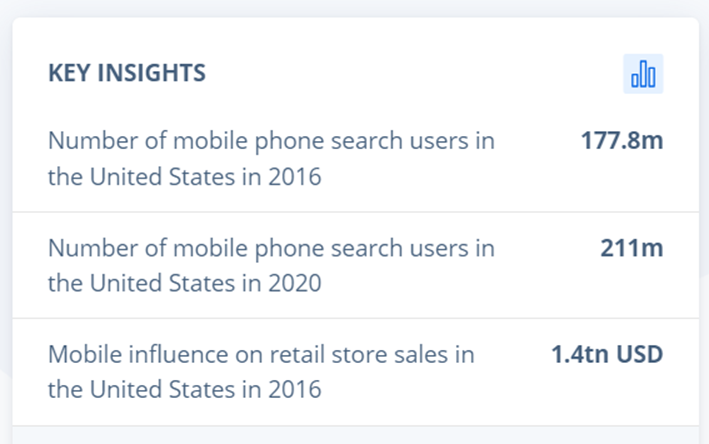
Source: Statista
Google has operated on a mobile-first indexing model since 2021. Your website must deliver a seamless, fast mobile experience to rank competitively.
Mobile and voice SEO best practices in 2026:
- Responsive, mobile-friendly design
- Minified code and reduced redirects for faster mobile load times
- Browser caching and CDN usage
- Structured data for local and voice search eligibility
- Conversational query optimisation — Writing content that answers natural-language voice questions (“What’s the best SEO package for a small business?”) improves both voice search and AI Overview visibility
- Optimised mobile content for “near me” and local searches
8. Local SEO (Google Business Profile & Local 3-Pack)
For any business serving a local or regional market, local SEO is non-negotiable. Appearing in the Google Local 3-Pack (the map results that appear above organic listings) can deliver more qualified leads than any traditional ranking.
A strong local SEO component includes:
- Full Google Business Profile optimisation — categories, services, posts, photos, Q&A, and review management
- Citation building across major directories (Yelp, Bing Places, Apple Maps, industry-specific platforms)
- Consistent NAP (Name, Address, Phone) data across all listings
- Local landing page creation and optimisation for each service area
- LocalBusiness schema markup
- Review acquisition strategy
9. AI Search Optimisation (GEO / AEO) — New in 2026
This is the most significant new addition to any comprehensive SEO package in 2026. Generative Engine Optimisation (GEO) and Answer Engine Optimisation (AEO) are the practices of structuring your content so that AI-powered platforms — including Google AI Overviews, ChatGPT, Perplexity, Microsoft Copilot, and Google Gemini — cite and recommend your brand in their generated answers.
Why this matters now: ChatGPT accounts for approximately 20% of search-related traffic worldwide (Graphite, March 2026). Monthly AI search sessions are now 56% the size of traditional search sessions globally. Brands that are not visible in AI-generated answers are losing a rapidly growing share of discovery traffic.
What GEO/AEO optimisation involves:
- FAQPage and structured answer formatting — Each key question answered in a concise 40–60 word block, followed by deeper elaboration
- Entity authority building — Establishing your brand as a recognised, trusted entity in Google’s Knowledge Graph
- Schema markup for AI parsability — Article, FAQ, HowTo, and Organisation schema help AI systems accurately extract and cite your content
- AI crawler access — GPTBot, ClaudeBot, and PerplexityBot must be unblocked
- Third-party mentions and digital PR — AI engines are 6.5x more likely to cite brands through third-party sources than their own domains
- Content freshness — AI engines heavily deprioritise guides that haven’t been updated in 12+ months
Ask any SEO agency you’re evaluating whether their packages include GEO/AEO optimisation. If they don’t know what it is, that is a significant red flag.
10. Transparent Reporting and KPI Tracking (Including AI Visibility Metrics)
You cannot improve what you don’t measure. A strong SEO package includes regular, transparent reporting that shows exactly what work has been done and what results it has delivered.
Tools your agency should use for reporting:
- Google Analytics 4 (GA4)
- Google Search Console (GSC) — now includes AI Overview impression data
- Semrush or Ahrefs — for keyword rankings, backlink monitoring, and competitor tracking
- Moz and Screaming Frog for technical audits
Key metrics to track for SEO progress:
- Organic traffic and traffic conversions
- Keyword rankings (target keywords + long-tail cluster)
- Impressions and click-through rate (CTR) from GSC
- Core Web Vitals scores (LCP, INP, CLS)
- Referring domains and backlink growth
- Domain Authority (DA) progression
- Number of indexed pages and index coverage errors
- Bounce rate and average session duration
- AI Overview impressions — how often your content is cited in Google’s AI-generated summaries
Which SEO Package Is Right for Your Industry?
This is the most important question — and the one most generic SEO packages fail to answer. Different industries face entirely different competitive landscapes, content requirements, and search behaviours. Here’s what to look for based on your specific industry:
SEO Packages for E-commerce Stores
E-commerce SEO is among the most technically intensive. The right package must include product and category page optimisation, product schema markup (which enables rich shopping results in Google), faceted navigation management to prevent duplicate content, and site speed optimisation — since even a one-second delay in load time can reduce conversions by up to 7%.
Look for: Ecommerce SEO packages with dedicated product schema, category architecture strategy, and conversion-focused content. If your competitors run paid campaigns, consider a package that integrates PPC alongside SEO.
SEO Packages for Law Firms
Legal content falls under Google’s YMYL (Your Money or Your Life) category, meaning the E-E-A-T bar is extremely high. Google’s quality evaluators scrutinise legal content for accuracy, author credentials, and trustworthiness. Generic content will not rank.
Look for: Packages with attorney-reviewed content strategies, practice area landing pages, local SEO for individual office locations, and E-E-A-T-focused author credentials. Law firm SEO services should include citation building and Google Business Profile optimisation for each office location.
SEO Packages for Healthcare and Medical Practices
Healthcare is another YMYL category with strict E-E-A-T requirements. Content must be accurate, medically reviewed, and compliant with privacy regulations. Google’s Search Quality Evaluator Guidelines give particular scrutiny to health-related claims.
Look for: Packages with medically reviewed content, author credentials for healthcare professionals, strong local SEO for clinic locations, and Google Health compliance awareness. Healthcare SEO packages should also include schema for medical conditions, treatments, and healthcare providers.
SEO Packages for Real Estate Agencies
Real estate is a hyper-local business. Buyers and sellers search by neighbourhood, city, and property type — often with voice queries like “homes for sale near me.” The vast majority of real estate leads begin with a local search.
Look for: Local SEO packages with Google Business Profile management, neighbourhood-specific landing pages, and voice search optimisation. Real estate agents benefit enormously from Local 3-Pack visibility and citation consistency across property portals.
SEO Packages for SaaS and B2B Companies
B2B and SaaS SEO is content-heavy and funnel-aware. Buyers conduct extensive research before making decisions — meaning your content must answer questions at every stage of the funnel, from awareness to evaluation to purchase. Topical authority clusters and thought leadership content are the primary ranking drivers.
Look for: Packages with content cluster strategy, comparison and alternatives pages, integration landing pages, and lead-generation-focused conversion optimisation.
SEO Packages for Restaurants and Hospitality
Restaurants, hotels, and hospitality businesses live and die by local search. “Best restaurant near me,” “hotels in [city],” and “[cuisine] delivery [neighbourhood]” are the queries that drive walk-ins and bookings. Appearing in the Local 3-Pack and managing reviews actively are critical.
Look for: Local SEO packages with strong Google Business Profile management, menu schema and review schema, Local 3-Pack optimisation, and “near me” voice query strategy. Restaurant SEO and hospitality SEO packages should include international SEO if you serve foreign travellers.
SEO Packages for Education and Online Courses
Education SEO is content-driven and long-tail-heavy. Students and parents search with highly specific, research-oriented queries. Ranking for these queries requires deep topical authority through blog content, guides, course-specific landing pages, and structured data for educational programmes.
Look for: Packages with high-volume content production, educational content schema, course and programme landing page optimisation, and long-form guide creation. Education SEO packages that prioritise blog content clusters will outperform those focused only on on-page optimisation.
SEO Packages for Small Businesses and Startups
Small businesses don’t need enterprise-level investment — they need smart, prioritised SEO that delivers quick wins (Google Business Profile, on-page fixes, local citations) alongside sustainable long-term growth. Budget-consciousness is important, but buying the cheapest package available often means buying no results.
Look for: Affordable SEO packages with transparent deliverables, local SEO as a core component, monthly reporting, and a clear roadmap from foundation to growth. Avoid agencies that lock you into long contracts without proven results.
Tips to Choose the Right SEO Package for Your Industry
Now that you understand what a package must include and what your industry needs, here is a step-by-step guide to selecting the right SEO partner and plan.
1. Define Your SEO Needs and Goals
Before comparing packages or prices, define what success looks like for your business. Different industries have entirely different SEO priorities. An e-commerce store optimises primarily for conversions and revenue, while a content platform may focus on organic visibility and newsletter subscribers.
Ask yourself:
- Do you need to rank locally, nationally, or internationally?
- Is lead generation or direct e-commerce revenue the primary goal?
- Are you trying to build brand authority, or do you need immediate traffic?
- What does your current organic traffic and keyword ranking baseline look like?
Define 1–3 concrete SEO goals before you begin evaluating packages. This ensures every package you consider is measured against your actual targets — not vague promises of “better rankings.”
Example SEO goals to set before buying a package:
- Rank on page one for 10 core commercial keywords within 6 months
- Generate 500+ new qualified organic visits per month within 90 days
- Increase organic lead conversion rate by 15% within one year
- Appear in the Google Local 3-Pack for all primary service area keywords
- Achieve AI Overview citations for brand-relevant informational queries
2. Decide Your SEO Budget
SEO delivers strong compounding returns — but it requires consistent investment to work. SEO package pricing varies widely depending on scope, competition level, and agency expertise:
- Starter packages (local/small business focus): $300–$800/month
- Growth packages (mid-market, competitive niches): $800–$2,000/month
- Enterprise packages (large websites, highly competitive industries): $2,000–$5,000+/month
- Custom packages: Priced based on specific scope, keywords, and deliverables
A general benchmark: allocate 10–20% of your digital marketing budget to SEO. The average ROI of SEO varies from 200% to 900% depending on your industry — with B2B companies typically generating twice as much revenue from organic search as from any other channel.
Tips for setting your SEO budget:
- Review your competitors’ estimated organic traffic investment if data is available
- Factor in internal resource requirements (will you provide content briefs, or does the agency handle everything?)
- Consider ROI expectations: how much is one new customer worth to your business?
- Scale your budget to reflect your website size, niche competition, and growth targets
3. Check If the SEO Package Matches Your Industry Needs
Choosing the right SEO package means more than picking a price tier — it means selecting a package built around the unique challenges and search behaviours of your specific industry.
Service-based local businesses (plumbing, AC repair, landscaping, cleaning) need a package with strong local SEO services: Google Business Profile optimisation, citation building, and Local 3-Pack strategy. Without local SEO, these businesses are essentially invisible to the customers who need them most.
E-commerce brands need intensive technical SEO, product schema, faceted navigation management, and conversion-optimised category pages. Ecommerce SEO packages should also include paid campaign integration if your competitors use PPC to dominate commercial intent searches.
Creative professionals — photographers, designers, artists — need SEO that integrates social media marketing. Visual content, portfolio pages, and social signals are central to how these businesses rank and attract clients.
Travel and tourism operators require National or International SEO (also called Global SEO), depending on whether they target domestic or international visitors. The same applies to hotels, car rental agencies, and tour operators offering advance bookings to foreign travellers.
Bloggers and education platforms benefit most from content-heavy packages that deliver a high volume of SEO-optimised articles, building topical authority across their subject area over time.
Large websites with hundreds or thousands of pages should invest in enterprise SEO packages that include advanced technical crawl management, site architecture strategy, and custom reporting dashboards.
If no standard package addresses your requirements, custom SEO packages are the right choice. Speaking with an SEO consultant before committing allows you to map out precisely what your business needs — and avoid paying for services that don’t apply to your situation.
4. Evaluate the Agency, Not Just the Package
The quality of an SEO package is only as good as the agency delivering it. Pricing alone is a poor indicator of value. When assessing an SEO partner, look beyond the package brochure.
Evaluate the SEO company through:
- Years in business and area of specialisation
- Case studies and client results from your specific industry
- Verified reviews and testimonials (Google, Clutch, UpCity)
- SEO team qualifications and demonstrated expertise
- Transparency of deliverables, timelines, and contract terms
- Quality of reporting — sample reports should show rankings, traffic, actions completed, and next steps
- Their own website’s organic performance — do they rank for competitive SEO keywords themselves?
Compare potential SEO partners carefully and find affordable SEO packages that align with your goals, budget, and industry. Weigh the long-term value of organic rankings against the monthly investment.
7 Red Flags to Avoid When Choosing an SEO Package
The SEO industry has no shortage of agencies making promises they cannot keep. Before you sign with any provider, watch for these warning signs:
- Guaranteed #1 rankings — No agency can guarantee specific positions. Google’s algorithm is not for sale. Any guarantee is a deceptive marketing tactic.
- Suspiciously low pricing — SEO packages priced at $50–$150/month cannot deliver real results. At those price points, corners are being cut — often with tactics that actively harm your site.
- No reporting or vague deliverables — If an agency can’t show you exactly what work they’ve done each month and what results it produced, that’s a serious red flag.
- Black-hat link building — Links from private blog networks (PBNs), link farms, or irrelevant spam sites can trigger manual penalties that take months to recover from.
- Keyword stuffing and AI-generated bulk content — Google’s Helpful Content System actively downgrades thin, repetitive, or obviously AI-generated content. This can tank an entire domain.
- Forced long-term lock-in contracts — A confident agency doesn’t need to trap you in a 24-month contract. Month-to-month or 6-month agreements with clear exit clauses are the industry norm for reputable providers.
- No mention of E-E-A-T, AI search, or 2026 SEO practices — If an agency’s proposal doesn’t mention Google’s Helpful Content System, E-E-A-T, GEO, or Core Web Vitals, they may be running outdated 2020-era SEO tactics under 2026 pricing.
10 Questions to Ask Before Buying an SEO Package
Before committing to any SEO provider, ask these questions directly. A reputable agency will answer all of them clearly and confidently.
- What does your onboarding process look like, and how long before I see initial results? — Sets realistic expectations. Typical timelines: 2–4 weeks for on-page improvements, 3–6 months for meaningful ranking movement, 6–12 months for strong compounding growth.
- Do you conduct an SEO audit before building a strategy? — If the answer is no, walk away. Any strategy built without an audit is guesswork.
- How do you conduct keyword research, and do you account for AI search query patterns? — Modern keyword research must include conversational and AI-driven queries, not just head terms.
- What schema markup do you implement, and do you target Google AI Overviews? — FAQPage and Article schema are table stakes in 2026.
- How do you build links, and can you show examples of placements you’ve earned for similar clients? — Quality link building should be verifiable and from recognisable publications.
- Does your package include GEO or AEO optimisation for AI search platforms? — If they’re not optimising for AI visibility in 2026, they’re only solving half the problem.
- What does your monthly report include, and how will I track ROI? — Reports should show traffic, rankings, actions completed, and clear attribution of results.
- How do you handle Google algorithm updates that affect rankings? — They should have a clear protocol: audit, diagnose, adapt — not silence.
- What contract terms do you offer, and what are the exit conditions? — Avoid agencies that can’t articulate clear exit terms.
- Can you share case studies from businesses in my industry? — Industry-specific results are the most reliable predictor of future performance.
How to Measure Your SEO Package’s ROI: Timelines and KPIs
SEO is not a one-time fix — it’s a compounding investment. Understanding realistic timelines helps you evaluate performance accurately rather than abandoning a working strategy prematurely.
- Months 1–3 (Foundation Phase) — Technical fixes, on-page optimisation, schema implementation, and initial content. Expect to see improvements in crawlability, page speed, and indexation. Some early ranking movements for low-competition terms.
- Months 3–6 (Momentum Phase) — Content and links begin to accumulate. Target keyword rankings move meaningfully. Organic traffic starts climbing. AI Overview appearances may begin for structured FAQ content.
- Months 6–12 (Compounding Phase) — Significant organic traffic gains. High-competition keywords approach page one. Lead volume or e-commerce revenue from organic search becomes measurable and attributable. ROI becomes clearly positive.
Track these KPIs monthly to measure your package’s performance: organic traffic growth, keyword ranking progression, CTR from Google Search Console, backlink growth, Core Web Vitals scores, conversion rate from organic traffic, and — new in 2026 — AI Overview impression data from Google Search Console.
Conclusion
Choosing the right SEO package in 2026 means finding one that’s built for how search actually works today — not how it worked three years ago. That means technical excellence, E-E-A-T-driven content, AI search readiness, and industry-specific strategy working together as a cohesive system.
With clear goals and a realistic budget defined upfront, you can confidently select the best SEO package from a reputable agency and start building the kind of organic presence that compounds over time. Consistent, expert SEO strengthens your online visibility, improves keyword rankings, earns AI search citations, and puts you ahead of competitors who are still running yesterday’s playbook.
Are you ready to buy a search engine optimization package? Explore our SEO pricing and packages to get started today. Or, book a consultation with our SEO specialist now.