97% of consumers now say online reviews influence their purchasing decisions, yet most businesses still treat their online reputation as an afterthought. If your business is losing customers to competitors with stronger digital profiles, your online reputation may be the silent reason why.
Almost everyone on the internet checks digital profiles, ratings, reviews, and testimonials of any individual or business before contacting them for a job role or business opportunity. Your digital or online reputation plays a very crucial role in how you or your business is going to perform in the real world.
When a customer posts a negative review about your business, it will be for the whole internet to see, and it influences other potential consumers against your business. A single unaddressed negative review can cost a business around 30 potential customers, according to consumer research, which is exactly why online reviews, ratings, and brand value impact the purchasing decisions of your customers and directly affect your revenue. This is where online reputation management becomes critically important, ensuring your digital footprint does not damage your online reputation or future business opportunities.
In this complete guide, you will learn exactly what online reputation management is, why it matters in 2026, how it works step by step, which platforms you actually need to be watching (including the ones most guides skip), and what it takes to build a reputation that drives real business growth.
Key ORM Statistics (2026):
• 97% of consumers say online reviews influence purchasing decisions (BrightLocal, 2026 Local Consumer Review Survey)
• 79% of consumers trust online reviews as much as personal recommendations
• A single negative review can cost a business up to 30 potential customers
• Hotels that started responding to reviews saw ratings rise by an average of 0.12 stars, per a Harvard Business Review analysis
• Every additional one-star Yelp rating can increase business revenue by up to 9%(Harvard Business School)
• 84% of job seekers weigh a company’s brand reputation before applying
Online Reputation Management (ORM) refers to taking control of a business’s or individual’s public image on the internet by monitoring, addressing, and improving how they appear across digital channels. This includes responding to negative or false comments, promoting positive content, and actively shaping what people find when they search for your brand online.
ORM works in tandem with SEO services to ensure that positive content ranks higher in search results, pushing down any negative information.
Typically, online reputation management is about cleaning up your digital profiles by monitoring and responding to negative words about your business using different ways and strategies. Unlike Public Relations (PR), which proactively strengthens your brand value through media promotions, ORM addresses both proactive and reactive reputation strategies, building positive brand perception while also responding to damaging content.
Most professional ORM strategies are organized around the PESO model: Paid, Earned, Shared, and Owned media. Thinking in terms of these four media types (covered in detail below) helps you build a complete reputation strategy instead of only reacting to bad reviews as they appear.
There are a number of reputation management companies and SEO packages that include affordable ORM packages that can work for you to manage and increase your online reputation.
Key Components of Online Reputation Management
A complete ORM strategy covers four core areas:
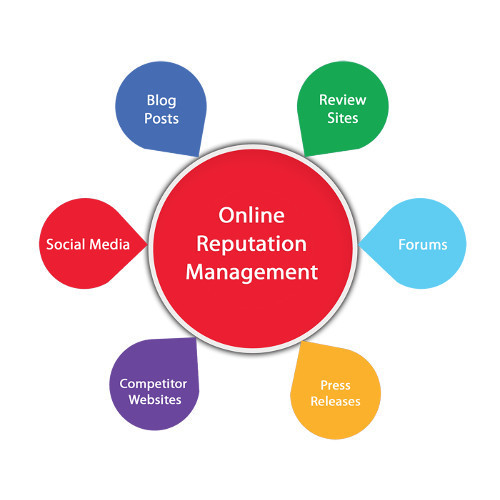
Monitoring: Tracking mentions of your brand across search engines, social media, review platforms, forums, and news sites in real time.
Responding: Engaging professionally with both positive and negative reviews and comments to demonstrate accountability.
Promoting: Creating and distributing positive content, such as blog posts, press releases, testimonials, and social content, that reinforces your brand’s strengths.
Suppressing: Using SEO tactics to push negative or irrelevant search results further down the page, replacing them with positive, authoritative content.
ORM vs. PR vs. SEO: What’s the Difference?
Dimension
ORM
SEO
PR
Primary Goal
Protect & improve brand perception
Improve search rankings & traffic
Build brand awareness & media presence
Approach
Reactive + Proactive
Proactive
Proactive
Key Channels
Review sites, SERP, social media, forums
Search engines, website
News, media, events
Timeline
Immediate + Ongoing
3–12 months
Campaign-based
Why Is Online Reputation Management Important for Business?
Your online reputation is often the very first impression a potential customer, investor, or employee has of your business. Before anyone picks up the phone or sends an email, they Google you. What they find in those first few results determines whether they move forward or look elsewhere.
Here is why online reputation management is more important than ever in 2026:
Impact on Consumer Purchase Decisions
The internet has made forming an initial impression about a brand more accessible than ever. According to BrightLocal’s 2026 Local Consumer Review Survey, 97% of consumers say online reviews influence their purchasing decisions, and 79% place equal weight on online reviews and personal recommendations. Managing your online reputation ensures that people’s first impression is a positive and accurate representation of what your business stands for.
Companies that are perceived negatively or have a high volume of unaddressed negative reviews miss out on significant revenue. Research suggests a single unresolved negative review can turn away as many as 30 potential customers. Conversely, actively managing your reputation and promoting positive reviews can directly increase conversions.
Reputation as a Direct Revenue Driver
The link between online reputation and revenue is well established. According to a Harvard Business School working paper, every additional one-star Yelp rating increases a business’s revenue by up to 9%. For a business generating ₹50 lakh per year, that’s a potential ₹4.5 lakh revenue increase from a single star improvement, without spending a rupee more on advertising.
This isn’t a one-off finding. A separate Harvard Business Review analysis found that when hotels started actively responding to guest reviews, their average star rating climbed by 0.12 stars, a small-sounding number that translated into a measurable lift in bookings. The takeaway is consistent across industries: responding to reviews isn’t just good customer service, it’s a revenue lever.
A positive online reputation also reduces customer acquisition costs. When potential customers find strong reviews and testimonials before they even contact you, the sales process becomes shorter and conversion rates improve.
How ORM Impacts Your Google Rankings
Online reputation management and SEO are deeply connected. Google’s E-E-A-T framework (Experience, Expertise, Authoritativeness, Trustworthiness), the standard Google quality raters use to evaluate pages, is heavily influenced by your online reputation signals. Positive reviews, brand mentions, and authoritative citations all strengthen your E-E-A-T score. If you haven’t checked how your site currently scores on these signals, running a full SEO audit is the fastest way to find out. Reputation monitoring is one of the core checks in a proper audit.
For local businesses, review volume, velocity, and owner response rate are among the ranking factors that shape your position in the Google Local Pack. An active ORM strategy directly improves your local SEO visibility and Google Maps rankings, and it starts with a fully optimised Google Business Profile.
The 4 Pillars of Online Reputation Management (The PESO Model)
A robust ORM strategy is built on four media pillars, commonly referred to as the PESO model. Understanding each helps you build a comprehensive approach rather than relying on a single tactic.
1. Owned Media: Your Website and Blog
Owned media is entirely under your control. Your website, blog, and landing pages are the foundation of your online reputation. Creating high-quality, SEO-optimised content ensures that when someone searches your brand name or your services, they find authoritative, positive content from you first. A well-maintained blog that consistently answers customer questions builds trust and pushes your own content to the top of search results.
2. Earned Media: Press Coverage and Third-Party Mentions
Earned media is the most trusted form of online content because it comes from independent third parties, journalists, bloggers, industry publications, and satisfied customers. Press coverage, guest posts, and organic reviews on platforms like Google, Trustpilot, and Justdial carry significant weight both with consumers and with search engines. A digital PR strategy that earns mentions on high-authority sites is one of the most powerful long-term ORM investments.
3. Shared Media: Social Media and Review Platforms
Shared media covers your social media presence and third-party review platforms. One negative Facebook review or Google review can seriously harm your brand reputation, but a quick, transparent, and empathetic response can actually build trust with people watching. Actively engaging on social media, responding to reviews, and encouraging happy customers to share their experience is a core part of modern ORM. Encouraging employees to positively represent your brand on their own social profiles, with clear guidelines in place, extends this pillar even further, strengthening your reputation with both customers and future hires.
4. Paid Media: Advertising for Reputation Control
Paid media allows you direct control of placement through channels like Google Ads, social media ads, and sponsored content. While paid ads are not a replacement for earned trust, they can be strategically used to promote positive content, suppress the visibility of negative results in competitive spaces, and control the brand narrative during a reputation crisis.
Where Do People Actually Talk About Your Business? Platforms You Can’t Ignore
Most ORM checklists stop at Google and Facebook, but by 2026, brand conversations happen in far more places, and missing them means missing the mentions that could do the most damage or the most good.
Google Business Profile & Google Search: Still the first place customers look. This is why a fully optimised Google Business Profile is treated as ORM infrastructure, not just a local SEO task.
Review platforms: Google Reviews, Yelp, Trustpilot, Justdial, and industry-specific review sites.
Social media: Facebook, Instagram, LinkedIn, and X (formerly Twitter) remain core channels for both praise and complaints.
Reddit and niche forums: Increasingly, Google surfaces Reddit threads and forum discussions directly in search results and AI-generated overviews. A candid complaint thread about your business can now outrank your own website for branded searches, making Reddit monitoring a genuine 2026 ORM priority, not an optional extra.
Short-form video: A single viral TikTok or Instagram Reel about a bad customer experience can reach millions of views faster than any review site, and it rarely mentions your brand name directly, making it harder to detect without active social listening.
News and press: Local and trade press coverage, which can carry more long-term SEO authority than a review site.
Set up alerts across all of these, not just Google, so nothing catches you off guard.
How Online Reputation Management Works: A 6-Step Process
Effective ORM is not a one-time fix. It is an ongoing process. Here is a practical six-step framework used by professional ORM agencies:
Step 1: Conduct a Reputation Audit
Before you can improve your reputation, you need to understand its current state. Search your business name on Google and note what appears on pages 1 and 2. Check your reviews on Google Business Profile, Justdial, Facebook, and any industry-specific platforms. Identify your average star rating, the volume of reviews, and the most common themes in negative feedback.
Go a step further and run a brand-keyword SWOT: search variations like “[your brand] reviews,” “[your brand] complaints,” and “[your brand] scam” to see whether any third-party review sites or forum threads are currently ranking in your own branded search results. If they are, that’s your clearest signal of where reputation damage is actively happening in the SERP. This kind of brand-level audit pairs well with a broader SEO audit, since reputation monitoring is one of the standard checks in a comprehensive audit process.
Tools to use: Google Search (incognito mode), Google Business Profile dashboard, BrightLocal, Brand24.
Step 2: Set Up Real-Time Brand Monitoring
You cannot manage what you do not monitor. Set up alerts so that you are notified the moment your brand is mentioned online, whether in a news article, social media post, Reddit thread, or new review.
How to set up Google Alerts: Visit google.com/alerts, enter your business name (in quotes), and set notification frequency to “as-it-happens”. This ensures you can respond to negative mentions quickly before they gain traction.
Google also introduced the ‘People Card’ feature, also known as ‘Add Me to Search‘, for individuals and businesses to create their own virtual visiting card on Google, a useful tool for personal brand management.
Step 3: Respond to Reviews and Mentions with Empathy
Never ignore customer feedback, positive or negative. Responding promptly and professionally is one of the most impactful ORM actions you can take. Studies show that 45% of consumers say they are more likely to visit a business that responds to negative reviews.
When mentions pile up across several platforms at once, prioritise using a simple impact-based approach: handle high-visibility, high-damage items first (a one-star Google review with photos), then quick, easy wins (a short thank-you reply to a five-star review), and treat everything else as routine upkeep. This keeps your response effort focused on what actually moves the needle instead of whatever arrived most recently.
For positive reviews: Thank the reviewer by name, reference the specific service they mentioned, and invite them back.
For negative reviews: Acknowledge the issue, apologise sincerely, offer a concrete resolution, and, where possible, take the conversation offline. Never get defensive. Remember: your response is read by hundreds of potential customers, not just the reviewer.
Never do this when responding to a negative review:
Do not argue or challenge the reviewer publicly.
Do not offer discounts or freebies to “buy” a review change.
Do not use a generic copy-paste template response.
Do not ignore the review and hope it disappears.
Step 4: Create and Promote Positive Content
The most sustainable long-term ORM strategy is proactive content creation. Publish blog posts that answer common customer questions, share case studies that demonstrate your expertise, create video testimonials, and actively seek positive reviews from satisfied customers. This content fills your search results with assets that you control and that position your business positively.
Complete your social media profiles across Facebook, LinkedIn, Instagram, and Twitter/X. People tend to visit social media pages to see how active and interactive a business is with its audience. A properly maintained profile with a clear bio, regular posts, and responsive engagement signals that you are a credible, active business.
Step 5: Suppress Negative Search Results
When negative content appears in search results, the most ethical and effective way to address it is through SEO suppression, publishing enough high-quality, positive content on authoritative pages that the negative results are pushed to page 2 and beyond. This includes optimising your own website pages, creating profiles on authoritative platforms (LinkedIn, Crunchbase, Google Business Profile), and earning press coverage that outranks negative mentions. Broader visibility efforts, like the ones covered in our guide to effective digital marketing techniques, also help fill your branded SERP with positive, owned and earned assets over time.
Step 6: Measure, Track, and Continuously Optimise
ORM success should be measured against clear KPIs. Track these metrics monthly to understand whether your strategy is working:
Average star rating across all platforms
Total number of reviews (and monthly growth rate)
Review response rate and average response time
Brand search volume (Google Search Console)
SERP position of your brand name results
Sentiment score and share of voice (positive vs. negative mentions ratio, and how much of the conversation is about you versus competitors)
Net Promoter Score (NPS) from customer surveys
How to Handle an Online Reputation Crisis
Even the best ORM strategy won’t prevent every crisis. A viral complaint, a service failure, or a piece of negative press can still happen. What separates businesses that recover quickly from those that don’t is having a plan in place before the crisis hits.
Build a crisis response protocol in advance
Decide, ahead of time, who owns the response (not “everyone,” which usually means no one), what your approval chain looks like for public statements, and which channels get monitored first when something starts spreading. Waiting until the crisis is live to figure out who’s in charge costs you the hours that matter most.
Respond with transparency, not defensiveness
Acknowledge the issue publicly and quickly, even if the full facts are still coming together. A holding statement that says “we’re aware and looking into this” is far better than silence. Avoid corporate-sounding non-apologies; people can tell the difference between genuine accountability and a deflection.
Take detailed resolution offline, but not the acknowledgment
The initial acknowledgment should be visible where the complaint appeared. The detailed back-and-forth (refunds, specifics, personal information) belongs in a private channel like email or direct message.
Document and review after the fact
Once resolved, record what happened, how it was handled, and what could prevent a repeat. Reputation crises are rarely one-off events; they usually expose a real process gap worth fixing.
Is Online Reputation Management Worth It?
Online reputation management can be beneficial in many ways for any business or individual. With the growth of your business, its online reputation also changes over time, and it is absolutely worth investing in to ensure that change is positive. A good online reputation benefits your business in the following ways:
A good online reputation leads to higher trust: People tend to trust a business with a good reputation. A business having positive reviews and testimonials receives more attention from potential consumers. This works more effectively than any paid marketing promotion and builds trust around your services and offerings.
A good online reputation improves your sales and revenue: Companies with good online reputations sell more than their competitors. A positive review of your product or service generates positive sentiment that influences other potential customers to buy or hire you. As your good reputation attracts more business opportunities, your business generates more revenue.
A good reputation translates into more profit: Companies with a good online reputation spend less on marketing to reach their targeted audience. A positive buzz about their products and services automatically attracts potential customers through different digital platforms, reducing the cost per acquisition.
Companies with a good online reputation attract better employees: Your good reputation not only attracts customers but also employees who are looking for jobs in your sector, 84% of job seekers say a company’s brand reputation matters when deciding whether to apply. A strong employer reputation increases the quality and volume of job applications you receive.
How Much Does Online Reputation Management Cost?
ORM investment varies widely depending on your business size and the severity of your reputation challenges. Here is a general breakdown:
Approach
Who It’s For
Typical Cost
Limitations
DIY ORM
Solo entrepreneurs, startups
₹0 (time only)
Time-intensive; limited reach
ORM Software / Tools
SMBs managing their own ORM
₹3,000–₹35,000/month
Requires internal expertise
ORM Agency / Managed Service
Growing businesses, enterprises
₹25,000–₹3,00,000+/month
Higher investment; best results
Whether you are doing it yourself or hiring a professional online reputation management agency, ORM should be on your priority list. There are a number of ORM packages designed for businesses of all sizes.
Online Reputation Management Strategies That Actually Work
Online reputation management agencies use different ways and strategies to manage and control the brand value and online reputation of a business. Here are the core strategies to address your reputation concerns:
Optimise Your Google Presence
As more and more people go to Google to search and learn about any business before making a move, a strong positive presence on Google’s first page can make a significant difference. Google is like your business card online, it influences whether people decide to do business with you.
Your strategy must include claiming and optimising your Google Business Profile, publishing positive content that ranks for your brand name, and ensuring that your website appears prominently for branded searches. Set up Google Alerts for your business name so that you are notified whenever something is posted about you online, allowing you to respond quickly to any negative content.
Complete and Maintain Your Social Media Profiles
People also tend to visit the social media pages of a business to see how active and interactive it is with its audience and consumer base. If your business does not exist on Facebook, LinkedIn, or Instagram with a proper bio, posting schedule, and clear brand identity, people form a negative impression quickly. Your social media pages are the most direct channel to communicate with your customers, build community, and demonstrate your business’s personality and values.
Respond Quickly and with Genuine Empathy
Never ignore customer direct messages or negative feedback. Respond to them immediately and with genuine empathy to make sure that the customer receives an honest response or solution. Customers who do not get a response begin posting negative reviews across multiple platforms, multiplying the damage to your reputation. A professional, empathetic response to even the harshest review demonstrates accountability and care to every future visitor who reads it.
Address Negativity Upfront: Never Ignore It
Ignoring negative reviews and comments will not help your cause. Most people who read online reviews before making a purchasing decision also read the business’s response to negative reviews. When you respond to unhappy customers, it builds a sense of accountability and lets potential customers know that you take their concerns seriously. Addressing negativity upfront often converts a dissatisfied customer into a loyal advocate.
Make Your Business Look Professional Online
We have all heard that “your first impression is everything”, and online, you often only get one chance. Ensure that your business looks professional on the internet: use high-quality branded imagery, maintain consistent messaging across all platforms, publish content that demonstrates your expertise, and keep all business information (address, phone number, hours) accurate and up to date across all directories.
10 Key Benefits of Online Reputation Management
Builds customer trust and credibility: Positive reviews and transparent communication signal that your business is reliable and trustworthy.
Increases revenue and conversions: Higher star ratings directly correlate with more enquiries, higher conversion rates, and increased revenue.
Improves local SEO and Google Maps visibility: Reviews are a key ranking factor for Google’s Local Pack; more reviews generally means higher local search rankings, especially when paired with a solid local SEO strategy.
Reduces customer acquisition cost: When your reputation does the selling, you spend less on advertising to win new customers.
Attracts top talent: The best candidates research employers before applying. A strong employer reputation brings better-quality applicants to your door.
Provides a competitive advantage: If your competitors are ignoring their online reputation and you are not, you gain a measurable edge in every customer’s decision.
Enables faster crisis recovery: Businesses with a response protocol already in place recover from negative events significantly faster than those improvising in the moment.
Strengthens investor and partner confidence: Strong online reputation signals stability and trustworthiness to investors, banks, and business partners.
Generates more user-generated content (UGC): An active ORM strategy encourages satisfied customers to share their experiences, creating a virtuous cycle of positive content.
Supports long-term brand equity: A consistently well-managed reputation compounds in value over time, building a brand that is resilient against future challenges.
Online Reputation Management by Business Type
ORM for Small Businesses
For small businesses, online reputation management can be the single most cost-effective marketing investment. Focus on: claiming your Google Business Profile, actively requesting reviews from happy customers, and responding to every review, positive or negative. Even a small increase in your average rating can produce a measurable increase in foot traffic and enquiries.
ORM for Local Businesses
Local businesses depend on local search visibility and community trust. A local ORM strategy should prioritise review generation on Google, Justdial, and Facebook, maintain consistent NAP (Name, Address, Phone) information across all local directories, and engage actively with the local community on social media. Appearing in the Google Local Pack, the map results at the top of local searches, requires strong review signals and the kind of complete profile covered in our local SEO strategy guide.
ORM for Enterprises and Large Brands
Enterprise ORM requires a cross-departmental approach, involving marketing, PR, customer service, HR, and legal teams. At scale, ORM tools that aggregate mentions across thousands of data sources, AI-powered sentiment analysis, and a formal crisis communication protocol are essential. Enterprise ORM also extends to managing the online reputation of key executives, as personal brand reputation directly impacts company credibility.
How long does online reputation management take to show results?
ORM results depend on the severity of your reputation challenges and the competitiveness of your market. For businesses starting from a neutral baseline, initial improvements in review volume and star ratings are typically visible within 30–60 days. Significant SERP changes, such as pushing negative results to page 2, generally take 3–6 months of consistent effort. Long-term brand authority building is an ongoing 12-month+ strategy.
Can a small business manage its own online reputation?
Yes, many small businesses manage their reputation effectively with free tools like Google Alerts and Google Business Profile, combined with a simple process for requesting reviews from happy customers. However, as your business grows, or if you are dealing with serious reputation damage, partnering with a professional ORM agency ensures faster and more comprehensive results.
What causes a bad online reputation?
The most common causes of a damaged online reputation include: a high volume of unanswered negative reviews, a major customer service failure that goes viral, outdated or inaccurate business information online, negative press coverage, competitor activity, or employee misconduct. Proactive ORM prevents many of these issues from escalating.
What is the difference between ORM and SEO?
SEO (Search Engine Optimisation) focuses on improving your website’s visibility and ranking for specific search queries. ORM focuses on controlling the perception of your brand in search results and across the wider internet. ORM uses SEO techniques as one of its tools, but also includes review management, social media engagement, PR, and content promotion that go beyond traditional SEO.
Does Reddit affect my online reputation?
Increasingly, yes. Google now surfaces Reddit threads and forum discussions directly in search results and AI-generated overviews, which means an unanswered complaint thread can appear alongside, or even above, your own website for branded searches. Monitoring Reddit and relevant forums should be part of any 2026 ORM strategy, not treated as optional.
Is paying for fake reviews a good ORM strategy?
No, and it is also against the terms of service of every major review platform. Fake reviews can result in your listing being penalised or removed, Google manual actions against your website, regulatory action under consumer protection laws, and severe reputational damage if exposed. The only sustainable ORM strategy is building a genuinely positive reputation through excellent service and proactive engagement.
How do I remove a negative Google review?
You can flag a review for removal if it violates Google’s review policies (fake review, spam, conflict of interest, or inappropriate content). However, genuine negative reviews cannot be removed; they must be managed through a professional, empathetic response and by building a larger volume of positive reviews that dilute the impact of any single negative one.
Conclusion
Whether you are doing it yourself or hiring a professional online reputation management agency, ORM should be at the top of your priority list. The above reasons are more than enough to confirm that online reputation management is worth the time and money to keep your business reputation in shape for growth and success.
An online reputation management strategy well-placed in your business plan helps you highlight the strengths and positives about your business to make it look its best on the internet. It is a crucial part of your overall digital marketing strategy, maintaining a good reputation online while working hard to keep your customers happy and coming back.
Ready to take control of how your business appears online? Explore our range of affordable ORM packages and SEO packages designed specifically for Indian businesses. Our team at Media Search Group has helped hundreds of businesses build stronger, more resilient digital reputations, and we can do the same for yours.
Meet Ratan Singh, a dedicated professional blogger and unwavering technology enthusiast. His journey in the world of content writing commenced over seven years ago. With a fervent passion for the latest advancements in technology, gadgets, mobile phones, apps, and social media, Ratan has emerged as a go-to source for all things tech and digital marketing. His analysis of the social media landscape unravels the latest trends and strategies, making him a valuable resource for digital marketers.