

Your website reputation is the single most decisive factor in whether a visitor stays, trusts you, and converts — or leaves and never returns. People form an opinion about your site in under 50 milliseconds. They scan your Google search results, glance at your star ratings, read your first headline, and feel your site’s quality on first load. Trust, search visibility, and revenue all depend on how credible, fast, and authoritative you appear.
In 2026, the stakes are even higher. Google’s AI Overviews and generative search features now shape a visitor’s first impression before they ever click through to your site. According to research, 85% of consumers trust online reviews as much as personal recommendations, and businesses with a strong review profile see up to a 9% increase in revenue. A single star improvement on Yelp can boost revenue for independent businesses by 5–9%. If your website reputation is weak, your competitors are capturing that revenue instead.
This guide gives you a complete, actionable plan to improve your website reputation in 2026 — covering on-site trust signals, review generation, backlink authority, AI search optimization, and ORM tools — so your brand ranks in the Top 10 and converts more visitors into customers.
What Is Website Reputation and Why It Matters More Than Ever in 2026
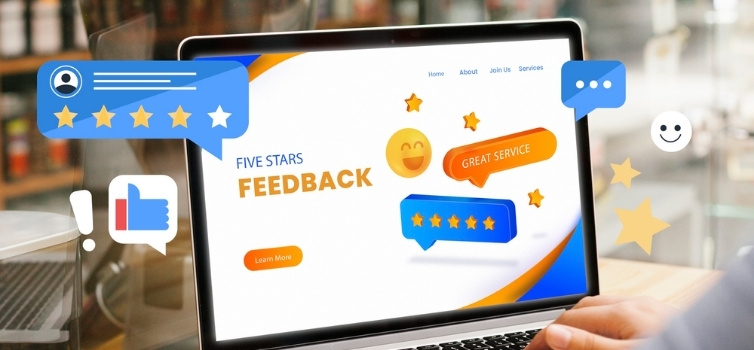
Website reputation is the collective perception that users, search engines, and AI systems form about your brand based on every digital signal they can find — your reviews, your backlink profile, your content quality, your social presence, and how your site behaves technically. It is not just what you say about yourself; it is what others say about you, and how consistently those signals align.
In 2026, website reputation is measured across three interconnected layers:
- On-site reputation: How trustworthy, fast, and credible your website feels to users and crawlers — E-E-A-T signals, technical performance, author credentials, and content quality.
- Off-site reputation: What the broader web says about you — review platform ratings, brand mentions, backlinks from authoritative sources, and business listing accuracy.
- AI & search reputation: How Google’s AI Overviews, ChatGPT, and other generative engines describe your brand when users ask about your category or your name directly.
How Online Reputation Directly Affects SEO Rankings
Google’s ranking systems evaluate reputation at every level. A site with strong reviews, consistent NAP data, authoritative backlinks, clear author credentials, and fast Core Web Vitals scores will always outrank a site that is technically optimized but reputation-weak. Reviews are the second most important local SEO ranking factor, comprising roughly one-third of the local search algorithm. Brand signals — mentions, links, and entity associations — are a key input into Google’s Quality Rater Guidelines under E-E-A-T (Experience, Expertise, Authoritativeness, and Trustworthiness).
The Real Cost of a Poor Website Reputation
A weak reputation is not a soft problem — it has hard financial consequences. Studies show that 81% of buyers check Google before purchasing. One negative article or a 2.8-star average rating can silently redirect thousands of potential customers to competitors. The ORM industry is estimated at $6.9 billion in 2025 and is expected to nearly double by 2030 — because businesses are discovering, often too late, how expensive a neglected reputation is.
Build On-Site Trust Signals That Users and Search Engines Trust Instantly
Trust on your site must come before link building or paid ads. If the site looks vague or risky, users leave within seconds. Google’s systems detect that bounce signal and reduce your visibility accordingly. The fix is methodical: show real people, reduce friction, and make the site stable, secure, and fast.
Use this quick checklist and knock it out in a week:
- Add clear author bylines with short bios that show why they know the topic.
- Publish an About page with your story, team photos, and a timeline.
- Post contact details in the header or footer, and a full Contact page.
- Use HTTPS only, remove mixed content, and pass Core Web Vitals targets.
- Clean up broken links, slow scripts, and heavy uncompressed images.
- Write simple policies in plain language and show last-updated dates.
- Place short, sourced testimonials near forms and checkout.
E-E-A-T — Experience, Expertise, Authoritativeness, and Trust — is Google’s quality framework for evaluating content credibility. You do not need buzzwords to satisfy it. You need to show who wrote the content, why they are qualified, and how users can verify and get help. Even small changes deliver fast results: adding a phone number and a real customer quote near a quote form routinely doubles form conversion rates.
Display Author Credentials and E-E-A-T Proof
Faces and names build confidence instantly. Every piece of content should carry an author byline linked to a bio page that includes: the author’s full name, professional credentials or relevant experience, a photo, links to published work or LinkedIn, and the date the content was last reviewed. Add Person schema and Author schema markup to each post so Google can associate the content with a real, verifiable identity.
Your About page should include: your company story, team photos with names and roles, your founding year, notable clients or partnerships, and any industry accreditations. Keep your NAP — Name, Address, Phone — identical across your site, Google Business Profile, and all directory listings. Add Organization or LocalBusiness schema to your footer.
Make Your Website Fast, Secure, and Technically Sound
Force HTTPS site-wide and eliminate all mixed content warnings. Google’s Core Web Vitals are direct ranking signals — aim for these specific targets in 2026:
- LCP (Largest Contentful Paint): Under 2.5 seconds — optimize hero images, preload key resources.
- INP (Interaction to Next Paint): Under 200 milliseconds — reduce JavaScript execution time.
- CLS (Cumulative Layout Shift): Under 0.1 — set explicit dimensions on all images and embeds.
Use Google PageSpeed Insights and Google Search Console’s Core Web Vitals report to identify failures. Compress images using WebP format, lazy-load below-the-fold media, enable browser caching, and eliminate render-blocking scripts. Remove or delay pop-ups that trigger immediately on page load — Google’s intrusive interstitials policy penalizes these directly. Use readable fonts at sufficient contrast ratios (4.5:1 minimum), add descriptive alt text to all images, and ensure full keyboard navigability for accessibility compliance.
Post Clear Policies and Guarantees That Reduce Purchase Anxiety
Write a plain-language Privacy Policy, Terms of Service, and — if you sell products — a Refund and Shipping policy. Show last-updated dates on each policy page. If you offer a service guarantee or money-back promise, place it prominently near your checkout, contact form, or primary CTA. Use only real payment badges and SSL security seals — never fabricated trust symbols, which actively erode trust when users recognize them as fake. For service businesses, clearly state your scope of work, response time commitments, and escalation process.
Display Social Proof: Reviews On-Page, Case Studies, and Media Logos
Place short, attributed testimonials near your primary calls-to-action — not buried in a footer carousel. Link to full case studies that show measurable results, real client names (with permission), and before/after outcomes. If media outlets or industry publications have mentioned your business, display their logos with a brief quote and a link to the original article. Implement Review schema, FAQ schema, and HowTo schema where appropriate to unlock star ratings and rich results in Google. Never fabricate reviews — Google’s systems and users can detect inauthentic patterns, and the penalty to your reputation is severe.
How to Get More Reviews and Manage Your Online Reputation Actively

Off-site pages shape perception before a visitor ever reaches your website. Your Google star rating, your Trustpilot score, and your listing accuracy are the first things potential customers see in search results. A clean, actively managed off-site reputation can lift your click-through rate significantly — even without a rank change.
Which Review Platforms Matter Most in 2026
Not all review platforms carry equal weight for every business. Focus your energy based on your industry:
| Platform | Best For | SEO Impact | Setup Link |
|---|---|---|---|
| Google Business Profile | All local businesses | 🔴 Highest — direct local ranking signal | business.google.com |
| Trustpilot | E-commerce, SaaS, services | 🔴 High — rich snippets + brand trust | trustpilot.com/signup |
| Yelp | Restaurants, hospitality, local | 🟠 Medium — high domain authority | biz.yelp.com |
| G2 / Capterra | B2B software and services | 🟠 Medium-High — B2B purchase decisions | g2.com / capterra.com |
| Better Business Bureau (BBB) | Professional services, US/Canada | 🟡 Trust signal — accreditation badge | bbb.org/accreditation |
| Facebook Reviews | Consumer brands, local retail | 🟡 Social trust + social proof | facebook.com/business |
Priority rule: Start with Google Business Profile. It is the most powerful single review source for local SEO. Once you have a consistent flow of Google reviews (aim for 4.5+ stars with 50+ reviews), expand to Trustpilot for brand credibility, then the relevant industry-specific platform.
How to Ask for Reviews the Right Way (With Templates)
Ask happy customers within 48 hours of a positive interaction — this is when satisfaction is highest and the experience is fresh. Share a direct review link and give one clear instruction. Never offer incentives in exchange for reviews; this violates Google’s and Trustpilot’s terms and can get your listing suspended.
Email template (use after service delivery):
Hi [Name], thank you for choosing [Company Name]. We hope everything went smoothly. If you have 60 seconds, a quick Google review would mean the world to us and helps other customers find us: [Direct Review Link]. Thank you — [Your Name]
SMS template (under 160 characters):
Hi [Name]! Thanks for working with us. Mind leaving a quick Google review? It only takes a minute: [Short Link]. We really appreciate it!
Set a team rule: respond to all reviews within 2 business days. Track three metrics monthly — average star rating, total review count, and average reply time.
How to Respond to Negative Reviews (With Example Responses)
Negative reviews handled well are often more powerful trust signals than positive ones. They show prospective customers that you are accountable and responsive. Follow this framework: acknowledge, apologize (for the experience, not necessarily the fault), offer a concrete fix, and move to a private channel for resolution.
Response template for 1-star reviews:
Hi [Name], thank you for taking the time to share your feedback — we’re genuinely sorry to hear your experience didn’t meet expectations. This isn’t the standard we hold ourselves to. Please reach out to us directly at [email/phone] so we can make this right. We take every concern seriously and want the opportunity to resolve this for you.
Response template for 2-3 star reviews (mixed feedback):
Hi [Name], thank you for your honest feedback. We’re glad [positive aspect] worked well for you, and we hear you on [specific concern]. We’ve passed your comments to our team and are working to improve. If you’d like to discuss further, please contact us at [email/phone] — we’d love the chance to earn a better experience for you.
Fix Your Business Listings and NAP Consistency Across the Web
Start with Google Business Profile. Match your business name, address, and phone number (NAP) exactly to what appears on your website footer — even small inconsistencies (abbreviations, suite numbers, phone formats) confuse Google’s local algorithm. Fill every field: categories, business hours, services, photos (minimum 10), and your website URL with UTM tracking parameters.
Audit and fix citations using tools like BrightLocal, Whitespark, or Yext. These tools scan hundreds of directories simultaneously, identify NAP inconsistencies, and flag duplicate listings. Set a quarterly calendar reminder to review your top 20 listings. Also update Apple Business Connect — Apple Maps is the default navigation app on over 1 billion iPhones and is frequently overlooked.
Use Social Media to Build Trust, Not Just Likes
Post helpful tips, how-to clips, behind-the-scenes moments, and customer success stories. Show your team’s faces and your work in action. Pin posts that answer the most common questions prospects ask. Reply to all comments within 24 hours — responsiveness is itself a trust signal. Link to your website only when it genuinely serves the user. Share positive reviews and case wins, crediting the customer when they permit it.
Earn Mentions and Links With Simple Digital PR
Pitch short, data-backed story angles tied to your expertise, customer results, or timely industry trends. Use platforms like HARO (now Connectively) or Help a B2B Writer to respond to journalists seeking expert quotes in your industry — a single mention in a high-authority publication can generate both a powerful backlink and lasting brand credibility. Publish a small original study quarterly (even 100–200 survey responses qualifies) to create genuinely linkable content. Build a dedicated media page with your bio, headshot, press kit, and a list of past mentions.
Also Read: Online Reputation Management: Is it Worth for Business?
Build Backlinks and Domain Authority to Strengthen Website Reputation
Off-site authority — the weight that other websites lend to yours through links and mentions — is one of Google’s most durable ranking signals. In 2026, backlink quality and brand signals outweigh raw volume. A single contextual link from a respected trade publication carries more authority than 50 links from irrelevant directories.
How to Earn High-Quality Backlinks in 2026
The most reliable link-building strategies in 2026 are:
- Guest posting on relevant, authoritative blogs: Pitch original articles to industry publications with real readerships. Focus on sites with Domain Authority (DA) 40+ that cover your niche.
- HARO and journalist outreach: Respond to reporter queries daily via Connectively (formerly HARO). A single media mention can generate high-authority links from Forbes, Entrepreneur, or trade publications.
- Original research and data studies: Survey 100–500 people in your target audience. Publish the findings as a report. Data-backed content attracts links organically as other sites cite your research.
- Unlinked brand mention recovery: Use Semrush Brand Monitoring or Ahrefs Alerts to find places that mention your brand without linking to you. Reach out and politely request a link — most will oblige since they already recognize your authority.
- Broken link building: Find broken links on authoritative sites in your niche and offer your relevant content as a replacement. Tools like Ahrefs’ Broken Link Checker make this scalable.
- Strategic partnerships and co-marketing: Create joint content (webinars, guides, reports) with complementary businesses. These naturally result in reciprocal links and expanded reach.
How to Track and Improve Your Domain Authority Score
Domain authority is measured differently by the major SEO tool providers — understand all three to get a complete picture:
- Moz Domain Authority (DA): Score 0–100. Reflects link profile strength. Check via Moz Link Explorer. Aim to increase DA by 3–5 points per quarter with consistent link acquisition.
- Semrush Authority Score (AS): Combines backlinks, organic traffic, and spam signals. Found in Semrush Domain Overview. Also reflects overall site health, not just links.
- Ahrefs Domain Rating (DR): Focuses purely on the quality and quantity of referring domains. Check via Ahrefs Site Explorer. A strong DR is the most reliable predictor of ranking potential.
Set a monthly benchmark: record your DA, AS, and DR scores on the first of each month. Track your number of referring domains over time — growth in unique referring domains is the clearest sign your link-building efforts are working.
Content, SEO, and GEO Tactics for a Stronger Digital Reputation in 2026

Content is the foundation of long-term website reputation. It feeds Google’s search results, shapes AI-generated summaries, and builds customer trust over time. In 2026, the most effective content strategy combines first-hand expertise, semantic depth, and deliberate optimization for both traditional search and generative AI engines.
Optimize for AI Overviews and Generative Engine Optimization (GEO) in 2026
Generative Engine Optimization (GEO) is the 2026 evolution of traditional SEO — it is the practice of structuring your content so that AI systems like Google’s AI Overviews, ChatGPT, and Perplexity accurately cite, summarize, and recommend your brand in their generated answers.
To optimize for GEO and AI Overviews:
- Answer questions directly and concisely: Place a clear, 40–60 word direct answer immediately after every H2 or H3 heading. AI models extract these as summaries.
- Use named entities consistently: Mention specific platforms, tools, people, and standards by name — Google, Trustpilot, Schema.org, E-E-A-T, Core Web Vitals. Entity-rich content is more likely to be cited by AI systems.
- Structure with clear HTML: Use proper <h2>, <h3>, <ul>, <ol>, and <table> tags. AI systems parse HTML structure to understand hierarchy and extract answers.
- Add original statistics and first-party data: AI Overviews prefer citing content with verifiable, specific data. Create and publish your own research, surveys, or case study data.
- Implement comprehensive schema markup: Article, FAQ, HowTo, and Organization schema give AI systems verified metadata about your content’s topic, author, and date.
Publish First-Hand Experience Content With Clear Authors
Write guides based on real projects, tests, and client outcomes. Add photos, before-and-after results, and specific metrics. Use author bylines with short bios that clearly explain the author’s experience and credentials. Link to credentials, portfolio work, or LinkedIn where relevant. Add publication dates and update old posts — a “Last Updated: [Month Year]” label near the title is a trust signal for both users and Google.
One comprehensive, experience-backed guide that genuinely teaches will consistently outperform five thin, generic posts. Depth, specificity, and verifiable expertise are the content quality signals that matter most in 2026.
Build Topic Clusters and Hub Pages Around Your Brand
Topical authority — Google’s confidence that your site comprehensively covers a subject — is built through content clusters. Pick 3 to 5 core topic pillars relevant to your business. Create one long-form hub page for each pillar (like this guide). Link from the hub to detailed supporting articles, and link those supporting articles back to the hub. This internal linking structure signals to Google that your site covers the topic comprehensively.
For example, a hub page on “Website Reputation” might link to supporting posts on: Google review strategies, responding to negative reviews, Core Web Vitals optimization, backlink building, and schema markup implementation. Each supporting post reinforces the hub’s topical authority while targeting its own specific long-tail keywords.
Add Schema Markup to Help Google Understand Your Content
Structured data is the clearest way to tell Google and AI systems exactly what your content contains. Implement the following schema types for a reputation-focused content strategy:
- Article schema: Adds headline, author, datePublished, dateModified, and image — boosts E-E-A-T signals.
- FAQ schema: Marks up question-and-answer content — unlocks accordion-style rich results in Google and increases click-through rates.
- HowTo schema: For step-by-step guides — enables rich results with numbered steps directly in the SERP.
- Organization schema: On your homepage — establishes your official name, logo, contact details, social profiles, and founding date as verified facts in Google’s Knowledge Graph.
- Review / AggregateRating schema: For product and service pages — enables star ratings to appear directly in search results.
Add schema markup using a plugin like Yoast SEO, RankMath, or Schema Pro. After adding any new schema, test it in Google’s Rich Results Test tool and submit the URL for re-indexing via Google Search Console.
Shape Your Brand SERP
Your brand SERP — the search results page that appears when someone Googles your business name — is your digital reputation at a glance. Claim and fully optimize:
- Your Google Knowledge Panel (claim via Google Search Console if eligible)
- Your social media profiles (LinkedIn, Twitter/X, Facebook, Instagram) — ensure they’re active and consistent
- Your Crunchbase or LinkedIn Company page (high-authority listings that typically appear on page 1 for brand searches)
- A dedicated Press page on your website with media mentions and contact info for journalists
- Your Wikipedia page (if your business meets notability criteria)
Top ORM Tools and Software for Managing Website Reputation in 2026
Managing your website reputation manually across dozens of platforms is not scalable. Online Reputation Management (ORM) software centralizes review monitoring, response management, listing updates, and brand mention tracking into a single dashboard. Here are the leading tools in 2026:
| Tool | Best For | Key Features | Price Range |
|---|---|---|---|
| Birdeye | Multi-location enterprise | 200+ integrations, AI response, social management | $299+/mo/location |
| Podium | Local SMBs, text-first businesses | SMS review requests, webchat, payments | $300–$500+/mo |
| ReviewTrackers | Multi-location analytics | NLP sentiment, aggregated analytics, CRM integrations | Custom pricing |
| BrightLocal | Local SEO + reputation | Citation tracking, rank tracking, review monitoring | $29–$49/mo |
| NiceJob | Home services, trades, contractors | Automated review requests, referral campaigns | $75–$149/mo |
| Semrush Brand Monitoring | Brand mention tracking | Unlinked mention finder, sentiment analysis, alerts | Included in Semrush Pro ($130+/mo) |
For small businesses just starting out: BrightLocal or NiceJob offer the best value with minimal setup. For agencies managing multiple clients: Birdeye or ReviewTrackers provide the scalability and white-label reporting you need. Need help building a complete ORM strategy? Explore our ORM services for a managed approach.
How to Monitor Your Online Reputation and Measure Progress
You cannot improve what you do not measure. Set up a simple monitoring system in the first week and check it consistently — reputation problems caught early are far less costly to resolve.
5 Essential Metrics Every Business Must Track for Website Reputation
| Metric | Tool to Use | Check Frequency | Target Benchmark |
|---|---|---|---|
| Average star rating | Google Business Profile dashboard | Weekly | 4.5+ stars (min. 50 reviews) |
| Review count growth | GBP + BrightLocal | Monthly | +5–10 new reviews/month |
| Branded organic clicks | Google Search Console | Weekly | Month-over-month growth |
| Core Web Vitals pass rate | Google Search Console → CWV report | Monthly | 100% of URLs “Good” |
| Referring domains (backlinks) | Ahrefs or Semrush | Monthly | +5–10 new referring domains/month |
| Brand mention volume & sentiment | Google Alerts + Semrush Brand Monitoring | Weekly | 80%+ positive sentiment |
Set up Google Alerts immediately (alerts.google.com) for: your brand name, your key personnel names, your primary product/service names, and your top competitors. Alerts are free and take 5 minutes to configure. For deeper monitoring, Semrush’s Brand Monitoring tool and Ahrefs Alerts provide more comprehensive coverage across the web, social media, and news sources.
Check your brand SERP — Google your own company name — at least once a month. Note what appears on the first page: are all results positive and controlled? Are any review platform pages showing below 4.0 stars? Are there any negative press mentions? Each issue you identify becomes a priority action item.
30-60-90 Day Website Reputation Improvement Roadmap
| Days 1–30: Fix the Foundation | Days 31–60: Build the Signals | Days 61–90: Scale and Amplify |
|---|---|---|
|
|
|
Conclusion
A strong website reputation is built through consistent action across four connected layers: on-site trust signals, actively managed reviews and listings, authoritative backlinks, and content that demonstrates genuine expertise. In 2026, you must also optimize for generative AI search — the brands that appear in AI Overviews and ChatGPT answers will dominate their categories in the years ahead.
Start with the 30-day foundation: fix your NAP, claim your Google Business Profile, add schema markup, and set up brand monitoring. Then build outward — earn reviews, acquire links, and publish content that teaches with depth and evidence. Measure your progress with the six KPIs in the dashboard above. Stay consistent, and your website reputation will improve where it matters most: in clicks, calls, and conversions.
Frequently Asked Questions About Improving Website Reputation
What is website reputation and why does it matter for SEO?
Website reputation is the collective assessment of your brand’s trustworthiness based on reviews, backlinks, content quality, author credentials, and technical performance. It matters for SEO because Google’s ranking systems evaluate reputation signals — particularly E-E-A-T — to determine which pages deserve top positions. Sites with strong reputations consistently outrank technically similar but reputation-weak competitors.
How long does it take to improve website reputation?
You can see measurable improvements in on-site trust signals (Core Web Vitals, schema, author bios) within 1–2 weeks. Review volume and star ratings typically improve within 30–60 days of a consistent review request campaign. SEO ranking improvements from reputation work typically appear within 6–12 weeks, as Google re-evaluates your site after crawling the improvements.
What is E-E-A-T and how do I improve it?
E-E-A-T stands for Experience, Expertise, Authoritativeness, and Trustworthiness — Google’s framework for assessing content quality. Improve it by: adding detailed author bios with credentials, citing sources and data in your content, earning mentions from authoritative sites in your industry, publishing original research, and maintaining accurate business information across the web.
Which review platform is most important for website reputation?
Google Business Profile reviews are the most important for local SEO and general business reputation. They are the most visible in search results and directly influence local rankings. After Google, Trustpilot is the most credible general review platform, followed by industry-specific platforms like G2 (B2B software), Yelp (hospitality/local), and Capterra (business software).
How do I respond to negative reviews without making things worse?
Always respond publicly within 48 hours. Acknowledge the experience, apologize for the dissatisfaction (without admitting fault if the review is inaccurate), offer a specific resolution, and invite the reviewer to continue the conversation privately via email or phone. Never argue, make excuses, or become defensive in a public response. A professional, empathetic response is often more convincing to potential customers than the negative review itself.
What is Generative Engine Optimization (GEO) and how does it relate to website reputation?
GEO is the practice of optimizing your content to be accurately cited and recommended by AI-powered search engines like Google AI Overviews, ChatGPT, and Perplexity. For website reputation, GEO means structuring your content with clear direct-answer paragraphs, named entities, comprehensive schema markup, and original data — so that AI systems choose your brand as a trusted source when generating responses to users’ questions.
How do I build backlinks to improve website authority?
The most effective tactics in 2026 are: publishing original research that others cite, responding to journalist queries via HARO/Connectively, writing guest posts for relevant industry publications, recovering unlinked brand mentions, and building strategic partnerships with complementary businesses. Avoid buying links or participating in link schemes — Google’s algorithms detect these patterns and can penalize your site.
What is the difference between Domain Authority, Authority Score, and Domain Rating?
All three are proprietary metrics that estimate a website’s link-based authority: Moz’s Domain Authority (DA), Semrush’s Authority Score (AS), and Ahrefs’ Domain Rating (DR). They measure similar signals but use different algorithms and data sources, so scores vary between tools. Track all three monthly, but focus on the trend direction — consistent upward movement across all three tools confirms your link-building efforts are working.
Do I need ORM software to manage my website reputation?
For businesses with fewer than 20 reviews per month across 2–3 platforms, manual management is feasible. Once you are actively monitoring reviews across 5+ platforms, managing multiple locations, or handling more than 50 reviews monthly, ORM software like Birdeye, BrightLocal, or NiceJob becomes necessary to maintain response time standards and identify trends efficiently.
How do I get my website to appear in Google AI Overviews?
Optimize your content with clear, direct-answer paragraphs (40–60 words) immediately after each heading. Implement comprehensive schema markup (Article, FAQ, HowTo). Include named entities, statistics, and cited sources. Ensure your site has strong E-E-A-T signals. Google AI Overviews tend to cite content from sites that are already ranking in the top 10 organic results for the query — so improving your overall SEO reputation is the most reliable path to AI Overview visibility.